Interest from energy companies in Egypt is growing. Gas supplies to the EU could bolster energy security

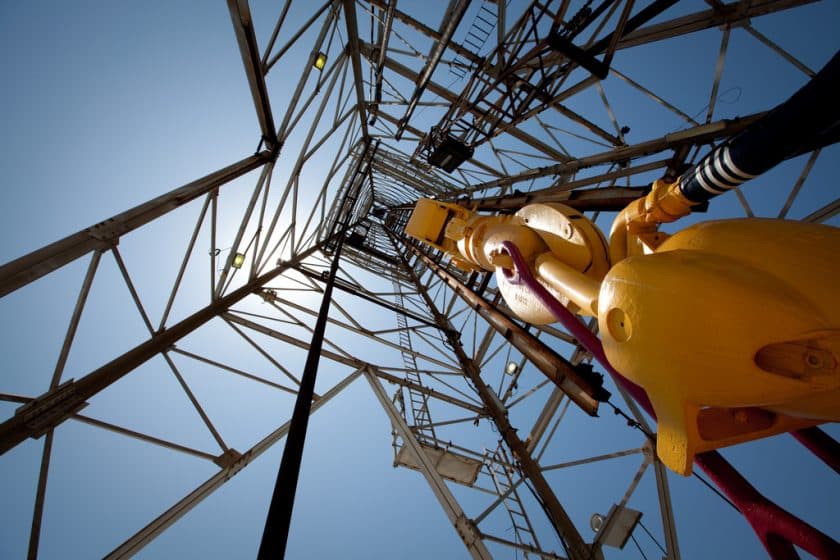
The Eastern Mediterranean has become a hotspot for developing new natural gas fields following several significant discoveries. Italian oil and gas company Eni announced a new discovery off the Egyptian coast early this year. Competitor British company BP and US giants Chevron and Exxon Mobil are also planning development activities in Egypt. The Nargis-1 exploration well drilled by Eni lies in a concession area it shares with US company Chevron. The two companies are joint operators of the exploration project, each with a 45% stake. The remaining 10% is held by Egyptian state-owned company Tharwa Petroleum Company. The discovery confirms Eni’s interest in further developing gas and oil production in the Mediterranean. The concession covering the Nargis Offshore Area, which spans roughly 1 800 square kilometres, offers potential for further exploration. Competitor BP is also planning new activities. In November last year, it announced that it had been awarded two exploration blocks by Egyptian state holding company EGAS.
"Egypt has long been important to BP – nearly 60 years of successful partnership and more than $35 billion in investment. We now look forward to an even more successful future, continuing to help meet Egypt’s growing energy needs by providing competitively priced gas supplies and supporting the country’s energy transition, for example by exploring opportunities for growth in hydrogen,"said Anja-Isabel Dotzenrath, BP’s executive vice president for gas and low-carbon energy."In 2022, we acquired four new exploration blocks and an extension to a block with the potential for further gas discoveries that could be developed using existing infrastructure. Acquiring these areas is part of our strategy to sustain long-term production across our portfolio,"added Karim Alaa, BP’s regional president for Egypt, Algeria and Libya.BP operates several gas fields as part of the West Nile Delta project and also has a strong presence in the eastern Nile Delta through its joint venture, Pharaonic Petroleum Company (PhPC), and its ownership of assets belonging to other partners. In addition to these activities, in early 2017 it acquired a 10% stake from Eni in the Shorouk concession. This includes the Zohr gas field, the largest gas field discovered in the Mediterranean to date, with estimated reserves of up to 850 billion cubic metres of natural gas. This January, the Egyptian government also awarded US company Exxon Mobil two exploration licences in the outer Nile Delta. This gives the company full control of both blocks, which cover a total area of 11 000 square kilometres. Another US company, Chevron, also announced a new discovery off the Egyptian coast. Preliminary data suggest the discovery could contain up to 3.5 trillion cubic metres of natural gas. There is also potential for further exploration and discoveries in the coming period, as late last year the Egyptian government launched a tender for oil and natural gas exploration in six more blocks in the Mediterranean and a further six onshore blocks in the Nile Delta. The tender deadline was set for 30 April 2023.
Potential to diversify supplies to Europe

Regional cooperation could benefit both sides
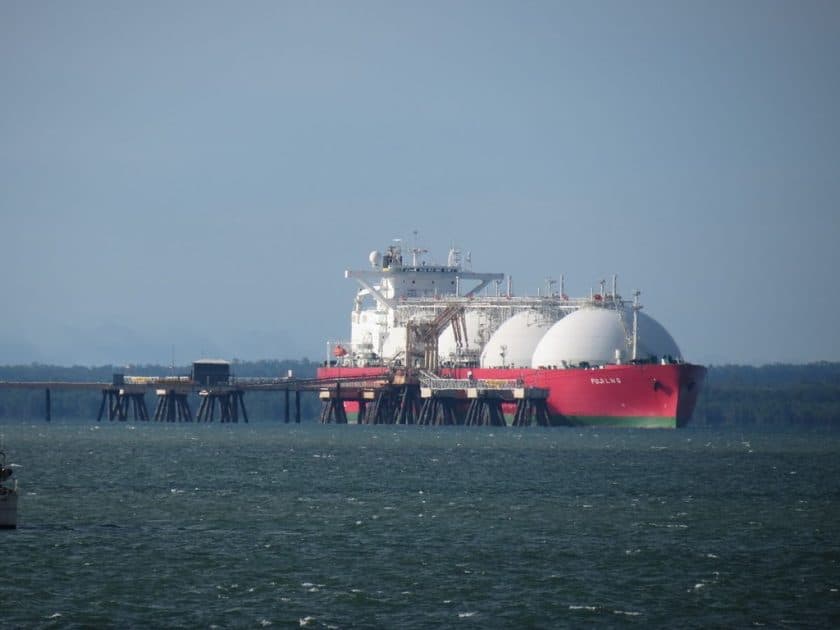
With its export terminals, Egypt could give other regional producers, particularly Cyprus and Israel, access to the European market through re-exports. Last year, Egypt and Israel signed a cooperation agreement with the EU aimed at securing more gas from the Eastern Mediterranean and increasing the involvement of European companies in exploring the region’s fields. A regional approach based on sharing infrastructure and resources could have a positive commercial impact for all the countries involved, as it could attract investment. According to an analysis by the Institute of International Relations in Prague, there are two main ways to implement such a strategy. The first option is to build the East Med (Eastern Mediterranean Natural Gas Pipeline), which, together with the existing Poseidon and IGB pipelines, would strengthen the region’s connections with countries in southeastern Europe. The main question with this option is whether the supplies would be competitive in price with LNG imported from the US. In Cyprus’s case, unresolved political disputes with Turkey are also a risk. The complex political situation and international disputes could undermine Cyprus’s appeal as a transit country. The second export option is to actively use and develop LNG capacity on Egypt’s northern coast. This could be used to transport not only Egyptian reserves but also those of Israel and Cyprus. Cyprus and Egypt signed an agreement in 2016 to build a pipeline that would transport gas from the Aphrodite field to Egypt. Such an arrangement would give Cyprus access to the global LNG market through re-exports. Israel could also use Egyptian capacity, transporting gas to Egypt by reversing the flow through the AGP pipeline or by building a short subsea pipeline connecting the Leviathan field with Egyptian terminals. As with the first option, however, this approach also carries significant risks. The first is a poor investment climate, affected by political instability both in Egypt and across North Africa. There is also considerable uncertainty about the future of Egyptian-Israeli relations and the ability to compete on price with other options for supplying Europe.Translation disclaimer
This article is a machine translation of the Czech original and has not yet been fully reviewed. In case of any doubt, please refer to the Czech version.
The article continues for subscribers
Premium content
The rest of this article is available to premium subscribers only. Get access to all premium articles on oEnergetice.cz.
Best value: annual subscription
Monthly option 4 € / month
3.25 €/ month