4 October 2026, 21:07
Loading...
Orbán: Hungary to halt gas supplies to Ukraine until Druzhba oil flows again

oEnergetice.cz, ČTK
25 March 2026, 14:37
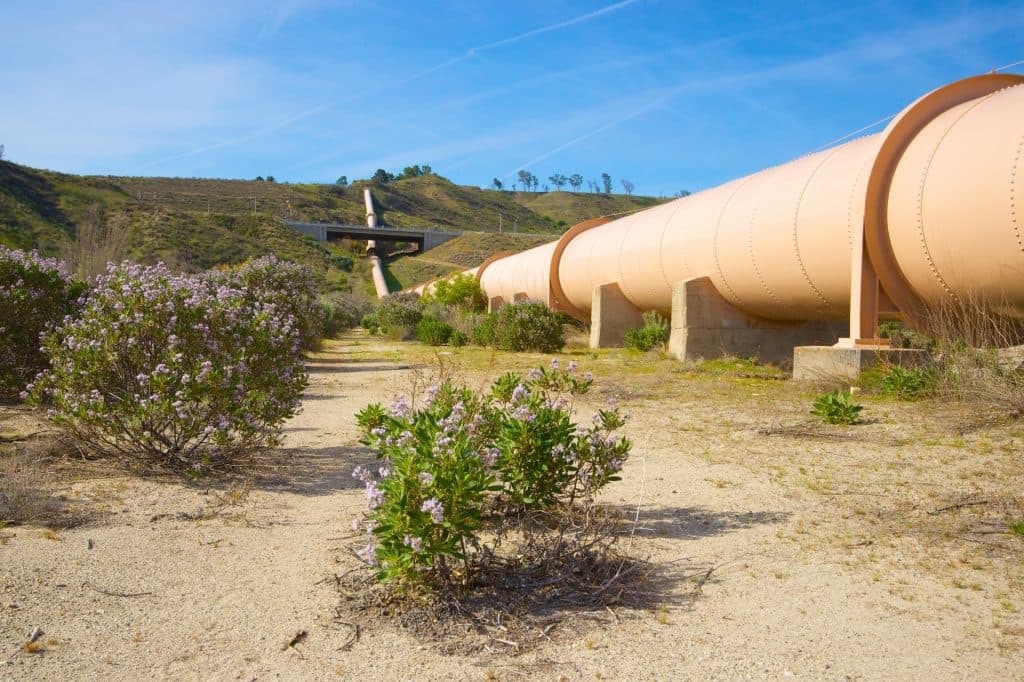
Hungary will halt gas supplies to Ukraine until oil transit through the Druzhba pipeline is restored. Hungarian Prime Minister Viktor Orbán wrote this on Facebook today. No oil has flowed through Druzhba since the end of January, when the pipeline was reportedly damaged in a Russian attack, according to Kyiv. The interruption to Russian oil transit is causing problems not only for Hungary but also for Slovakia. Both countries have an exemption from EU sanctions against Russia and can continue to buy Russian oil.
"We are gradually stopping gas supplies from Hungary to Ukraine. We will store in Hungary the gas that remains," Orbán said in a video published on Facebook. He said the new measures were now necessary to ensure Hungary's energy supplies while Druzhba was out of operation. According to data on the website of Hungarian gas pipeline operator FGSZ, gas supplies to Ukraine were still flowing this morning.
Data from Ukraine's gas transmission system operator show that Ukraine will receive 8.3 million cubic metres of gas from Hungary today, the same amount as on Tuesday. Ukraine plans to import a total of 25 million cubic metres of gas from eastern Europe today. It contracted a total of 180 million cubic metres of supplies from Hungary for March, accounting for 28 percent of its total gas imports, an industry source told Reuters this month. In February, the figure was 200 million cubic metres, or 31 percent of total gas imports.
Hungary will keep the gas it does not supply to Ukraine as a reserve, because Kyiv is also attacking the TurkStream pipeline, which carries natural gas from Russia to Hungary. "Given that Ukraine is also attacking the pipeline supplying Hungary via the southern route, we need to build up reserves. So instead of supplying Ukraine, we will fill Hungary's gas storage facilities," Orbán said, according to RIA Novosti.
Ukrainian President Volodymyr Zelenskyy said on 5 March that the Druzhba pipeline could be technically ready to resume operations in a month and a half, and that Ukrainians were trying to repair it as quickly as possible. Zelenskyy repeated this two weeks later in a letter to the European Commission, saying repairs to the pipeline were nearing completion and that it could be back in operation in a month, or at most a month and a half. Hungary and Slovakia accuse Zelenskyy of blocking oil transit for political reasons. Orbán had previously said, for example, that his country did not support Ukraine's accession to the EU, prompting criticism from Zelenskyy.
According to analysts at the Oeconomus Economic Research Foundation, a Hungarian think tank considered close to the government, Hungary has become one of Ukraine's main gas suppliers. "The volume and share of natural gas originating from Hungary have been steadily increasing since 2022," AFP quoted an analysis published by the foundation in February. "In the first ten months of 2025, its share rose from 2.5 percent to 14 percent," the report added.
Before the war in Ukraine began, Hungary received gas from Russia in transit through Ukraine. But Kyiv has not allowed the transit of Russian gas since the start of 2025, so Hungary began looking for alternative sources. It currently receives gas mainly via the TurkStream pipeline, which brings Russian gas along the southern route through Turkey. Hungary is also connected to neighbouring countries and can import gas from Austria, Slovakia, Croatia or Romania. These routes carry both pipeline gas and liquefied natural gas (LNG).
Orbán, whose positions are often seen within the European Union as highly accommodating to Moscow, continues to block final approval of a €90 billion loan (about 2.2 trillion Kč) from the EU to Ukraine. He says he is ready to support Ukraine only once Russian oil transit through the Druzhba pipeline to Hungary and Slovakia is restored. Russian oil stopped flowing through the pipeline on 27 January.
The Hungarian prime minister has thus changed the position he held as recently as December, when he agreed at an EU summit to provide financial support to the country under attack. The other EU heads of state and government failed to persuade Orbán to stop blocking the loan at a summit in Brussels last Thursday. Hungary is also blocking another package of sanctions against Russia, which the union had wanted to approve on the anniversary of Russia's invasion of Ukraine.
Orbán had also previously suggested that Hungary could restrict electricity exports to Ukraine if oil transit through Druzhba was not restored. Slovakia halted electricity supplies to Ukraine for the same reason in February. Last week, EU experts travelled to Ukraine to assess the pipeline's condition. Kyiv had previously said it accepted the EU's offer of technical support and funding to restore oil transit. At the same time, however, Ukraine indicated that resuming oil supplies to Hungary and Slovakia remained a matter of several weeks.
Orbán accuses the Ukrainian side of trying to trigger a political crisis in his country ahead of the April elections, which could end his time as prime minister. Kyiv points out that revenues from oil and gas exports finance Russia's military campaign against Ukraine. Russia invaded its neighbouring country in February 2022.
Translation disclaimer
This article is a machine translation of the Czech original and has not yet been fully reviewed. In case of any doubt, please refer to the Czech version.
Sdílejte článek prostřednictvím:
You might also like

3 October 2026, 13:01
3 October 2026, 07:43
2 October 2026, 21:55