Ukraine's mineral wealth: What's at stake in the global energy game

As the war in Ukraine rages on, diplomatic talks have stalled. With the arrival of President Donald Trump's administration, the geopolitical dynamics are changing dramatically, particularly after the ill-fated meeting with Ukrainian President Volodymyr Zelenskyy in the Oval Office. The anticipated deal that would give the US access to Ukraine's rare earth mineral deposits has yet to materialise. What mineral wealth can Ukraine offer?
The so-called "victory plan" did not work out. At least for now. From an energy perspective, the most interesting is point four: strategic economic potential, through which Ukraine offers its strategic partners a special agreement on the joint protection of the country's critical resources, as well as joint investment in and use of this economic potential.
"Ukraine's critical resource deposits, along with its globally significant potential in energy and food production, are among the Russian Federation's main targets of plunder in this war. And that is our opportunity for growth," President Zelenskyy said.
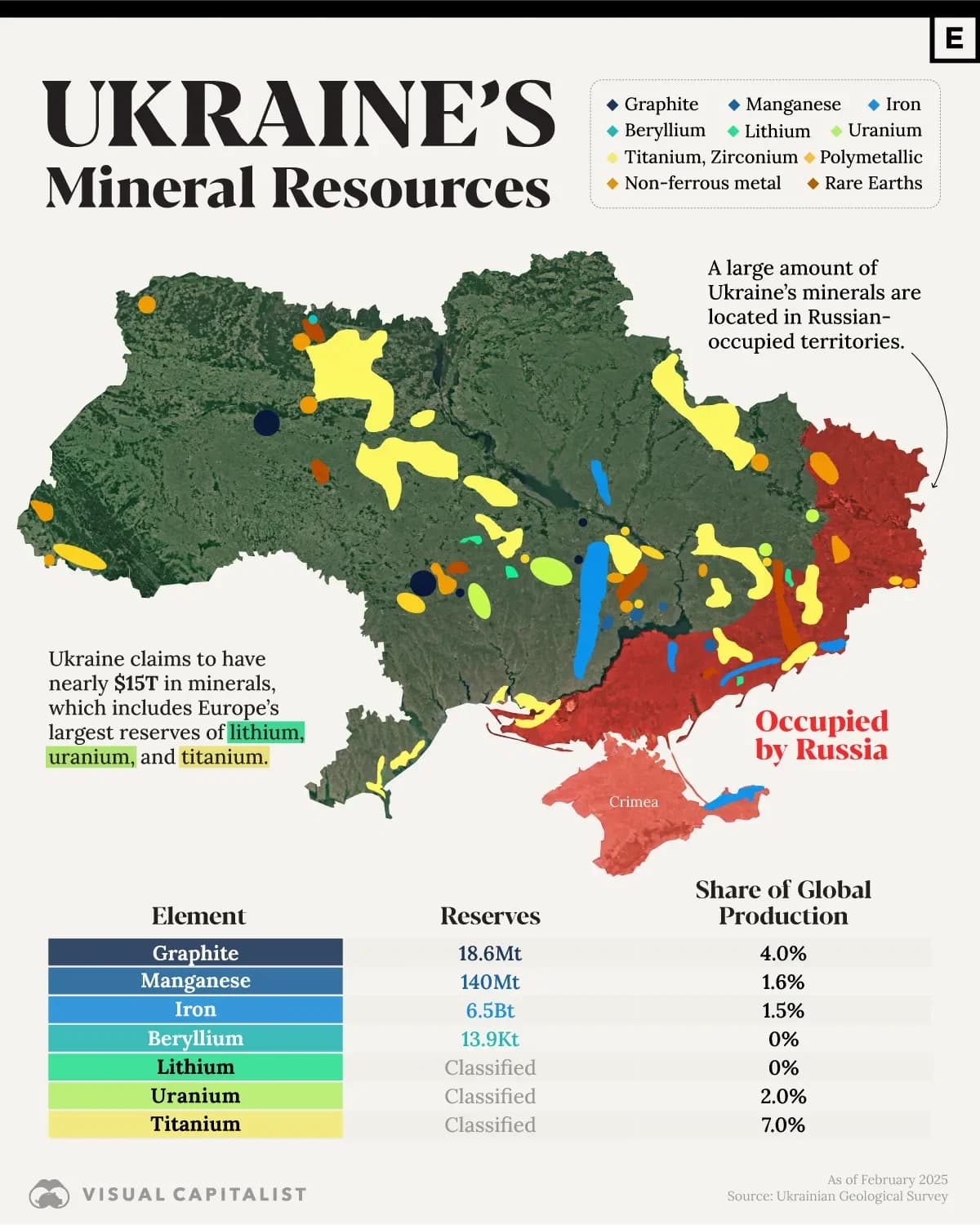
Ukraine is one of the relatively resource-rich countries in terms of critical minerals, which are essential for modern technologies, the defence industry and the energy sector. It is estimated that the country holds around 5% of the world's reserves of these materials, including strategically important graphite, titanium, lithium and uranium.
Ukraine has around 19 million tonnes of graphite, which is especially important for manufacturing batteries for electric vehicles and nuclear reactors, making the country one of the world's most important suppliers of the mineral. Ukraine's lithium reserves, which amount to half a million tonnes, are vital for battery technologies, and the country has Europe's largest deposits of the element.
In addition to these resources, the country is home to a third of all Europe's rare earth reserves. Rare earths are a group of 17 elements essential for manufacturing electronics, wind turbines and military technologies. Among these elements, scandium stands out. The Ukrainian government keeps its reserves secret, but the element is used, for example, in military equipment.
Ukraine also has significant deposits of titanium, which is essential for the aerospace industry, as well as beryllium and uranium, which are used in nuclear power and the arms industry. Other valuable resources include copper, lead, zinc, nickel, cobalt, manganese and silver, which are important for electronics, construction and renewable energy.
One complication, however, may be the scale of the capital investment required, which may not yield results for several years—long after Trump's term in office ends. Another problem is that a significant portion of Ukraine's natural resources is now located in areas under the control of the Russian army. In the context of current geopolitical tensions, these deposits therefore represent not only an economic opportunity but also a key factor influencing the strategic decisions of major powers in the region.
Translation disclaimer
This article is a machine translation of the Czech original and has not yet been fully reviewed. In case of any doubt, please refer to the Czech version.




