U.S. presidential election: Gas vs. renewables

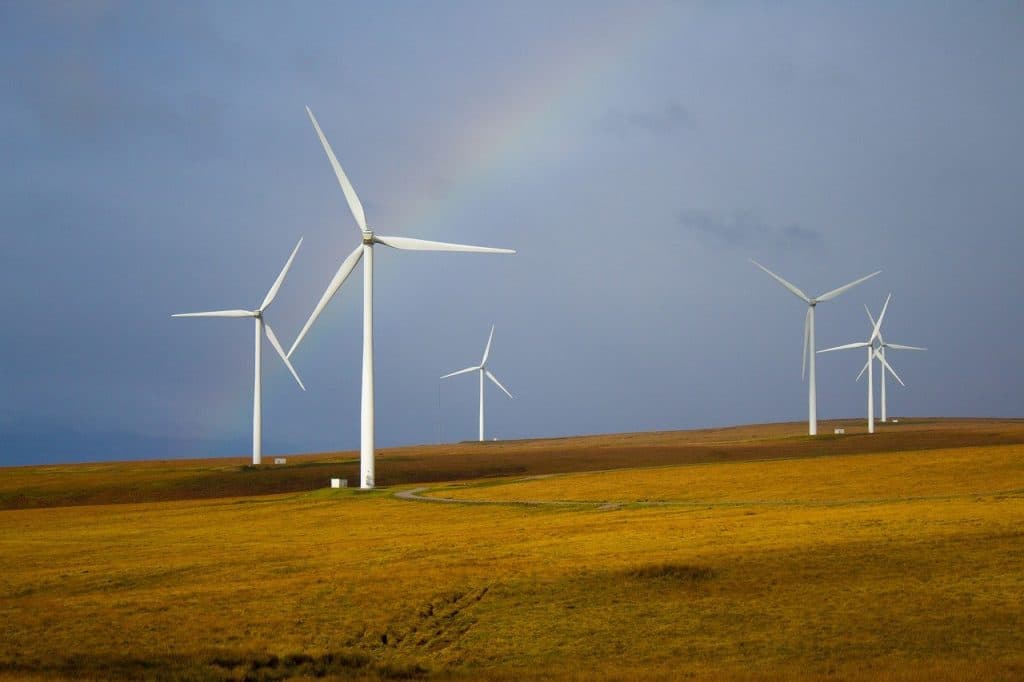
The U.S. election is already in full swing. Opinions are once again deeply polarized, including views on the country’s future energy direction. The election could therefore mark a turning point for the future of the energy sector in a country that may choose either to develop natural gas or to pursue renewable energy. Some commentators warn that economic issues may ultimately be the main factor deciding the direction of the energy sector.
It often seems that the U.S. presidential candidates, Donald Trump and Joe Biden, hold opposing views on almost everything. The future direction of the energy sector is no exception. The U.S. election could therefore mark a turning point for energy policy. Based on the candidates’ and their parties’ positions to date, the country appears likely to embark on either a “gas” or a “renewables” revolution.
The Biden administration is betting heavily on renewable energy, which it sees as more environmentally friendly. If Trump returns to the White House, Republicans would likely support further development of natural gas and an approach described by commentators as “Drill, baby, drill.”
Despite their differing approaches, both candidates are emphasizing the same goal during the campaign: the country’s energy security. According to Francesca Gregory, lead energy transition analyst at GlobalData, both parties will champion it in the run-up to the election. The wealth and jobs associated with gas extraction will attract some voters to the Republicans, while others will be drawn to the long-term economic potential of developing clean energy.
Biden is betting on the latter, as demonstrated, for example, by his administration’s determined support for offshore wind farms. Donald Trump, by contrast, makes no secret of his support for gas and oil companies, or of his view that their dominance should be key.
“Donald Trump has been very clear that he wants to restore U.S. energy dominance through oil and natural gas and a fracking revolution,”said Arthur Herman, senior fellow and director of the Quantum Alliance Initiative at the Hudson Institute.
A Trump victory – a different energy transition
Biden’s energy priorities can be read fairly clearly from his record in office. His main achievement in this area is the Inflation Reduction Act (IRA), signed in August 2022. It aims to fight inflation and cut greenhouse gas emissions by around 40%. The IRA also allocated billions of dollars to projects to improve energy infrastructure and is widely considered Congress’s most significant clean technology measure to date.
The law’s first effects are already visible, although they do not always involve simply building renewable energy facilities. For example, U.S. energy giant ExxonMobil has shared plans to become a leading supplier of lithium for electric vehicles by 2030.
“A major U.S. oil company has shifted into a higher gear to take advantage of lucrative tax credits,” commented Clarice Brambilla, energy transition analyst at GlobalData Power Technology.
Another company whose core business is oil and gas, Occidental Petroleum, has agreed to acquire Canadian start-up Carbon Engineering, which is investing billions in direct air capture technology.
In Herman’s view, the direction taken by companies such as ExxonMobil would not necessarily diverge from the course Trump might set for the energy sector.
“On the other hand, if Trump wins, fossil fuel and mining companies’ clean energy priorities (carbon capture and storage, other carbon removal technologies, hydrogen, nuclear power, geothermal energy and critical minerals) will likely be prioritized over other clean energy segments (such as offshore wind), permitting for which was halted during Trump’s first term,” Herman argues.
This suggests that although environmental protection would not be a priority for a potential Trump administration, that would not necessarily mean an effort to reduce emissions. Investment support would simply be directed toward approaches favored by certain energy giants, such as carbon storage.
Who will win? Economics may matter more than energy
Commentators point out that economic issues are currently the main influence on the election and, consequently, the direction of energy policy. Arthur Herman believes Trump’s focus on “a huge economic resource waiting to be tapped” will appeal to voters who feel they have been disadvantaged under the Biden administration.
He cites Wisconsin, which was once a major source of fracking sand. Expanding oil and natural gas extraction through fracking would be good news for the state and might seem more appealing to undecided voters there than the promise of further environmental regulation.
“Environmental regulations sell well when people are doing well and have time to think about big existential questions. We are now facing a time when young people in this country cannot afford to buy a home, when owning a car increasingly feels like a financial strain, and when credit cards are maxed out because people have to use them to pay for food and gas bills,” Herman added, sharing his view on environmental protection, an issue traditionally championed by Democrats.
Translation disclaimer
This article is a machine translation of the Czech original and has not yet been fully reviewed. In case of any doubt, please refer to the Czech version.




