Dan Jiránek: We have robust energy grids. But they cannot handle everything
Existing distribution grids can cope with a certain capacity of photovoltaic panels or electric vehicle chargers in cities. “But in some places, it will be necessary to ensure that the grid is not overloaded when the sun shines or when electric vehicles start charging simultaneously at a particular time,” Dan Jiránek, director of the Projects and Innovative Approaches Section at the Union of Towns and Municipalities, says in an interview with oEnergetice.
The former chairman of the association and mayor of the city of Kladno hopes that, thanks to several favourable factors, it will be possible to better address one of the biggest problems in the energy sector in the coming years – delays in construction projects. Dan Jiránek will be one of the keynote speakers at the Development Projects of Energy Infrastructure seminar, held as part of the conference on digitalisation in construction. The conference will take place in hybrid format on 9-10 February 2022 at the Czech Technical University in Prague.
The aim of the discussion at the upcoming seminar on energy infrastructure development projects is to identify priority tasks in this area and formulate proposals for legislative amendments. Representatives of energy distribution companies will also discuss them with municipal representatives.
Delays in construction projects are one of the biggest problems in today’s energy sector. This also concerns energy grids in cities, for example. Could the situation improve in the coming years thanks to digitalisation?
I would not say thanks to digitalisation alone, but thanks to the fact that we may finally have more accurate data. I mean, for example, data on where grids run or who owns a grid whose ownership has not been clear so far. Let us hope that it will also be possible to resolve issues such as plots of land whose owner cannot be traced or died long ago. Under the new Civil Code, the state will become the owner of these plots in 2024. The situation may improve due to a combination of several factors. Digital technical maps will also be created, making it possible to determine with greater precision where grids run. We cannot expect everything to be ideal, but there is a chance that many things can be improved.
So do you expect construction approvals and implementation to speed up, and various disputes to be reduced?
Construction projects are most often delayed because of unresolved ownership relations or insufficient information about grids. It happens that a grid runs through a construction site but is not recorded anywhere. We hope that all these problems can at least be partly eliminated. If, for example, it is clear who owns the land, it is much easier to obtain statements from landowners and grid owners and issue a building permit. We also hope that the new Building Act and the Act on Linear Structures will make a positive contribution.
The new Building Act will probably still undergo changes, with the government set to propose another amendment…
Yes, but in any case it should be clear that important strategic grids will not be approved at the lowest level of building authorities. There is a general consensus that a Special Building Authority should be established. The permitting process should no longer be handled, for instance, by a building authority that deals with such a matter once every few decades, lacks sufficient staffing and finds it difficult to communicate with a huge number of landowners.
How far along are preparations for digital technical maps? According to current plans, they should be completed by mid-2023 at the latest…
I am afraid it will not be the same everywhere. Digital technical maps are largely the responsibility of the regions, and they received relatively substantial subsidies for them. On the other hand, we must realise that the subsidy was the same for all regions. Given the number of properties or grids in their territory, it is clear that such a subsidy may be sufficient for the Karlovy Vary Region, but not for the Central Bohemian Region. Moreover, much will depend on how successfully the technical maps of large cities are integrated, as many cities already have them at a fairly good level. I have no illusions that everything will be completed on time as required by law. That is almost never the case in Czechia. Even so, digital technical maps can greatly help speed up construction projects.
As far as I know, some municipalities complained that subsidies for creating digital technical maps did not go directly to them. What do you think?
As I said, some municipalities – especially large cities – already have these maps completed. Other municipalities have nothing at all. I think the chosen regional level is appropriate; it is just that regions with denser grid infrastructure should receive a substantially larger amount.
A major problem in energy construction projects is the installation of underground grids. At the same time, you point out that huge changes are planned in the energy sector for the future – the development of electromobility, decentralised energy and energy communities. Increased interest in using photovoltaic panels is already evident. What are your expectations in this regard?
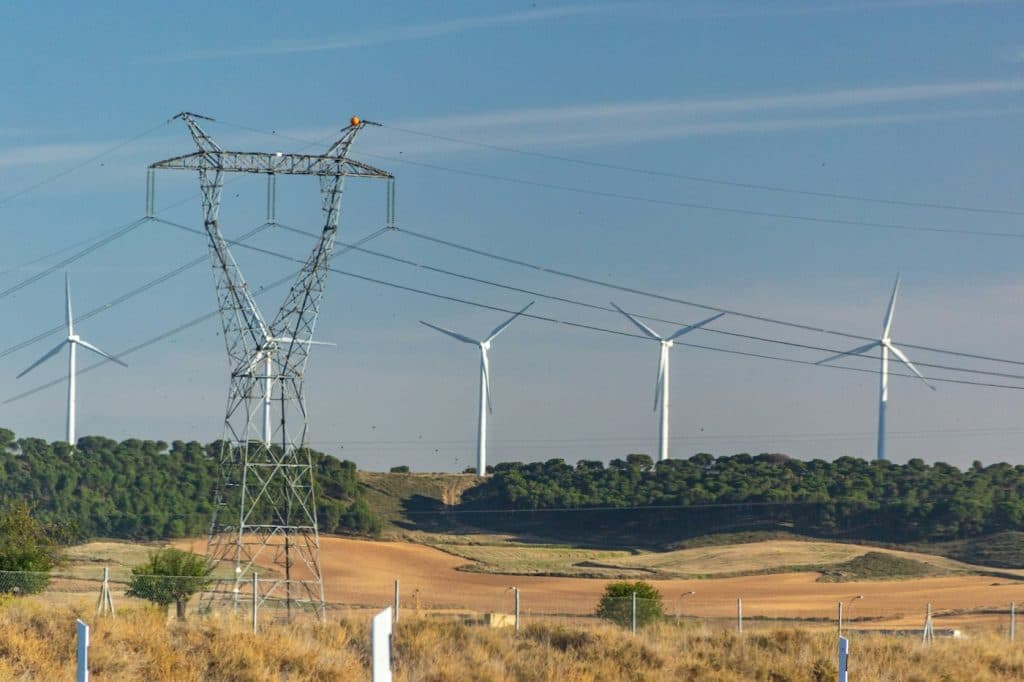
Historically, we have a relatively robust energy grid structure. Up to a certain point, it can operate without major changes, apart from standard cable replacement and modernisation. The energy grid can handle a certain number of photovoltaic installations, electric vehicle chargers and so on. But it cannot handle everything. Conditions will vary from place to place. It will be necessary to manage permitting processes sensibly so that the grid is not overloaded locally because of a high number of photovoltaic installations when the sun shines. Or because electric vehicles begin charging simultaneously at a particular time. Such situations can partly be addressed using software that will not allow everyone to charge at once and overload the distribution grid.
I have previously noted your statement that it will not always be possible to connect chargers to conventional cables used for street lighting…
It depends on how robust such cables are. If I replace discharge lamps with LED lighting, part of the cables’ capacity will become available. But only part of it. However, there is an even bigger problem. Just think about what it will look like in the part of a municipality where cables run from public lighting to vehicles. First, we know that the service life of cables placed freely in a housing estate is very short. And second, I do not think electricity will be cheapest and most abundant at night. If the number of photovoltaic installations grows, as all indications suggest, then logically the most electricity will be generated during the day.
How do you view the vision that electromobility will serve to stabilise the grid?
But then we must take into account that cars need to be charged during the day. Moreover, I think that charging conditions will not be the same throughout the day. Households will think much more about when it makes sense to switch on individual appliances. There will be more price tariffs. The period when charging is advantageous will shrink and be more difficult to hit. In any case, I assume that most electric vehicle owners will not charge their cars in a housing estate, but somewhere at a Park&Ride car park or at their employer’s premises. Charging capacity will need to be concentrated there. Or there will have to be some large battery, for example at a shopping centre, which photovoltaics on its roof will charge and which will supply energy to cars during peak shopping hours. But that is, of course, less efficient, as some energy is lost during the whole process.
You also spoke about the need to amend the Building Act specifically in connection with electromobility…
This is because many other issues need to be resolved. These concern, for example, parking electric vehicles beneath residential buildings. EU legislation is pushing for new residential buildings to be constructed with underground parking in order to save space. But we know the situation with gas-powered cars, which cannot park in underground garages because of fire risk. According to information from public sources, the fire risk may be similar or even greater for electric vehicles. I think this contradiction will have to be resolved at least at the level of implementing decrees under the new Building Act. I cannot imagine building regulations specifying how many parking spaces must be equipped for charging while at the same time stating that they must not be beneath residential buildings.
You emphasise how important it is for us to have more accurate data in digital technical maps. I assume this should also apply to future development projects?
Of course. Ideally, digital maps should include foreseeable or expected requirements for new grids, replacement of parts of these grids and so on. Municipal representatives should be able to look at a map and find out what is planned and when in terms of the renewal of electricity or gas distribution grids, and relate this to the fact that the municipality also needs a new surface at that location. It would then be possible to agree to do everything at once.
In your view, it will also depend on how the European taxonomy develops – that is, which energy investments the European Union classifies as sustainable. Why is this important?
It will then be possible to better estimate future grid needs. But it also depends on the overall framework of European legislation, which may in fact conflict with the taxonomy. If gas is now allowed as a transitional energy source, but at the same time the EU approves its phase-out in 2040, that is a problem. If we find out that in twenty years we will have to switch almost entirely to electric heating, we can throw away the energy development plans we have made so far.
Translation disclaimer
This article is a machine translation of the Czech original and has not yet been fully reviewed. In case of any doubt, please refer to the Czech version.