
17 October 2026, 13:09
Loading...
German LNG terminals are busy, but gas often flows to neighboring countries

oEnergetice.cz, ČTK
24 June 2025, 18:53
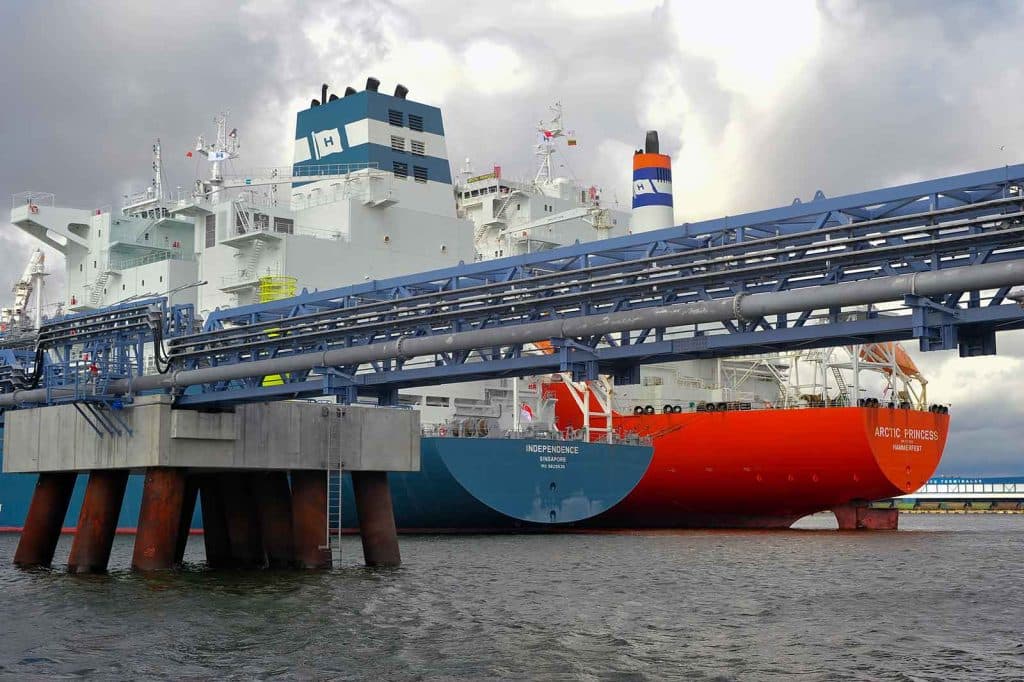
German liquefied natural gas (LNG) terminals are busier than ever. However, much of the imported fuel flows from Germany to other countries, including the Czech Republic. Domestic reserves therefore remain low, Bloomberg reported.
According to ship-tracking data compiled by Bloomberg, deliveries to the country’s four floating terminals have surged in recent months amid efforts to replenish gas reserves. Rather than going into domestic storage, however, large volumes of fuel are flowing to Austria and the Czech Republic, as well as further afield to Hungary and Ukraine.
Germany spent billions of euros building the terminals after the energy crisis exposed the risks to security of supply, Bloomberg noted. Despite recent activity at German terminals, however, neighboring countries are building up their gas reserves faster than Berlin this year. This raises concerns that the state may have to intervene later in the season and buy additional gas, which could prove costly for consumers too.
The situation shows that while the terminals are useful for Europe as a whole, they do not necessarily guarantee supplies for the governments that paid for them. Some of the fuel is currently flowing to countries affected by the halt in Russian gas deliveries through Ukraine on 1 January.

Illustrative photo
Strong demand for gas in Central and Eastern Europe has supported LNG imports through German terminals, said Energy Aspects analyst Erisa Pasková. Exports from Germany to Czechia and Austria have risen significantly in recent months, mainly due to higher demand in Ukraine.
The increase in imports through Germany follows a mild winter, when the terminals operated at just 25 percent of capacity in the fourth quarter of 2024, the lowest utilization rate in northwestern Europe, according to Bloomberg. Last year, LNG imports through domestic terminals covered just eight percent of national gas demand.
Terminal operators confirm that gas imports have risen over the past three months. Although this has not yet affected the pace at which Germany is replenishing its reserves, some experts say it could justify the scale of LNG infrastructure construction, which was previously criticized as excessive. However, Thomas Thorkildsen, chief commercial officer at Höegh Evi, which provides floating terminals, warns that Europe remains vulnerable in terms of energy security and will not have enough capacity to meet demand if a cold winter arrives or a problem occurs in the system, as can happen from time to time.
Translation disclaimer
This article is a machine translation of the Czech original and has not yet been fully reviewed. In case of any doubt, please refer to the Czech version.
Sdílejte článek prostřednictvím:
You might also like




16 October 2026, 10:16