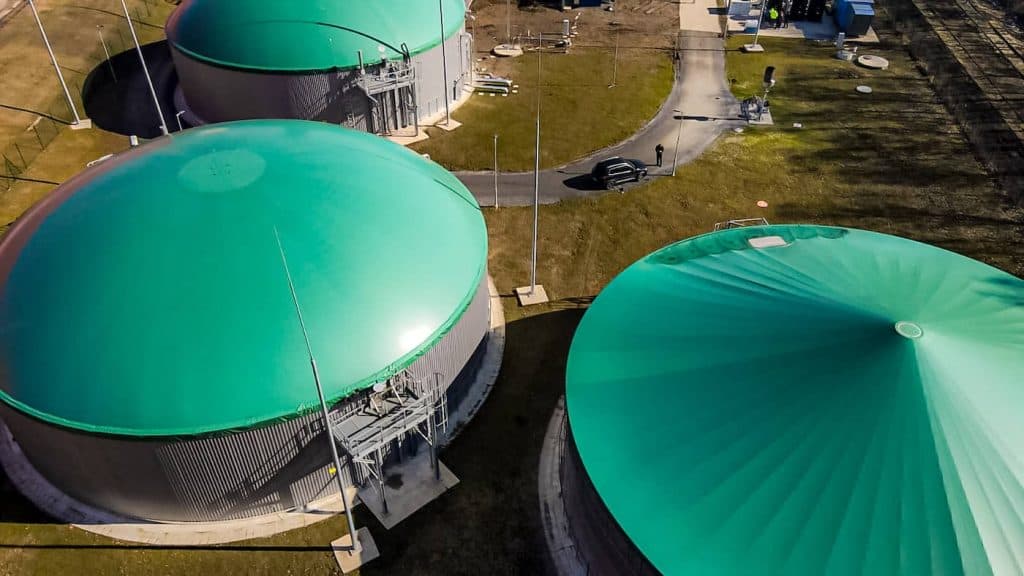
Projects with a combined capacity of approximately 200 million cubic metres of biomethane per year applied for the first Czech auction to support production of 45 million cubic metres annually. Demand therefore exceeded the volume on offer by roughly four times.
The result sent a very strong signal. Investors are interested in this type of support, and there are significantly more projects ready to go on the market than the current allocation can cover.
The Czech biogas market has been stagnating for a long time, with no defined future, so strong interest in the first auction round was to be expected. But actual demand exceeded even my expectations. For me, the most important message from the auction is the interest in new production facilities, which accounted for one quarter of all bids. The projects exist, the capital is available, and operators are ready to invest. After years of stagnation, we now have a tool that can get the entire sector moving.
The Ministry of Industry and Trade also deserves enormous credit for securing European state aid approval in a record-short time and for engaging in constructive discussions with the sector, together with the Energy Regulatory Office, on how to structure the auctions, while taking many of its comments on board.
Five greenfield projects
Of the eleven winning projects, five are to be built as new greenfield biomethane plants, while the other six are projects at existing biogas plants. This is an important combination. Czechia needs to kick-start the construction of new facilities while gradually harnessing the potential of biogas from existing plants that is not currently needed for combined heat and power generation.
But the auctions must not become merely a programme to convert some of today’s biogas plants. They should help kick-start an investment wave like the one Czech biogas experienced 20 years ago. This time, however, it can be built around using feedstocks to produce renewable biomethane, which can replace a significant share of imported natural gas.
For this to happen, the government must not treat the first success as proof that the current conditions are definitively settled. Quite the opposite. Such a large oversubscription is an argument for further work on how the auctions are designed. Preparing an investment in a new biomethane plant takes several years, and its economics are affected by development conditions, technology prices, financing, grid connections and feedstock availability.
Every unnecessary uncertainty increases the risk premium, and some projects may be halted before they are built. Successful development, and therefore the success of future auction rounds, will depend heavily on a stable and predictable investment environment.
Can we build on our biogas tradition?
Alongside the auction terms, the size of allocations in future rounds should therefore be a major focus. The government plans to hold a second auction this year in November, again for 45 million cubic metres. However, the proposed auction schedule runs only until 2028 and envisages a total allocation of 350 million cubic metres.
The development plan should cover a longer period and make room for further auctions in 2029 and beyond. Otherwise, there is a risk that development will overheat again and then come to an abrupt halt. Czechia’s 2030 target calls for annual biomethane production of almost 500 million cubic metres. Yet domestic plants produced only around 17 million cubic metres of biomethane last year.
The first auction also highlights a practical problem. Winning a bid does not automatically mean that a project will actually be built. During project preparation, some may encounter foreseeable or unforeseen complications. Such projects can then tie up part of the available volume for a time, while other ready-to-go projects have narrowly missed out. That is why it makes sense to discuss not only the timing and volume of future allocations, but also a mechanism for returning unused capacity to the system.
Investor interest needs to be sustained
Czechia now has an opportunity to build on its strong biogas tradition and once again become a leader in the field. After years of very slow biomethane development, mainly due to the failure of the first support scheme based on green bonuses, the market is showing a strong revival. Only three production plants used the previous support scheme, whereas the first auction generated several times more interest than the government could meet.
Now investor interest needs to be sustained. If future auctions are large enough, predictable and attractive, we need not be talking about just a few dozen new projects. We can truly launch a new chapter for Czech biogas, which can provide not only flexible combined heat and power generation but also secure domestic biomethane. The first auction has shown that investors are ready to take on this challenge.