9 October 2026, 06:22
Loading...
EFG chief: We want to buy more biogas plants and convert production in Vyškov to biomethane
Ekonews.cz
20 June 2023, 15:57
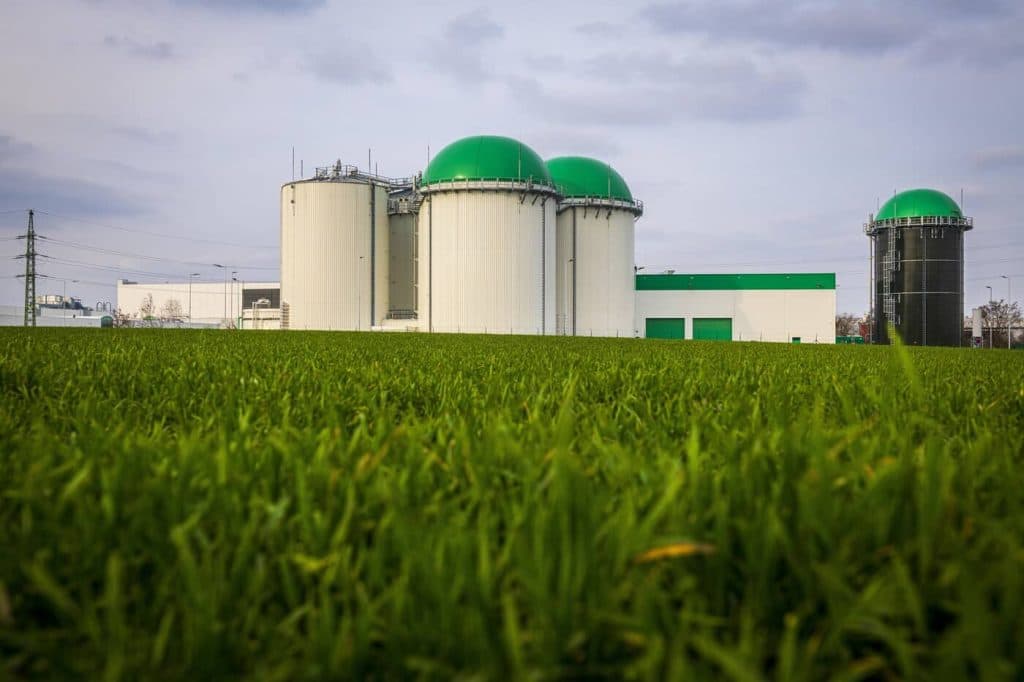
There are only a handful of biogas plants in Czechia capable of producing biomethane and injecting it into the grid. The first was opened by EFG in Rapotín in the Olomouc Region in 2019, and the company is now planning expansion, according to its chief executive Tomáš Voltr.
“We are looking at acquiring stakes in other biogas plants and rebuilding the existing plant in Vyškov. It has a capacity of 12 thousand tonnes of waste, which we are increasing to 30 thousand tonnes, as in Rapotín,” says Tomáš Voltr, chief executive of EFG.
The company also plans to start producing biomethane in Vyškov in the second half of this year. Its main advantage is its lower carbon dioxide emissions.
There are currently five biomethane production facilities in Czechia, while three biogas plants can inject it into the grid. Yet there are more than 500 biogas plants in Czechia overall. Why can’t they do this? Is it too capital-intensive?
Biogas plants are mostly owned by farmers, who tend to be somewhat conservative. They have combined heat and power units that produce electricity and heat, which is often enough to ensure sufficiently stable operations. For a long time, they lacked both the incentive and state support to invest in biomethane. They are now reassessing this approach. Annual green bonuses for electricity generation from biogas are zero, meaning they have effectively been suspended due to high energy prices. Meanwhile, biomethane is increasingly gaining traction across the European Union given its shortage.
So what was your motivation in 2016?
Our input feedstock is waste, which paradoxically meant that at our Rapotín facility we did not receive a green bonus for the electricity generated, unlike with agricultural crops. We were looking at how to improve the operating economic model. At that time, however, upgrading biogas to biomethane was already relatively widespread in Western Europe, which inspired us.
Selling biomethane is a fairly complex process. Certification must be addressed, with the emissions footprint of the entire production process being closely monitored, especially that of the feedstocks processed. The resulting emissions footprint then affects the value of the commodity. Gradually, though, it started to make sense to us, so we decided to go ahead. We dealt with the distributor over permits and connection to the distribution system, as well as the construction permitting process, which was complicated. It was the first project of its kind here, and officials themselves were only just becoming familiar with it.
Is biomethane production in Rapotín now at capacity, or do you have room to increase it?
The biomethane production unit itself was already at capacity last year, so we are now planning to install additional membrane modules and increase compressor capacity. But it is not a priority; we are working on other projects.
Which ones?
Above all, acquiring stakes in other biogas plants and rebuilding the existing plant in Vyškov, where capacity is 12 thousand tonnes of waste and we are increasing it to 30 thousand tonnes, as in Rapotín. We also plan to produce biomethane there, with implementation expected in the second half of the year. We are at the due diligence stage for several acquisitions (a review of previous operations before taking over a company, editor’s note). We invest in biogas plants with the aim of operating them on waste. If a plant is agricultural, we focus on optimising it to accept waste. The main aim is to install biomethane production units.
So agricultural biogas plants always run on biomass rather than waste?
They can supplement their feedstock with waste. For example, slurry is a waste feedstock commonly used in agricultural biogas plants. However, unlike waste-processing plants, which have permits to accept and process waste on a broader scale, they have very limited options. Waste-processing plants are also technologically equipped for this, for example with hygienisation and specialised intake lines.
Looking at waste, is there enough of it for biogas plants?
A lot of waste is produced, but large quantities are still landfilled or incinerated in an environmentally unsound manner, and know-how is needed to secure access to it. We have our own collection company and work with many waste producers. In addition, the “I sort food waste” project is rapidly getting under way, under which municipalities and cities recycle waste with us. Their landfill charges for municipal waste are rising, motivating them to address the recycling of kitchen waste, which accounts for around 30 percent of mixed waste. What is more, food waste produces methane in landfills; we capture it in a controlled manner and use it as feedstock.
Do you use both food waste and biowaste from brown bins?
No, there is a difference. Waste from standard brown biowaste bins is primarily suitable for processing in composting plants. Given the specialisation of our facilities, we focus mainly on kitchen and other food waste that contains a greater share of the problematic animal component. In cities and municipalities, we have food-waste containers where residents can deposit it even in its original packaging, except for glass. We try to maintain consumer convenience, which is why our facilities are equipped with technology that hygienises all waste. It can also effectively separate packaging materials.
Do you collect and transport waste only in the wider vicinity of a biogas plant, or do you travel further afield?
We have biogas plants in Rapotín and Vyškov. The “I sort food waste” project is active in the Olomouc, Moravian-Silesian, Zlín and South Moravian regions. The Vysočina, Hradec Králové and Pardubice regions are also planned. Interest from cities is high; we deal with new customers every month. However, we are trying to expand collection beyond just our regions. We are already looking beyond Moravia, linking this with acquisition activity in those locations.
A pilot project for collecting kitchen waste operated in Prague a few years ago, but was then discontinued because it was reportedly not economically viable…
It depends on having an end-use facility, which at the time was not within a reasonable distance of Prague. It does not pay to transport waste far. But paradoxically, on a business trip to Italy, we found that waste is transported over long distances there. We were in the north, near Milan, where there are many biogas plants, and a truck arrived from Naples, more than 700 kilometres away. This is due to a different legislative framework. For example, landfill charges are significantly higher there, making longer-distance transport economically worthwhile.
When you bring the biogas plant in Vyškov online, will Moravia still be sufficient as a source of feedstock?
Yes, we know there are other waste producers there as well.
You mentioned acquisitions of agricultural biogas plants. Can you be more specific?
We are still at the commercial negotiations stage, so we cannot.
If you buy a biogas plant, do you have to invest in it so that it can switch to biomethane production?
We assess each case individually, depending on the availability of waste in the location concerned. The biogas plant’s technology is then adapted accordingly.
All this is highly capital-intensive. How much did you invest last year?
We have investments of more than CZK 300 million under way in our existing portfolio. The acquisition and development projects ahead of us will likewise run into the high hundreds of millions of Czech crowns.
What are your sources of financing? Green bonds, for example?
That is one of the sources. Historically, the group has completed one public bond issue, and it has now issued green bonds worth CZK 350 million and EUR 15 million. Within the group, we have an issuer, EFG Acquisitions & development, focused directly on acquisitions.
Are these strictly green bonds, or sustainability-linked bonds backed by a “green” asset?
Our green bonds meet the rules of the “ICMA Green Bond Principles 2021”, created to support the financing of sustainable projects. They also take into account European Union taxonomy criteria and the principles set out in the proposed “European Green Bond Standard”, which ensure transparency and the use of proceeds.
If you issue bonds, will you be subject to the obligation to publish a non-financial report on your sustainability for 2024?
No. We will have a statement that the bonds comply with the “green bond policy”. We are seeking to progressively adapt as far as possible to rapidly evolving legislation. If feasible, EFG will also issue impact reports describing the environmental contribution of the projects in line with ICMA guidance, annually until the proceeds are allocated. This will enable investors to assess the positive impact of their investments in green bonds.
Last year, you announced that you would provide so-called balancing services. How exactly does that work?
We have been providing them to ČEPS (the company that operates the electricity transmission system in the Czech Republic, editor’s note) since May this year. The assets we have are highly controllable; this is not a photovoltaic power plant with erratic generation. The first project through which we began providing flexibility services is MOSTEK energo. Going forward, we expect our biogas plants to provide balancing services as well. Their characteristics make them ideal for this purpose.
What exactly does it mean that you provide flexibility?
Put simply, it is “reserved capacity”, upward or downward, which assets provide to ČEPS in the event of a surplus or shortage of electricity in the grid. ČEPS pays fees for this capacity and for activating the assets, so from EFG’s perspective it improves the group’s economic efficiency.
The energy situation over the past year must have been advantageous for you…
It is a complex issue for all of us. Ultimately, we too consume and pay for energy at home in one way or another. Therefore, with social responsibility in mind, we channel our revenues into new renewable energy projects, especially green gas production.
Republished from the online portal EkoNews.cz, a website covering business and sustainability.
Translation disclaimer
This article is a machine translation of the Czech original and has not yet been fully reviewed. In case of any doubt, please refer to the Czech version.
Sdílejte článek prostřednictvím:
You might also like
8 October 2026, 10:05