4 October 2026, 21:07
Loading...
European gas prices plunge after Middle East ceasefire

oEnergetice.cz, ČTK
8 April 2026, 09:33
Wholesale gas prices for the European market have plunged since this morning. They are reacting to an agreement on a two-week ceasefire in the Middle East, which has raised hopes of oil and liquefied natural gas (LNG) supplies resuming through the Strait of Hormuz. At around 09:00 CEST, the key front-month gas futures contract at the Title Transfer Facility (TTF), a virtual trading hub in the Netherlands, was down 16.8 percent at 44.3 euros (almost 1100 Kč) per megawatt-hour (MWh). The price fell as low as 43.95 euros early in the morning, its lowest level since 2 March, Reuters reports.
The Strait of Hormuz is a vital artery for global trade in oil, gas and other commodities. Around a fifth of global oil and gas supplies normally pass through it. The price of gas rose to as much as 74 euros per MWh in mid-March after the strait was closed following an attack on Iran by US and Israeli forces.
US President Donald Trump said on Tuesday evening (overnight into today Central European time) that he had agreed to suspend strikes on Iran for two weeks and was ready for a ceasefire. Tehran had submitted a ten-point proposal that could serve as a workable basis for further talks, he said. The two-week period is intended to help secure a final agreement.
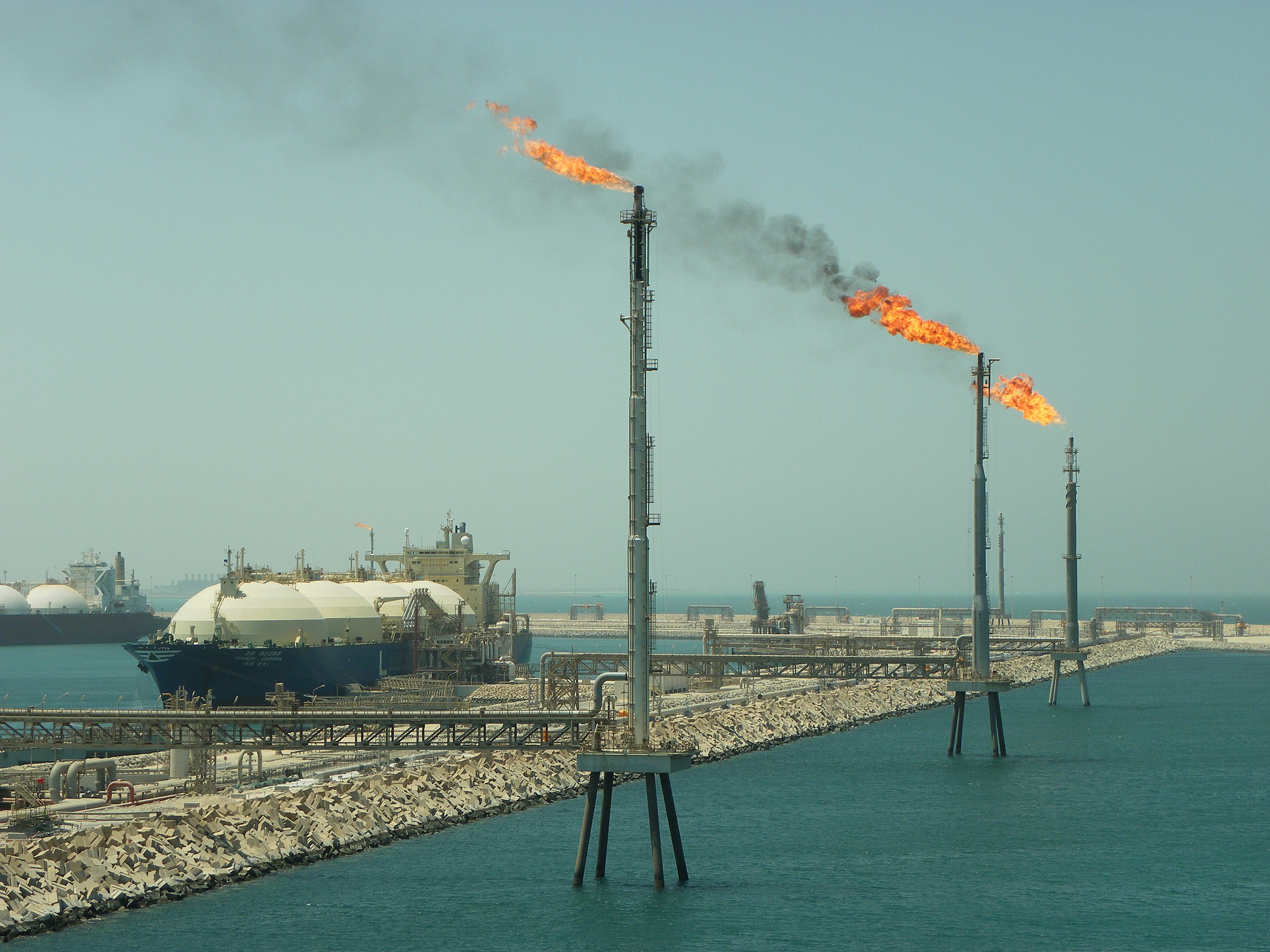
Qatar's Ras Laffan LNG terminal. Source: Matthew Smith / Creative Commons / CC-BY-2.0
Trump made the ceasefire conditional on the reopening of the Strait of Hormuz, which Tehran agreed to, according to Iranian Foreign Minister Abbas Araghchi. Araghchi also said, according to AFP, that passage through the Strait of Hormuz would be allowed over the next two weeks "in coordination with the Iranian armed forces and with due consideration for technical limitations".
Analysts say, however, that it is unlikely all oil and LNG tankers in the Strait of Hormuz will be able to pass through over the next two weeks. Iranian attacks in March also caused significant damage to QatarEnergy's LNG production facilities.
"A ceasefire agreement will not resolve this situation. With around 17 percent of Qatar's LNG production destroyed—and Qatar itself saying repairs will take three to five years—there is no longer any prospect of a global LNG surplus in the coming years," said Arne Lohmann Rasmussen, an analyst at Global Risk Management.
Translation disclaimer
This article is a machine translation of the Czech original and has not yet been fully reviewed. In case of any doubt, please refer to the Czech version.
Sdílejte článek prostřednictvím:
You might also like
3 October 2026, 13:01
3 October 2026, 07:43
2 October 2026, 21:55