Nord Stream 2 in reverse – Germany’s trump card against Russia
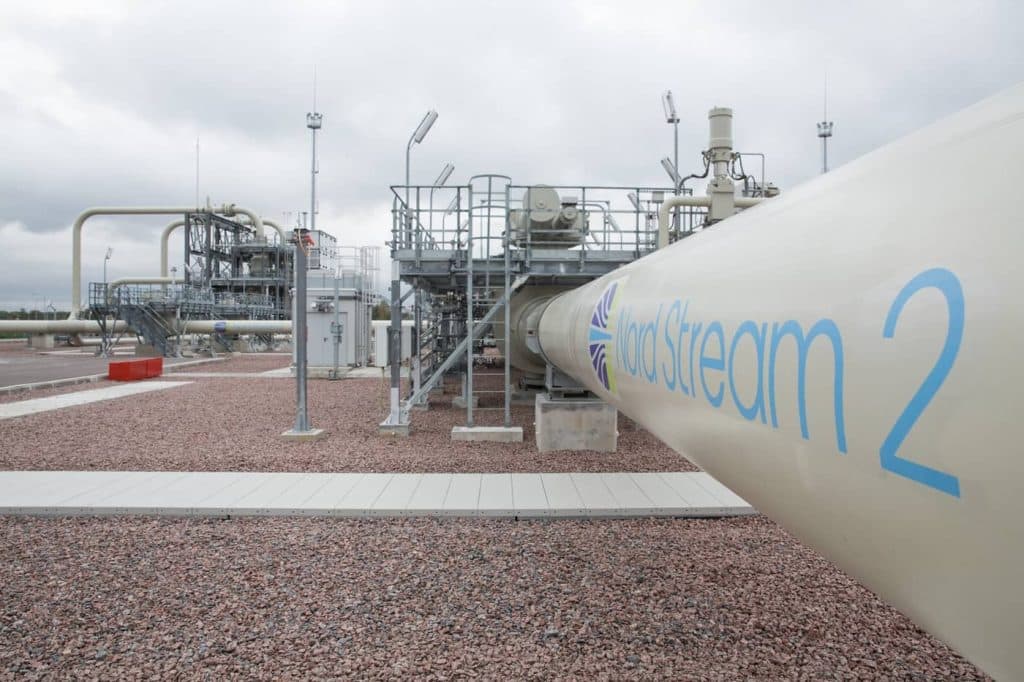
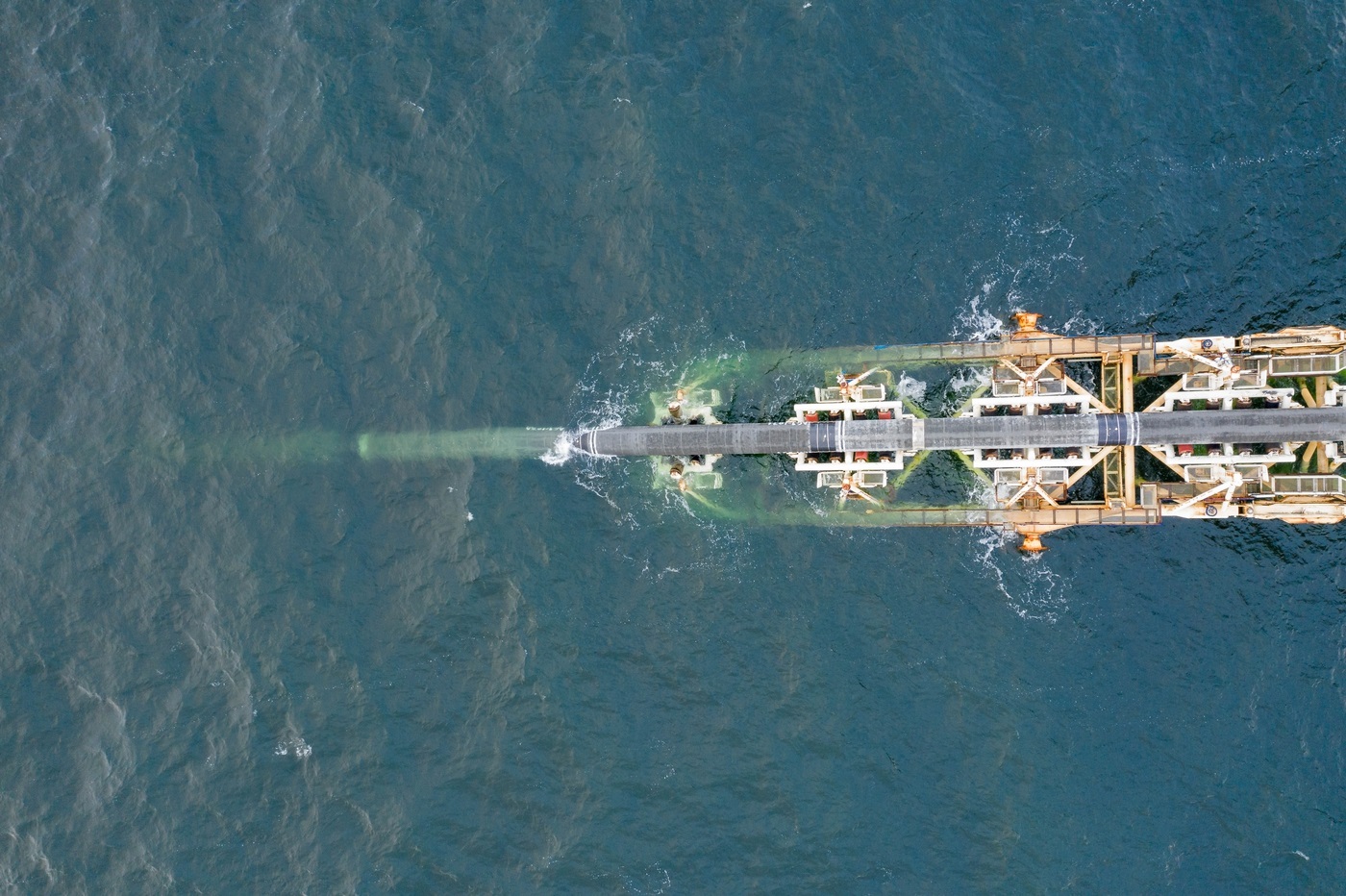
Germany is supporting Russia’s geopolitical goals. This is one of the most frequent criticisms levelled at Berlin by critics of the Nord Stream 2 gas pipeline, which is currently under construction. Nord Stream 2 is intended to double the capacity of the existing route running directly to Germany under the Baltic Sea. Russia will strengthen its role as a supplier of a strategic commodity to Europe and will no longer have to rely on transit through countries such as Ukraine and Poland, with which it has highly strained relations.
Why are the Germans doing this? And why, unlike some other Europeans, are they not concerned that from 2020, Nord Stream 2 will give Russia a “big stick” enabling it to intensify political or economic pressure on its customers? A proper analysis of the views of German supporters of the offshore pipeline requires taking one basic fact into account: these politicians, managers and analysts do not feel at all that Berlin is holding the shorter end of the rope in its relationship with Russia. Quite the contrary.
For example, German Foreign Minister Heiko Maas reiterates Berlin’s long-standing position that Nord Stream 2 is primarily a commercial project. At the same time, however, he says that it allows Germany to maintain political influence in its relationship with Moscow, and suggests that Berlin can pressure Russia not to take its confrontational policy towards Ukraine too far.
A Ukrainian compromise?
Chancellor Angela Merkel has already obtained assurances from President Vladimir Putin that Russia will not stop using the transit pipeline through Ukraine entirely even after Nord Stream 2 is completed. For Kyiv, the fees for transporting the commodity are an especially important source of income in the current situation of a country in disarray and a struggling economy.
The question, of course, remains how much gas will actually flow through Ukraine and whether this will be sufficient even to maintain the pipeline, which according to numerous reports is certainly not in the best condition. One way or another, Berlin sees Germany’s efforts to find a compromise on Ukrainian transit as a way to save face.
This is probably also how Annegret Kramp-Karrenbauer, the new leader of the CDU, the strongest Christian Democratic party, sees it. The media have so far counted her among Nord Stream 2’s opponents. In her view, one option is to reduce the volume of gas flowing through the Baltic pipeline. It should be added that the new pipelines will have a capacity of 55 billion cubic metres per year, meaning that Nord Stream 1 and 2 together will be able to transport 110 billion cubic metres – the larger part of Russian exports to Europe, including Turkey, which is supplied by another Russian pipeline.
Germany takes the lead
Foreign Minister Maas also argues that if Berlin withdrew its political support, Gazprom would still complete Nord Stream 2 with the backing of German and other European companies, while the German government would merely lose its influence. This is a debatable argument, but it demonstrates Berlin’s determination to take the lead in this matter, both within the European Union (where it faces opposition from the European Commission, Poland and the Baltic states) and, ultimately, in relations with Russia.
Many in the Kremlin apparently realise that fractured relations with the West bode nothing good for the Russian economy, and that cooperation with Germany – underpinned by gas supplies – offers at least some hope in this respect. This naturally strengthens Germany’s position towards Russia.
Germany’s accommodating approach to the pipeline – which is more or less cross-party – is further illustrated by the words of opposition Green MP and former environment minister Jürgen Trittin, who says that Russian gas supplies to Germany mean mutual dependence. It would be easier for Europe to find alternative suppliers of the commodity if necessary than for Russia to find other customers.
Without the risk of friction
Although this may seem absurd to Poles and other Europeans, Germans find the argument that Nord Stream 2 will strengthen overall energy security quite logical. German political scientist Josef Janning argues that while the new pipeline will not increase overall energy dependence on Russia, Germany will be far less exposed to political friction between Russia and transit countries.
Not only in Germany but elsewhere in Europe, there remains deep distrust of Ukraine, even though it is often concealed behind official statements about the need to help a country torn by conflict with Russia. (This is not widely discussed, but the situation is similar in the Czech Republic.) Whether justified or not, Ukraine is still associated in many people’s minds with an oligarchic system, corruption and a dysfunctional state that cannot be relied upon to maintain its gas pipeline network properly.
On the other hand, it is clear that without some compromise on Ukrainian transit, the West’s overall policy towards the country and support for its economy would lose all meaning.
Reliable Russians?
By contrast, German energy industry players see Russia as a fundamentally reliable partner that has always sought to fulfil its commitments on commodity supplies. Here, however, the attitude of smaller Central European states is often entirely different – Russia has always been careful not to alienate Germany as its main European partner, whereas other countries were evidently not such a priority.
Deutsche Bank analyst Josef Auer notes that Russian gas supplies have flowed to Western Europe uninterrupted for more than 40 years, including during the Iron Curtain era. He also points to the extensive liberalisation of the European gas market, which can potentially source the commodity from a range of suppliers.
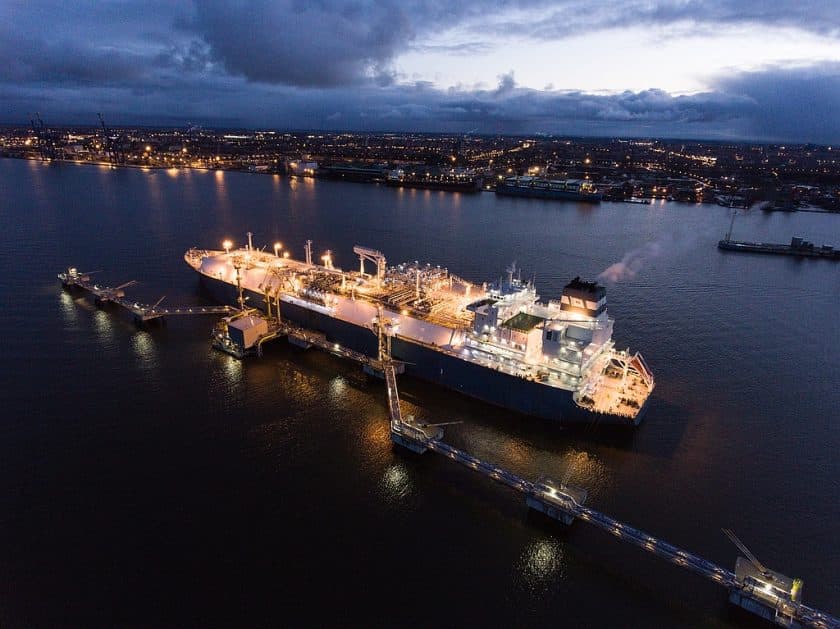
The LNG market has become global to some extent – for example, the United States has allowed gas exports without requiring their precise destination to be specified in advance. (Gas prices on different continents still differ, however.) And the European Union is succeeding in strengthening various gas pipeline interconnections. Overall gas infrastructure here looks quite solid – there are relatively many transport routes, storage facilities and LNG terminals, with more being built.
Cheaper gas
The fact is that Russia’s Gazprom has had to adapt to growing competition in the European market. Auer notes that this gas giant no longer has a complete monopoly on gas exports even within Russia itself – other Russian companies are becoming involved in LNG exports.
On the other hand, Nord Stream 2 will give Russia a cheaper transport route than its competitors – one without transit fees. Even under competitive pressure, it will have every prerequisite to hold its own in a price war. Relatively lower gas prices will then benefit European consumers, which is another key argument of German supporters of Nord Stream 2.
A study by German research company EWI concluded that Nord Stream 2 will reduce the amount of LNG that needs to be imported into Europe, and that this lower demand will also result in cheaper LNG for European consumers. The study assumes various scenarios under which, in 2020 following completion of the Baltic pipeline, wholesale gas prices in Europe will be 13 – 32% lower than if no new Nord Stream 2 pipes were built. Consumers in all EU countries would thus reportedly save EUR 8-24 billion.
For Germans themselves, however, this economic benefit is greatest – the Federal Republic will become a hub, a gas crossroads, and will benefit the most from the expanded Nord Stream transport route. In German eyes, the need for the new pipeline is further reinforced by the expectation that gas-fired power plants will play a more significant role given the gradual nuclear phase-out and calls to scale back coal-fired power generation.
The Czech link
However, this is not only about Germany. The oEnergetice website has previously noted that the actual positions of Germans, Austrians and Czechs are similar in many respects when it comes to Nord Stream 2, although not everyone makes them known loudly. German supporters of the Baltic pipeline also argue that it will ultimately benefit Central and Eastern Europe as well.
For example, Josef Auer disagrees with objections that Nord Stream 2 will lead to a division of the Eastern and Western European markets. He notes that once the connecting EUGAL pipeline to the Czech border is completed, up to 50 billion cubic metres of gas can continue eastward through the Czech Republic. It should be added, however, that much of this commodity will flow through the Czech Republic and Slovakia to the major Austrian gas hub at Baumgarten, and perhaps onwards to Italy.
So far, everything indicates that Nord Stream 2 is becoming a reality, construction is continuing, and critics’ voices from Germany itself, other European countries or the United States cannot alter Berlin’s clearly set course. Especially in a situation where the voices of the Baltic pipeline’s strongest critics are associated with their own narrow interests. Many Germans, for instance, have no doubt that President Donald Trump is primarily advancing the interests of US LNG exporters. Donald Trump’s role as the leading opponent of Nord Stream 2 and his criticism of Germany’s relations with Russia are particularly distinctive – people in his circle are now facing prosecution over their ties to Russia, and it cannot be ruled out that US investigators will also focus on the president himself in this regard.
The author is a commentator for All for Power magazine.
Lead photo source: © Nord Stream 2 / Axel Schmidt
Translation disclaimer
This article is a machine translation of the Czech original and has not yet been fully reviewed. In case of any doubt, please refer to the Czech version.