25 September 2026, 09:51
Loading...
Sharp rise in gas consumption and domestic biomethane production. NET4GAS publishes 10-year plan

Jan Budín
25 July 2025, 06:24
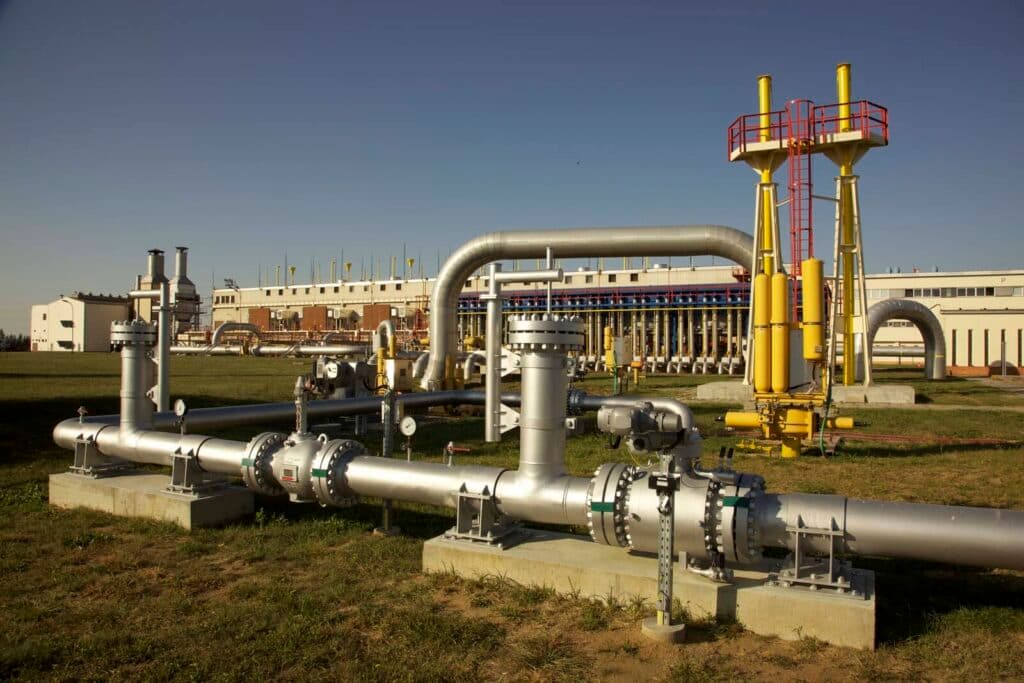
NET4GAS, the operator of the Czech gas transmission system, expects natural gas consumption in the Czech Republic to rise relatively sharply over the next 10 years, mainly as a result of the planned shift away from coal use in electricity and heat generation. The increase in gas consumption is expected to be partly met by the development of domestic biomethane production. Preparations for the expansion of hydrogen use are also fully underway. This follows from the draft Ten-Year Network Development Plan for the 2026 to 2035 period.
According to NET4GAS, natural gas consumption in the Czech Republic should rise to 110 TWh by 2035, representing an increase of almost 50 % compared with 2024. However, as NET4GAS states in the published document, natural gas consumption in the Czech Republic fell significantly between 2022 and 2024, initially as a result of the Covid pandemic and subsequently due to the energy crisis. Between 2016 and 2020, consumption stood at around 90 TWh, and in 2021 it even exceeded 100 TWh.
NET4GAS bases its outlook on a 2024 report by Czech market operator OTE, a.s. According to the report, natural gas consumption in district heating plants and power plants will grow in particular as a result of the shift away from coal. Moderate growth is also expected in the transport segment. By contrast, consumption in the household segment is expected to gradually decline.
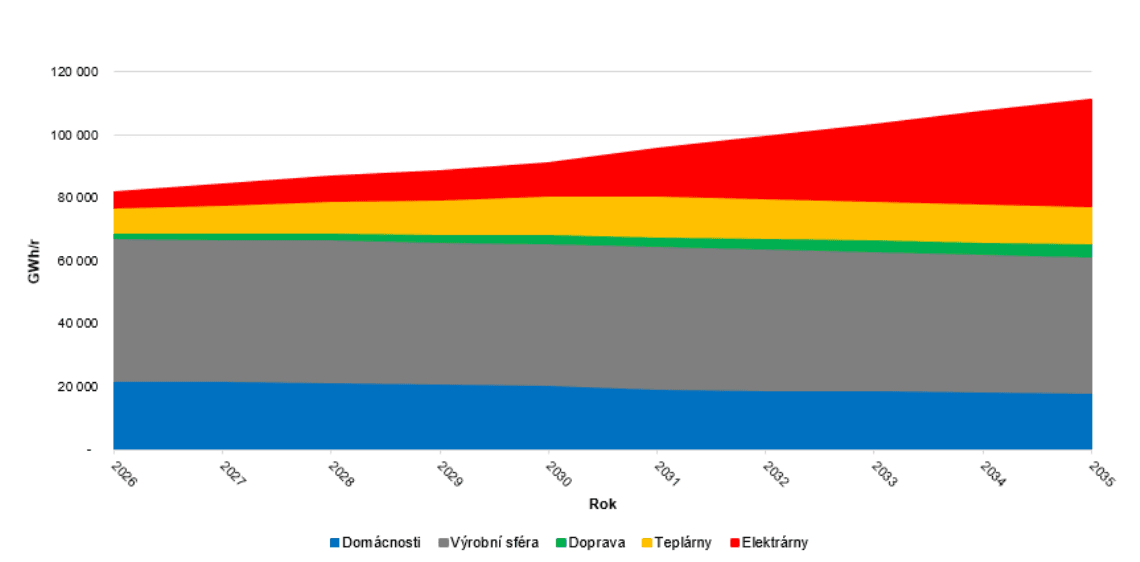
Estimated development of annual natural gas consumption in the Czech Republic. Source: NET4GAS
Rising consumption to be partly covered by biomethane production
The Czech gas transmission system operator noted in its draft ten-year plan that the Czech Republic has relatively small domestic natural gas resources, accounting for approximately 1 to 2 % of annual domestic gas consumption. No significant change is expected in this area in the future either.
One area expected to see relatively rapid development in the coming years is domestic biomethane production, which could increase from last year's 73 GWh supplied by 10 production facilities to as much as 8 110 GWh supplied by up to 250 facilities in 2035.
However, NET4GAS noted that only 25 connection agreements have currently been registered under this estimate, with potential total biomethane production of 816 GWh/year. The stated potential may therefore not be realised at all.
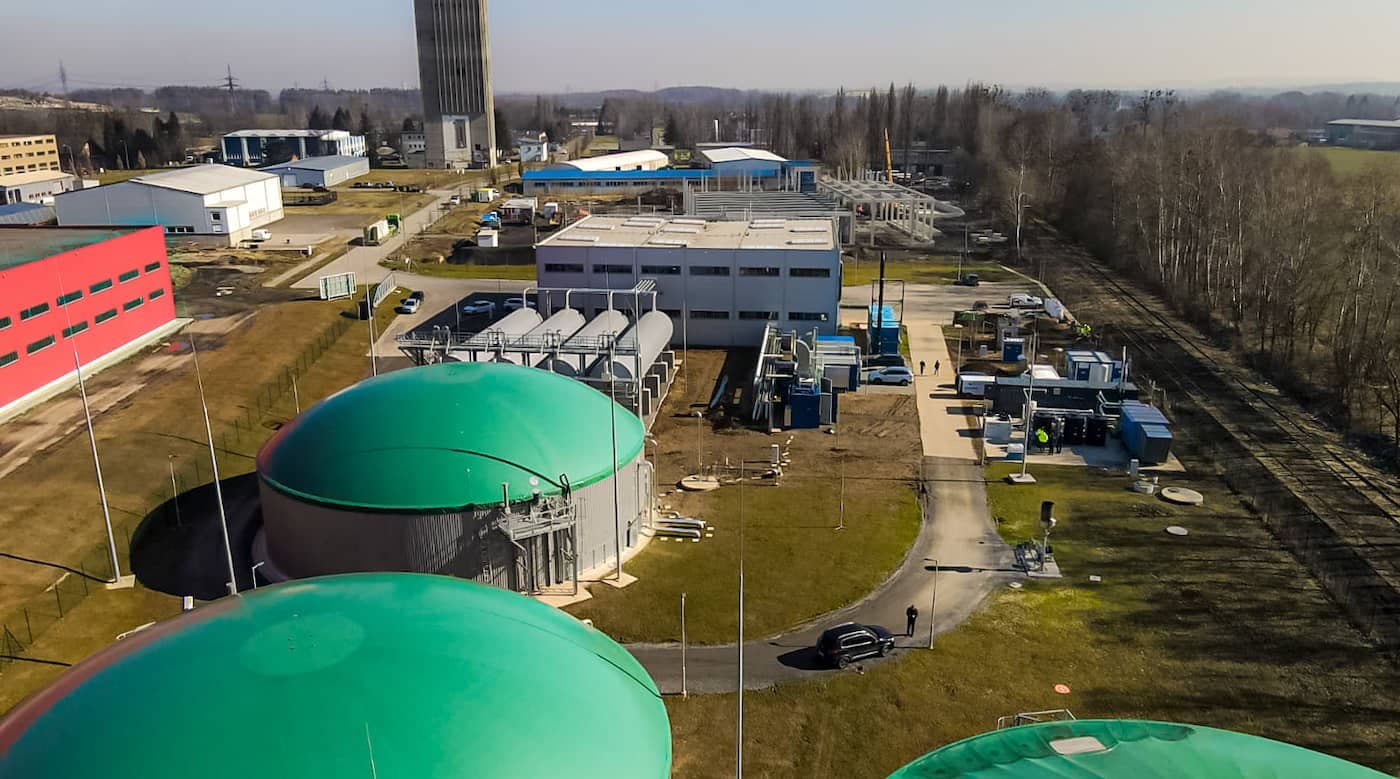
Biomethane production facility, Horní Suchá. Source: GasNet
Preparing for hydrogen
NET4GAS also reported in its published plan on preparations for the expansion of hydrogen use. Hydrogen is currently produced almost exclusively from fossil fuels, in the form of so-called grey hydrogen. The largest producer is Unipetrol, which produces it through partial oxidation of oil residues, steam reforming and from an ethylene unit, and primarily consumes it for ammonia production.
According to the Czech Hydrogen Technology Platform HYTEP, the potential for producing so-called green hydrogen is relatively small, and hydrogen produced in the Czech Republic is expected to be more expensive than imported hydrogen.
"Hydrogen is consumed in the Czech Republic primarily in the chemical industry, as a feedstock and intermediate product for the production of ammonia, aniline or in refineries. The Czech Republic consumed approximately 4 495 GWh of hydrogen (135 thousand tonnes) in 2024. However, this is primarily hydrogen produced from fossil sources without the use of CCU/CCS, which is expected to be replaced later by renewable and low-carbon hydrogen," NET4GAS stated, noting that the Czech Republic's hydrogen strategy assumes that hydrogen consumption will increase several-fold in the future and expand into other sectors of the economy.
This is why, in the first phase, the gas system operator is focusing on the possibilities of blending hydrogen into natural gas, while also working on the development of dedicated hydrogen infrastructure that should enable the import and transmission of hydrogen across the Czech Republic.
Participation in international hydrogen initiatives is key, as they aim to develop specific hydrogen corridors for the future import of hydrogen into Central Europe. Four of these are expected to pass through the Czech Republic.
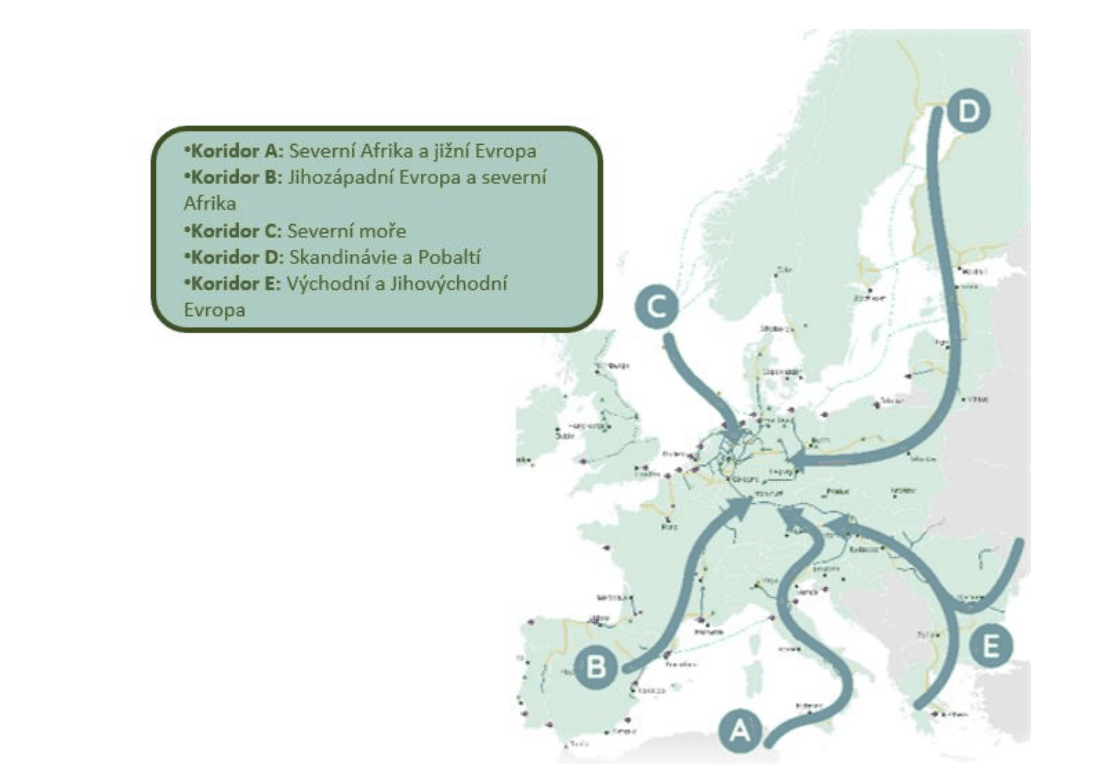
Hydrogen corridors for future hydrogen imports into Central Europe. Source: NET4GAS
Preparations are also fully underway for dedicated hydrogen transmission infrastructure in the Czech Republic, comprising the ZÁPAD, SEVER and JIH projects.
"The implementation of these projects would create the Czech hydrogen backbone infrastructure (CZH2B) and enable hydrogen transit through the Czech Republic, hydrogen imports into the Czech Republic, and efficient hydrogen transmission within the Czech Republic from domestic producers to consumers along the routes of pipelines adapted for hydrogen transport," NET4GAS stated.
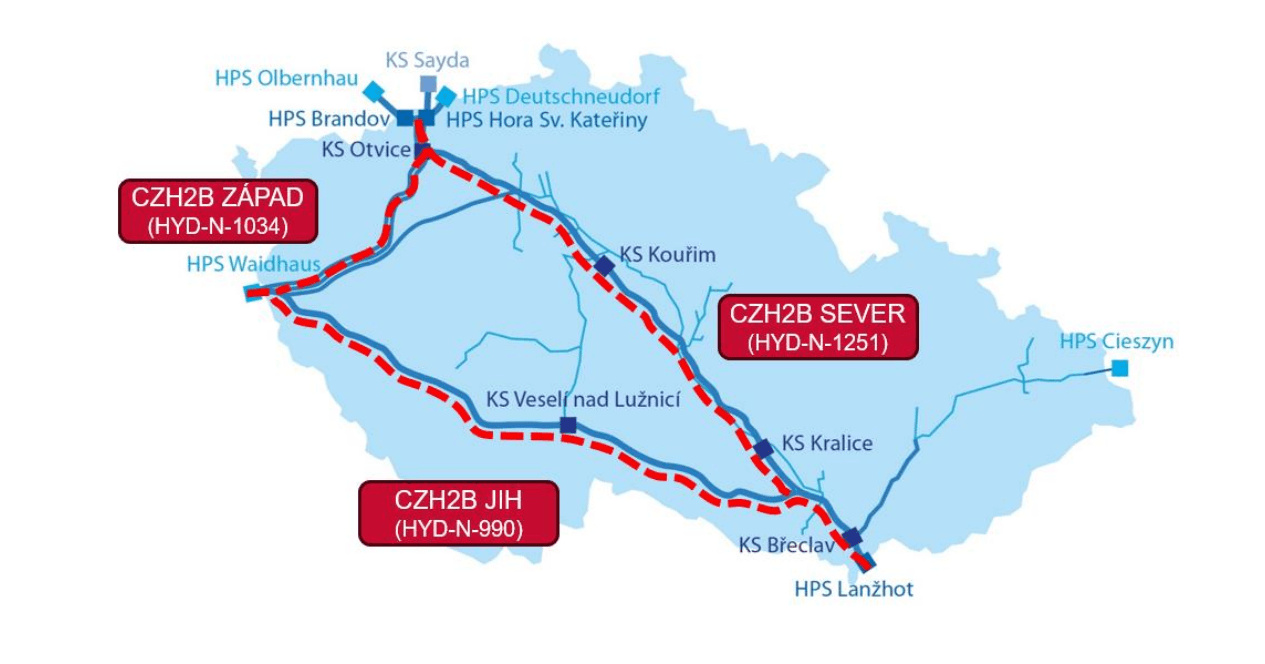
Czech hydrogen backbone infrastructure projects. Source: NET4GAS
The ZÁPAD and JIH projects are included in the currently valid list of Projects of Common Interest and Projects of Mutual Interest, which includes key cross-border infrastructure projects for Europe. However, NET4GAS reported that it is considering deprioritising the JIH project in favour of developing the remaining two hydrogen infrastructure projects.
Translation disclaimer
This article is a machine translation of the Czech original and has not yet been fully reviewed. In case of any doubt, please refer to the Czech version.
Sdílejte článek prostřednictvím:
You might also like
24 September 2026, 11:23

24 September 2026, 10:30
24 September 2026, 06:56