9 October 2026, 06:22
Loading...
State-owned Diamo plans to extract gas at former mine near Frenštát using controversial method
Ekonews.cz
1 April 2024, 10:53
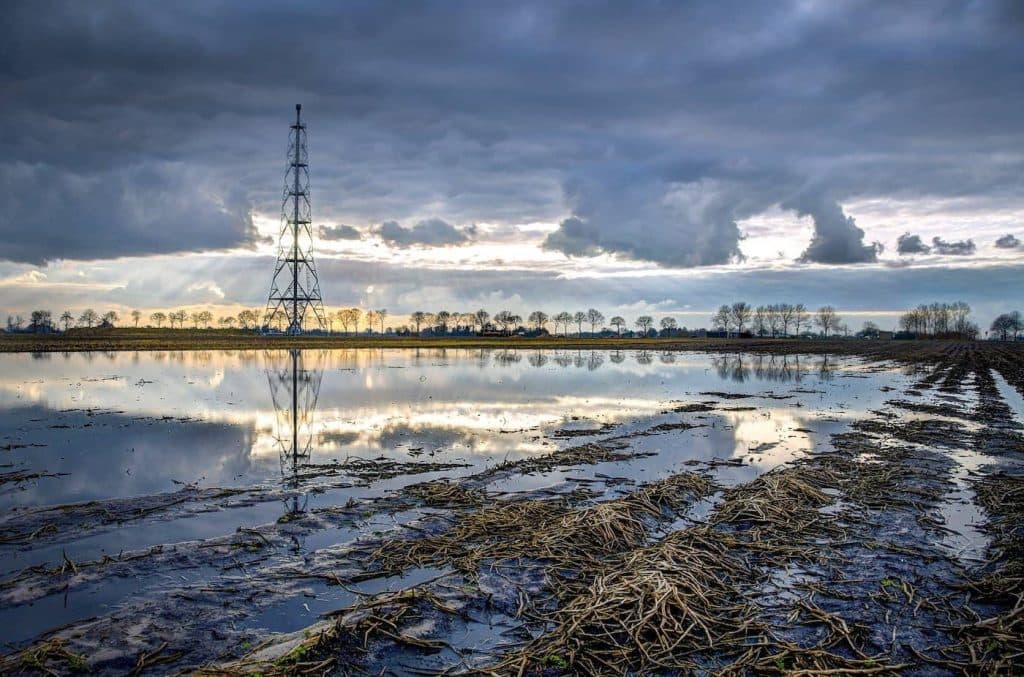
State-owned company Diamo plans to extract gas at the site of the former Frenštát black coal mine in the Beskydy foothills. It wants to pump a solution of unknown composition underground through boreholes at high pressure. Czechia previously “froze” the use of this environmentally risky method. Municipalities learned of Diamo’s plan by chance.
Simona Janíková’s article was originally published by independent regional website Okraj.cz.Two massive headframes, surrounded by family homes, are the last reminders of black coal mining in Trojanovice near Frenštát. In mid-August last year, the last symbolic pit tub was brought up from the shaft – mining never took place at the Frenštát mine, so there was no coal-filled wagon to bid farewell to the pit.
Finance Minister Zbyněk Stanjura (ODS) and Environment Minister Petr Hladík (KDU-ČSL) also attended the “mourning” ceremony. Locals, who had long fought against coal extraction, breathed a sigh of relief. But even then, it was clear that the state had not abandoned plans for extraction beneath the Beskydy mountains.
Instead of coal, it now wants to extract gas from underground. However, the method it intends to use to obtain the mineral resource poses a threat to the environment.
Doubts over the size of reserves
State-owned company Diamo approached the mining authority as early as June last year with a plan to establish a new mining area for extracting gas from coal seams near Frenštát. It sees the extraction and sale of combustible natural gas as one way of funding its operations.
“In 2020, the government tasked the company with finding ways to reduce its reliance on funds from the state budget, including through commercial activities. Proceeds from gas sales will be used for Diamo’s operations,” explains Marek Vošahlík, head of the press department at the Ministry of Industry and Trade, which established Diamo.
In 2022, the company received CZK 5.2 billion in state subsidies, the same amount as in the previous year. Diamo’s turnover in 2022 was CZK 6.1 billion, compared with CZK 5.5 billion a year earlier.
The state-owned company primarily deals with remedying the consequences of black coal mining, reclaiming spoil heaps, pumping mine water and degassing mines. Coal mining will gradually end in Czechia, however, and Diamo must find new revenues. According to Vošahlík, it also envisages commercial methane extraction in the already mothballed Staříč, ČSA, Darkov and Lazy mines in the Karviná area.
The company does not deny its economic interest in gas extraction, while also referring to an update of the state’s energy policy – since January this year, combustible natural gas has been a critical mineral. Its deposits have gained strategic importance, and its prospecting, exploration and extraction are in the public interest under an amendment to the Mining Act.
“Given the current situation in the Czech Republic and worldwide, we believe that it is precisely a state-owned company that can ensure the proper management of this reserved mineral in line with the public interest and the interests of the Czech Republic,” says Diamo spokesperson Tomáš Indrei. Under Diamo’s proposal, the resource could be extracted from 2030 for at least 30 years.
Dan Štěpánský, head of the geoenergy department at the Czech Geological Survey, believes Diamo is taking on a major challenge. “Gas extraction is demanding in terms of both material and human resources and carries major risks. In general, it takes decades to build a successful company in this field. From this perspective, and given that potential extraction volumes at the site are limited, it is unlikely that the state will engage in extraction here in the near future,” he says.
Indrei claims that the large coal reserves remaining underground near Frenštát are linked to large reserves of combustible natural gas. Diamo estimates these at ten billion cubic metres, making the site the largest mining area in the country.
Štěpánský is sceptical of the figure. “Calculations of mineral resource reserves are generally not publicly available. Any debate about the size of reserves and extraction volumes is based on analogies with surrounding sites. From this, I can assume that such a volume (as estimated by Diamo – editor’s note) of recoverable reserves for a single mining area is unlikely,” the geologist says.
For comparison, in 2017 the extraction company Moravské naftové doly found a deposit of around 80 million cubic metres of gas underground in the Hodonín area, and it was described as a huge find. Around 200 million cubic metres of gas are extracted annually in Czechia, while roughly seven billion cubic metres are imported.
Controversial fracking
When Diamo took over the Frenštát mine from miner OKD for closure three years ago, it also acquired the mining area for coal extraction. It now wants to designate a mining area for gas extraction across its entire extent, covering more than 60 square kilometres and extending into the territory of 11 municipalities and the Beskydy Protected Landscape Area.
The protected landscape area administration is aware of the state’s plan. “I found out from the official notice board in Frenštát. When I asked the mining authority why the protected landscape area administration was not a party to the proceedings, the inspector admitted that he had forgotten about us,” says geologist František Šulgan. The administration has no further information on where the boreholes would be located or how Diamo intends to extract the gas from underground. It therefore cannot comment on the impact of extraction on nature.
Diamo, specifically its Darkov plant, which is preparing the extraction, contacted some affected municipalities in December last year to request their consent for the new mining area. In its request, it states that the gas would be extracted by suction through ten existing surface boreholes. The state drilled these while surveying gas reserves in the last century. But when the leadership of Frenštát pod Radhoštěm asked for details of the extraction method, Diamo wrote to the town that it intended to obtain the gas through hydraulic fracturing, or fracking.
The company first wants to establish a drilling site and bring in a drilling rig. If gas production proves sufficient, “stimulation”, meaning hydraulic fracturing, may not be needed, according to Diamo. But three paragraphs later, the company writes: “The drilling work is intended to enable stimulation of the coal seams and their surroundings, which essentially means hydraulic fracturing using water and sand injected under pressure.”
“Put simply, it is a method in which various solutions are forced into a borehole under pressure, causing the coal seam to fracture and methane to be released,” describes Dan Štěpánský of the Czech Geological Survey.
The solution is water mixed with sand. Because it does not form a compact mass, chemicals are added to the mixture to bind it into a homogeneous fluid. According to environmentalist Jiří Malík, there are up to 700 types of such fluids, and mixtures have included napalm in the past. “Petroleum-based substances or biocides and other substances are used, which are often carcinogenic,” says Malík, who previously campaigned against fracking in the Trutnov area.
Around ten years ago, Czechia “froze” both exploration and extraction using fracking on its territory. At the time, hydraulic fracturing was the subject of a broad public debate in Europe. According to Štěpánský, this extraction method, used mainly in the US to obtain gas from shale rock, poses risks, particularly to the environment.
“The liquid pumped underground can flow uncontrolled through tectonic fissures underground for years, potentially going anywhere and threatening groundwater. A single fissure can destroy water supplies for, say, 50,000 people. The storage or disposal of chemicals and water brought back out of the borehole must also be addressed. Radioactivity also comes to the surface with them, and gas can leak into the atmosphere. For example, at the largest deposits in the US, up to 12.5% of methane escapes, according to the US National Oceanic and Atmospheric Administration,” Malík says, adding that neither exploration nor extraction using fracking should be permitted.
Ten years ago, the environmentalist drafted three laws to ban fracking, none of which passed. However, as part of its raw materials policy, Czechia then adopted the position that shale gas reserves, whose extraction by fracking was being considered at the time, were small and that the state would therefore not use this method.
Foreign scientists have found that fracking causes local earthquakes. These can reach magnitude three on the ten-point Richter scale. People may feel such quakes, but they do not cause damage. For this reason, fracking is not supported by, for example, the United Kingdom or the Netherlands. According to scientists at Duke University in North Carolina, US, gas enters groundwater during fracking, creating a risk of explosions.
“Major meta-studies have been conducted in the United States which found that the number of people with brain cancer rises sharply in areas where fracking takes place,” Malík adds. The 2010 US documentary GasLand about fracking shows that water at an extraction site can be so saturated with methane that it burns when a match is struck.
Industry ministry unaware of fracking
The Ministry of Industry and Trade says it has not changed its position on fracking. “The government previously stated that it does not envisage using this method at unconventional natural gas deposits in Czechia,” wrote Marek Vošahlík from the press department.
Vošahlík also denied that the ministry had information that the state-owned company was considering hydraulic fracturing as an extraction method. However, the state-owned company’s spokesperson confirmed this to the editorial team. “The method is specific to coal deposits. It should be stressed that the development of coal seam stimulation technology is continuing, and it is assumed that it may become more environmentally friendly,” says Indrei, adding that he cannot disclose further information because it is technological know-how that could put the company at a competitive disadvantage. According to him, the final extraction method is yet to be developed.
“It is true that attempts have been made to frack without chemicals. But then extraction may not be as effective. If they claim there are ten billion cubic metres of gas there, they must use the most aggressive chemical mixture that will allow them the highest recovery rate,” says Malík. Experience abroad shows, he says, that the method is also not very efficient, because after one year of extraction some deposits do not even retain half their original productivity. After pressurisation, methane escapes from underground through other possible pathways.
According to Bohuslav Machek, spokesperson for the Mining Authority, Diamo describes gas extraction by suction in its application to establish a new mining area. It says nothing about hydraulic fracturing, so the authority cannot comment on it.
Frenštát pod Radhoštěm commissioned an expert opinion on Diamo’s plan from Professor Petr Bujok of the University of Mining and Technology after learning from Diamo in early February that it intended to use fracking.
Bujok writes in the opinion that current knowledge indicates hydraulic fracturing is the most suitable method for obtaining gas from coal seams. For extraction to be used commercially, five to ten new boreholes would need to be drilled or the same number of non-decommissioned surface boreholes repaired, he says.
Regarding the environmental impact of extraction, Bujok writes about creating reservoirs for fracturing fluids that would return to the surface through the boreholes, noise and light pollution during borehole drilling and fracking itself, and disturbance to wildlife. “Given the geological structure of the area of interest and the fact that fracturing work would be carried out in the Carboniferous massif, the risk of affecting drinking water is entirely negligible, unrealistic,” Bujok writes. He sees technical defects or accidents as the only risk associated with fracking.
For Frenštát, it was important that the opinion found exploratory fracking had been tested in the Beskydy in the 1990s and assessed as insufficient. At the same time, the expert confirmed that the technology is not used commercially anywhere in Europe. “In other words, we are to return to something that demonstrably failed here once before,” says Frenštát pod Radhoštěm councillor Roman Jurík (Change for Frenštát).
They learned of the extraction by chance
The mining area where Diamo wants to extract gas extends into the territory of Trojanovice, Kunčice pod Ondřejníkem, Frenštát pod Radhoštěm, Čeladná, Kozlovice, Pstruží, Rožnov pod Radhoštěm, Tichá na Moravě, Bordovice, Veřovice and Lhotka u Frýdku-Místku. Family and apartment buildings, roads and sports grounds now stand above the potential mining area; a stream flows through it, and it also includes a pond and a cemetery.
The mining area would cover the largest share in Trojanovice, up to two-thirds of the municipality’s total territory. “In the past, the municipality promised it would discuss gas if the mining area for coal were cancelled. We intend to keep that promise,” says Mayor Jiří Novotný (independent, Our Beskydy), who, together with other local mayors, had long actively fought coal miners’ plans.
No application from Diamo has yet arrived in Kunčice pod Ondřejníkem, although the mining area would cover around one-third of its cadastral territory. “We fundamentally disagree with gas extraction,” responded Mayor Jiří Mikala (Health Sport Prosperity).
Frenštát pod Radhoštěm, beneath which a significant part of the mining area would lie, has also opposed Diamo’s plan. At the end of February, the town council unanimously rejected the company’s application for consent to establish a new mining area. According to town councillor Jurík, this was the culmination of very poor communication by Diamo.
“We learned completely by chance last July at the mining authority that Diamo wanted a new mining area for gas extraction. It was an absolute shock to us. Diamo did not inform us of its plan at all and made no effort to meet with us or discuss the plan,” Jurík says. Councillors considered the first application sent by the company to the town last December insufficient, so they requested further supporting documents.
Councillor Jurík says the town is seeking to approach Diamo’s plan with maximum responsibility. “It is necessary to realise that we are talking about highly explosive gas. As the town’s leadership, we must take all safety risks into account,” he says.
“If the state is interested in reserving a mining area for gas as part of its comprehensive strategy to ensure energy security, this exploration should be carried out by the Czech Geological Survey. We consider the current manner of communication by the state-owned company Diamo, Darkov plant, to be entirely inadequate,” Jurík adds.
However, the town’s rejection of the proposed mining area does not mean the state-owned company’s plan has fallen through. “We do not want to proceed against the opposition of municipalities; we are interested in reaching a joint agreement,” Diamo spokesperson Indrei seeks to calm the situation.
At the end of February, Frenštát councillors invited company representatives to a working seminar where they discussed the extraction. Zdeněk Hrůzek from the Darkov plant’s Department of Closure Preparation and Legislation explained the plan on behalf of the state-owned company. According to him, Diamo originally wanted simply to “convert” the mining area for coal into a mining area for gas. However, the Mining Authority did not allow this.
Hrůzek also said the company does not yet know whether it will use existing boreholes or have to drill new ones, and where. “We are miners by origin; we will commission a study,” Hrůzek said. When Mayor Jan Rejman (Change for Frenštát) asked whether it would not be more appropriate to first prepare a study and only then negotiate with municipalities, Hrůzek replied that its results would not be available until the end of the year.
According to environmentalist Malík, fracking over such an area means creating a network of boreholes spaced 300 metres to three kilometres apart. If new boreholes are to be drilled, headframes must be erected above them for the drilling work.
Competitor also interested
Diamo is in a hurry. It needs to submit all documents missing from its application for the new mining area to the Mining Authority by the end of June. If it does not, the Mining Authority will halt the proceedings. A competitor has also become interested in gas near Frenštát.
The company Green Gas, which extracts this mineral resource in northern Moravia and Silesia, has expressed interest. According to the company’s director of mining and technical services, Petr Hemza, who represented the company at the aforementioned seminar in Frenštát, to which the town also invited him, Green Gas had been interested in gas extraction in the region since the 1990s. However, it had always been unsuccessful. Following the backfilling of the Frenštát mine, the company’s position is more favourable, he says.
Hemza said at the seminar that the company first wants to carry out exploration work to determine how much gas is underground and its quality. “We are talking about a depth of 600 metres below the surface; this is unrelated to deep seams,” he said according to the minutes, adding that the company owns six surface boreholes in the town’s territory. Any new boreholes are beyond the company’s economic considerations, according to Hemza.
By contrast, Zdeněk Hrůzek of Diamo said the company does not want to conduct exploratory drilling because it knows gas is underground. However, he acknowledged that the company has no experience with extracting the mineral resource and that it is uncertain whether it will be economically viable. “Europe does not extract much of this gas because coal permeability is not sufficient,” he explained, according to the minutes.
Green Gas head of communications Martina Laimarová confirmed the company’s interest in an exploration area for gas extraction as a preliminary step towards possible extraction. However, she declined to provide further information. “As this is a live matter that is still under consideration, we cannot prematurely provide any further details,” she wrote. According to Frenštát councillor Roman Jurík, the company withdrew its application for an opinion on the proposal to designate an exploration area shortly before the town council meeting at the end of February.
Green Gas states on its website that it extracts gas at seven deposits through 54 gas wells, and among other activities also degasses old mine workings in the Ostrava area. The company, owned by entrepreneurs Laurent Barrieux and Martin Vojta, also holds a certificate for an exclusive natural gas deposit covering the entire mining area Diamo now wants to establish.
Green Gas obtained the certificate from the Ministry of Environment. “It means that a natural gas deposit has been registered at the site, but no extraction rights are attached to this,” explains Štěpánský of the Czech Geological Survey.
In Čeladná, where the mining area would cover only a small part of the cadastral territory, they also want to invite Diamo to a public hearing. Mayor Pavol Lukša (TOP09) sees no problem with gas extraction. “If local people’s energy costs can be reduced by extracting domestic resources, that is appropriate. Diamo will certainly listen to citizens’ views. After all, the state backfilled its coal reserves, so it will undoubtedly have the final say in this matter as well,” Lukša said.
Other mayors did not want to comment on Diamo’s plan. All affected municipalities will address gas extraction jointly at the level of the Frenštátsko microregion.
Dismissal of Darkov management unrelated to gas
After Frenštát pod Radhoštěm began investigating its gas extraction plans and the town council rejected the proposal for a new mining area, the state-owned company dismissed the management of the Darkov plant, which had prepared everything. According to Diamo’s spokesperson, however, this is unrelated to gas extraction.
“At the end of last year, we announced a reorganisation within the company, under which seven plants will become four. At the beginning of the year, it became clear that the Darkov plant would merge with the Odra plant, which will be led by Rostislav Dudáš,” spokesperson Indrei explains. This allegedly changes nothing about the gas extraction plan.
Republished from EkoNews.cz, a website covering business and sustainability.
Translation disclaimer
This article is a machine translation of the Czech original and has not yet been fully reviewed. In case of any doubt, please refer to the Czech version.
Sdílejte článek prostřednictvím:
You might also like
8 October 2026, 10:05