3 October 2026, 13:01
Loading...
American tech companies turn to nuclear power

oEnergetice.cz, ČTK
15 June 2026, 20:04
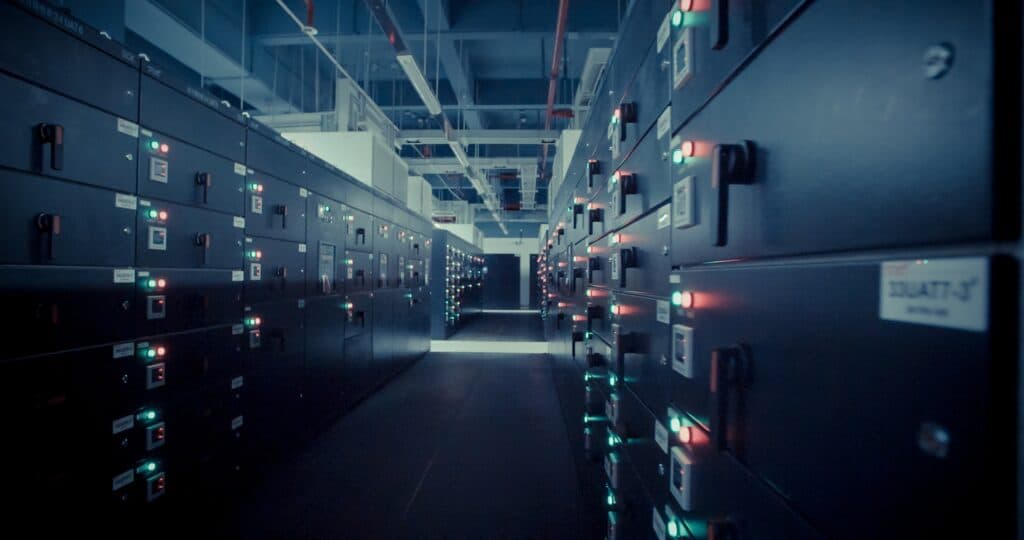
American tech companies, whose data centers are consuming ever more electricity, are turning to nuclear power in the hope of securing stable, carbon-free supplies. Newsweek magazine reported this on its website today, saying experts are talking about a nuclear renaissance.
American data centers consumed 183 terawatt-hours of electricity last year, more than the annual consumption of the state of Ohio, which has 12 million residents. The International Energy Agency (IEA) says that as artificial intelligence (AI) grows more powerful, electricity demand is increasing further, by 15 to 20 percent a year, putting considerable strain on the American power grid.
The North American Electric Reliability Corporation (NERC) warns that large parts of North America face a risk of electricity shortages, particularly in the PJM transmission system area. It supplies 13 US states and the capital, Washington.
American tech giants are increasingly turning to nuclear power in an effort to meet electricity demand. John Moura of NERC told Newsweek that extending the operating lives of existing reactors and restarting those that have been shut down could be advantageous, since much of the infrastructure is already in place.
Microsoft and OpenAI have agreements to open large-scale data centers in Ohio. Microsoft has also focused on Illinois, while OpenAI is building another center in Ohio in partnership with Oracle, Blackstone and Related Digital.
Microsoft, which is headquartered in Redmond, Washington, has already signed an agreement with Constellation Energy, the largest US supplier of nuclear power. Microsoft has pledged to invest more than $1.5 billion (CZK 31.2 billion) in restarting the Three Mile Island nuclear power plant in Pennsylvania. The US Department of Energy will support the move with a federal loan of $1 billion (CZK 20.8 billion). Three Mile Island was the site of a serious accident in 1979. The damaged second reactor has been shut down ever since, while the first reactor operated until 2019. Meta has also signed a 20-year power purchase agreement with Constellation Energy.
Newsweek noted that the US government is also supporting the development of nuclear power through small modular reactors. The US and other countries hope these reactors will provide cheaper energy. Small modular reactors are designed for mass production in factories, which should make their deployment cheaper and faster.
Google has already signed an agreement with nuclear company Kairos Power to purchase electricity from its small modular reactors. Newsweek also reported that tech companies are investing in startups working on both nuclear fission and nuclear fusion.
Translation disclaimer
This article is a machine translation of the Czech original and has not yet been fully reviewed. In case of any doubt, please refer to the Czech version.
Sdílejte článek prostřednictvím:
You might also like
3 October 2026, 07:43

2 October 2026, 21:55

2 October 2026, 15:14