Argentina’s president seeks to pave the way for privatization of the country’s nuclear sector

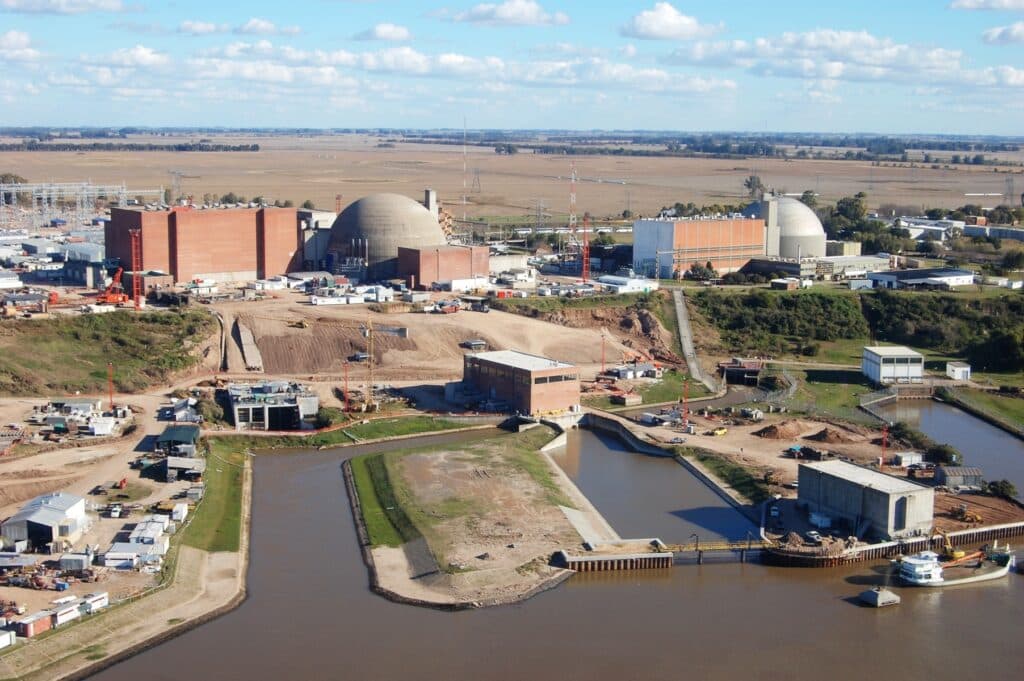
Argentina currently operates three nuclear units, which supply less than a tenth of the country’s electricity consumption. All of the units are state-owned and operated, but that could soon change. President Javier Milei is expected to sign a law that would allow the sector to be partially privatized.
Nuclear power has a long history in Argentina, where the first commercial nuclear reactor began operating in the mid-1970s. The country currently has three units with a total installed capacity of around 1.6 GW. These are the German-designed heavy-water reactors Atucha 1 and 2, and the CANDU-type Embalse unit. All are operated by the state-owned company Nucleoeléctrica Argentina S.A. (NA-SA).
Presidential spokesperson Manuel Adorni told Reuters this week that the government plans to sell a 44% stake in NA-SA in an international tender. A further 5% of the company’s share capital is to be set aside under an employee share ownership programme. The state therefore plans to retain a majority stake of 51% in the company.
“The aim is to encourage private investment in the construction of Argentina’s first modular reactor and to support uranium mining,” Adorni said, adding that all state-owned companies in the country could be privatized.
The government later said in a separate statement, according to Reuters, that private investment is key to expanding access to capital and diversifying risks. Private capital participation is also expected to ensure that NA-SA operates efficiently and competitively.
The plans have nevertheless drawn criticism from an association representing some employees of the National Atomic Energy Commission and the nuclear industry. It says the state should play a central role in overseeing the development and safety of nuclear power. Partial privatization would also lead to higher electricity prices, it says.
Translation disclaimer
This article is a machine translation of the Czech original and has not yet been fully reviewed. In case of any doubt, please refer to the Czech version.




