Bavarian premier expects changes in Germany and wants nuclear cooperation with Czechia

Germany can expect radical changes after the February elections if the conservative CDU/CSU alliance takes over the country’s leadership—not only in migration policy, but also in economic and energy policy. This was stated by Bavarian premier and Christian Social Union (CSU) leader Markus Söder in an interview published today by the business daily Handelsblatt.
The CDU/CSU alliance and its leader Friedrich Merz, who is seeking the post of chancellor in the upcoming snap parliamentary election on 23 February, are advocating a tough immigration policy. Merz has said that under his leadership, Germany will consistently deport rejected asylum seekers and impose even stricter controls on its borders with neighbouring countries to prevent migrants without the necessary documents from entering.
Söder said that major changes would also be made in the economic and energy sectors. Germany should build new gas-fired power plants and also explore its own extraction potential so that it does not depend on expensive natural gas from the US, he said.
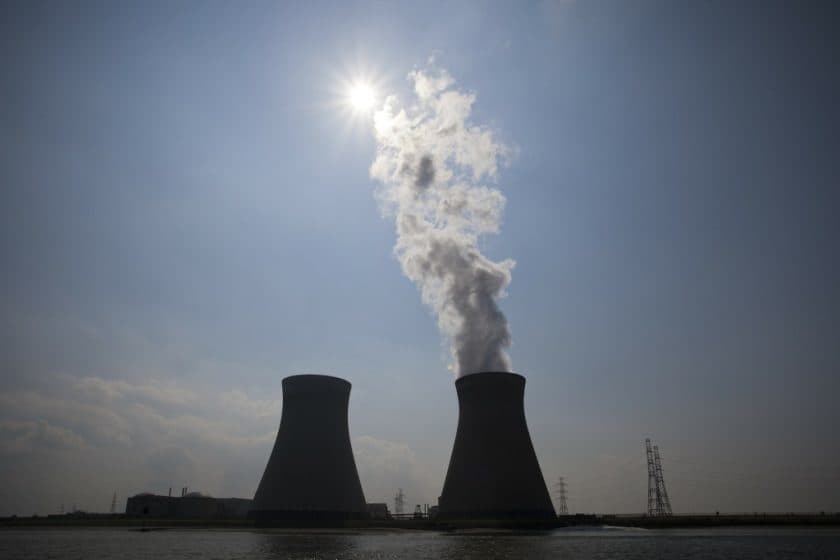
Söder also stressed that Germany would not be able to preserve its prosperity and industrial character without nuclear energy. He therefore wants to restart reactors that the country has already shut down. The Federal Republic disconnected its last nuclear power plants from the grid in 2023, ending more than 60 years of nuclear power generation.
According to Söder, energy demand will rise enormously in the future as a result of the growing use of artificial intelligence, advanced digitalisation and electric mobility. „We have to adapt to this, and we will not manage it with the help of the sun and wind alone,“ he said.
Söder sees considerable scope for international cooperation on nuclear energy in Germany’s case. „We can cooperate with partner countries such as France and Germany to secure privileged access to nuclear energy,“ he said.
In the long term, Söder said, it would also be possible to consider building small next-generation reactors at the existing sites of current nuclear power plants.
Söder spoke of a privileged partnership with Czechia last December during a visit to Prague.
Czechia is currently working on completing the nuclear power plant at Dukovany. It also plans to focus on small modular reactors (SMRs). ČEZ Group told the Czech News Agency (ČTK) last December that two factories producing modules for SMRs could be built in Czechia. ČEZ and Rolls-Royce SMR signed a strategic partnership to develop modular reactors last October. The cooperation is planned to span several decades and envisages ČEZ taking a direct part in developing the new modular reactor technology and manufacturing the reactors on a global scale.
Translation disclaimer
This article is a machine translation of the Czech original and has not yet been fully reviewed. In case of any doubt, please refer to the Czech version.




