Belgian Tihange 1 reactor shuts down after 50 years

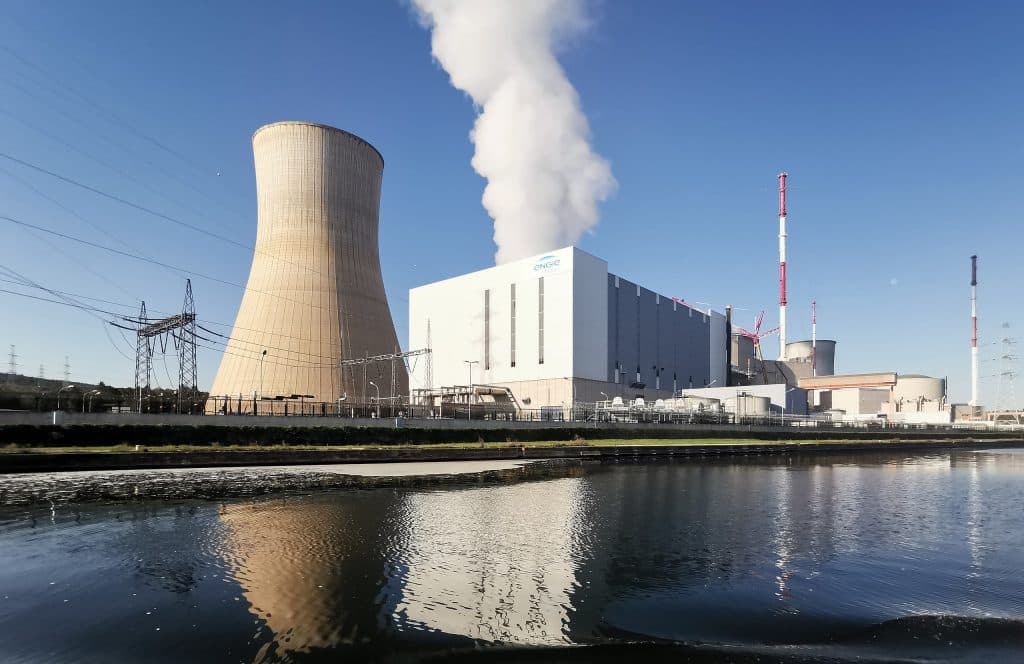
The first unit of the Tihange nuclear power plant was permanently shut down and disconnected from the grid at 23:21 on 30 September 2025. This brought to a close 50 years of operation, which began on 1 October 1975. It was operated by Electrabel, a subsidiary of France’s Engie.
The Tihange 1 reactor was a pressurised water reactor with an installed capacity of 962 MWe. Over its lifetime, it generated more than 327 TWh of emissions-free electricity, equivalent to an average of 6.5 TWh per year – roughly the annual consumption of 1.8 million households.
Context of Belgium’s nuclear phase-out
The closure of Tihange 1 is part of Belgium’s policy of gradually shutting down its nuclear power plants, based on a 2003 law that envisaged the closure of all seven reactors in the country. Doel 3 was shut down in September 2022 and Tihange 2 in January 2023. Doel 1 followed in February 2025.
| Unit | Reactor type | Capacity (MWe) | Commissioned | Status (2025) |
| Doel 1 | PWR | 433 | 1975 | shut down (February 2025) |
| Doel 2 | PWR | 433 | 1975 | shutdown planned – November 2025 |
| Doel 3 | PWR | 1006 | 1982 | shut down (September 2022) |
| Doel 4 | PWR | 1041 | 1985 | in operation, extension planned until 2035 |
| Tihange 1 | PWR | 962 | 1975 | shut down (September 2025) |
| Tihange 2 | PWR | 1008 | 1983 | shut down (January 2023) |
| Tihange 3 | PWR | 1046 | 1985 | in operation, extension planned until 2035 |
Under the original plans, Doel 4 and Tihange 3 were also due to be shut down in 2025. However, following the outbreak of war in Ukraine, the Belgian government decided to keep them operating at least until 2035.
Decommissioning and next steps
Tihange 1 is now entering the decommissioning phase. The fuel will be removed from the reactor and transferred to the spent fuel pool, and after several years it will then be moved to a temporary storage facility. Once the fuel assemblies have been removed, chemical cleaning of the primary circuit will begin. Decommissioning of the unit itself is planned to start in 2028 and will last until approximately 2040.
According to plant director Antoine Assice, extending the reactor’s operation was not a realistic option: preparatory work for a lifetime extension would have had to begin five years ago, and it would also have complicated the ongoing decommissioning process at Tihange 3. High financial costs were another significant factor.
Political changes in Belgium
In May this year, the Belgian parliament passed a law repealing the original 2003 legislation on a complete phase-out of nuclear power. The ban on the construction of new nuclear units was also lifted, opening the way for a broader debate about the future role of nuclear power in Belgium’s energy mix.
In 2024, nuclear power plants still accounted for around 50% of the country’s electricity generation. Since the beginning of October 2025, nuclear power’s share of electricity generation has been approximately 23%.
Translation disclaimer
This article is a machine translation of the Czech original and has not yet been fully reviewed. In case of any doubt, please refer to the Czech version.