Bloomberg: South Korea is becoming a major player in nuclear energy

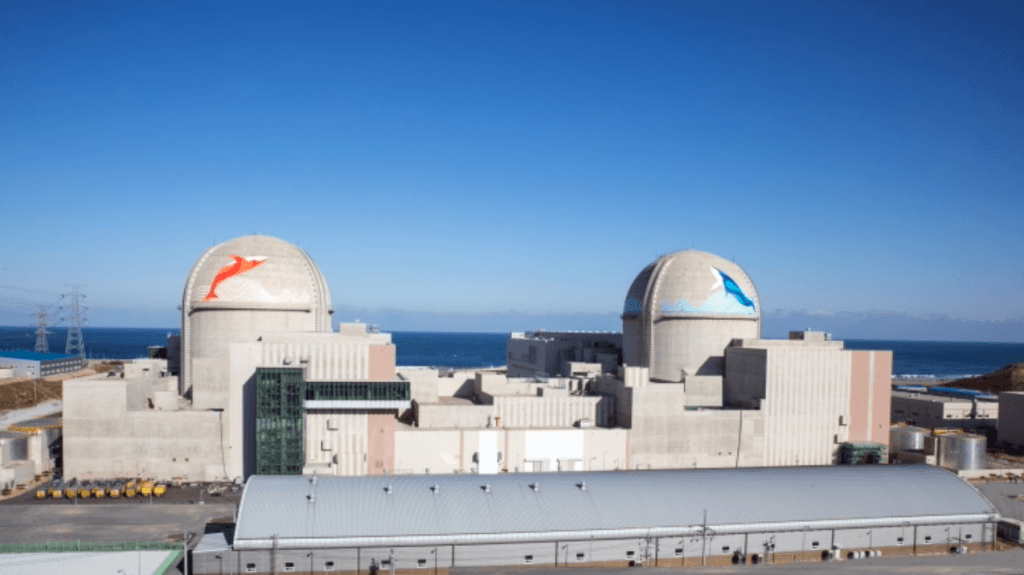
Thanks to decades of focused development of its own nuclear technology, South Korea is becoming one of the world’s leading players in nuclear energy. Western countries are once again turning their attention to low-emissions energy sources and seeking alternatives to Russia and China. South Korea’s nuclear industry, the largest of its kind outside those two powers, is benefiting considerably from this interest. According to Bloomberg, South Korea could win as much as 43 percent of contracts for the more than 400 nuclear reactors planned or proposed around the world.
South Korea could thus become one of the largest exporters of nuclear technology over the next decade. China, which is expected to become the world’s largest producer of nuclear energy by 2030, will be a major supplier, but primarily to its domestic market.
Nuclear reactors now supply almost a tenth of the world’s energy. Forecasts show, however, that global nuclear power capacity must triple by 2050 to limit the worst effects of planetary warming. Demand for carbon-free energy has also been boosted by the growth of cloud services and artificial intelligence (AI). According to a Morgan Stanley estimate last year, generative AI could need as much energy by 2027 as Spain used in 2022. Wind and solar power can help reduce the carbon footprint associated with this increase, but they cannot provide readily available low-carbon energy around the clock; only nuclear power can.
According to the nonprofit climate protection organization Clean Air Task Force, up to nine trillion USD (199.4 trillion CZK) will need to be invested in nuclear energy over the next quarter-century to triple nuclear power capacity.
It is less clear who will build the new reactors, as an already concentrated industry has shrunk under pressure from high costs, long timelines, strict regulation and political opposition. The United States and France, once the industry’s leading players, are known for frequent cost overruns and project delays. Other major players, Russia and China, have struggled to attract Western customers because of national security concerns. Japan is still recovering from the 2011 Fukushima disaster. South Korea, a relative newcomer to nuclear exports, could therefore seize these lucrative opportunities.
“We can deliver a nuclear power plant on time and within budget,” says Kim Jong-chang, mayor of the port city of Changwon.
South Korean company Doosan manufactures nuclear reactor components in the city. “That is why the rest of the world is interested in Korean technology,” the mayor adds.
In 2022, South Korea set a target of exporting ten reactors by the end of the decade. Its first overseas project was a 20 billion USD project in the United Arab Emirates. The contract, won in 2009, was completed in 2023, and industry experts noted that it was delivered with only limited delays. That is a remarkable achievement in an industry known for massive schedule overruns.
Another test could be a contract in the Czech Republic, where a South Korean consortium led by KHNP was selected last summer as the preferred bidder to build two nuclear reactors for 18 billion USD. A court temporarily blocked the signing of the agreement this month, however, after French competitor EDF challenged the result.
South Korea’s advantage lies in the close cooperation among companies across the nuclear sector—from engineers and construction firms to fuel suppliers and banks. Some are state-owned, others private, and many use government funding and loans. Like China and Russia, South Korea can offer comprehensive solutions through intergovernmental agreements.
Although South Korea did not export nuclear technology for a long time, it has been building nuclear power plants continuously for more than 50 years. While accidents and the subsequent loss of expertise slowed nuclear development in the United States, France and Japan, South Korea avoided a similar trajectory. Its reactors have European certification, and decades of experience have enabled the country to train a generation of experts capable of building complex systems without frequent cost overruns and delays.
South Korea began building its first commercial power plant in 1971 using American technology. It eventually developed its own technology, and today the country has 26 reactors. More are due to come online by 2038.
Despite its successes, South Korea’s nuclear industry has also faced criticism—for example, over its use of low-cost foreign labor in the Middle East. This helped keep the budget for the United Arab Emirates project down. This raises questions about the project in the Czech Republic, where the government expects KHNP to employ local workers at higher wages. South Korea’s nuclear ambitions could also be threatened by domestic politics.
South Korea is currently taking on enormous financial risks to offer competitive terms for building power plants. Political changes could make the government more cautious, for example about providing financial guarantees. But Chris Gadomski, a nuclear energy analyst at BloombergNEF, says that if he were advising a major country on building a large reactor, he would recommend the South Koreans.
South Korea still lags behind industrial giants, however. China, the largest builder, has 30 reactors under construction. That is almost half of all reactors under construction worldwide. The country relies primarily on domestic technology, and its flagship Hualong One reactor can be built for a fraction of the cost of Western units. So far, however, it has only been exported to Pakistan. Russia has spent years refining its technology and exporting reactors to customers in India, Iran and other countries.
Translation disclaimer
This article is a machine translation of the Czech original and has not yet been fully reviewed. In case of any doubt, please refer to the Czech version.




