Bulgaria wants to build two new nuclear units at Kozloduy for a fixed price

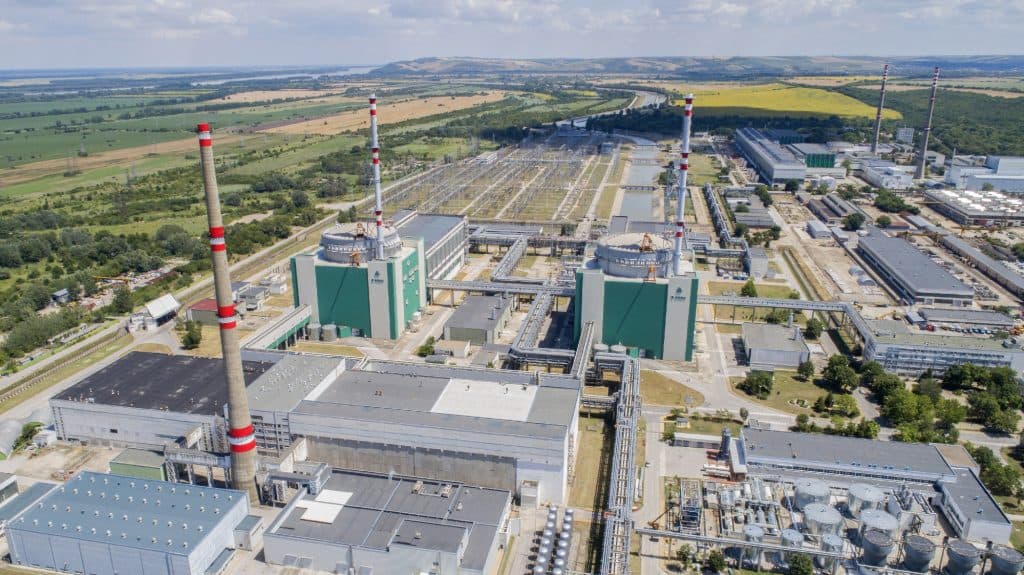
Bulgaria is continuing preparatory work on the construction of two new nuclear units at the Kozloduy power plant. The country has agreed with South Korean company Hyundai E&C to further extend the engineering contract. The two new AP1000 units, with a combined installed capacity of 2300 MW, are scheduled to begin operating in 2035 and 2037 under government plans. In addition to conventional nuclear units, the country is also considering building new modular reactors to maintain nuclear power in its energy mix.
Bulgarian energy minister met with representatives of South Korean company Hyundai Engineering and Construction (Hyundai E&C) and the South Korean ambassador to discuss the continuation of cooperation on building new nuclear units. Bulgaria signed an engineering contract with Hyundai E&C for two US-built AP1000 units at the Kozloduy power plant in November 2024. The minister called for both units to be built for a fixed price, particularly in light of negative experiences with previous projects that were subject to excessive delays and cost overruns.
"As one measure to prevent unjustified price increases, I have formally requested that the land needed for the new units be expropriated at market prices," Bulgarian Energy Minister Traycho Traykov stressed.
Representatives of both sides agreed to extend the engineering contract by a further 14 months so that preparatory work can continue without unnecessary delays. The extension still needs to be approved by the management of the Kozloduy nuclear power plant and state-owned Bulgarian Energy Holding. Hyundai E&C representatives pledged to award at least 30% of the work to Bulgarian companies.
"Bulgaria's expertise and many years of experience in operating nuclear power plants make the country a safe and reliable partner in delivering projects on this scale," Traykov added.
Replacing ageing nuclear units
Bulgaria's only nuclear power plant, Kozloduy, had six VVER nuclear units. The country shut down the first four, VVER-440 units dating from the 1970s and 1980s, in 2002 and 2006 as one of the conditions for joining the EU. The other two reactors, VVER-1000 units commissioned in 1987 and 1991, have been upgraded and generate around a third of Bulgaria's electricity.
Bulgaria has been working to expand the Kozloduy power plant with additional units for more than 10 years. Under current plans, construction is officially expected to take five years, with the first new unit due to enter operation in 2035 and the second two years later. The Bulgarian government is also planning further new units to replace Kozloduy 5 and 6 after 2050. New nuclear construction could also include small modular reactors.
Translation disclaimer
This article is a machine translation of the Czech original and has not yet been fully reviewed. In case of any doubt, please refer to the Czech version.