3 October 2026, 13:01
Loading...
Czech anti-repository platform opposes building law amendment, will turn to senators

oEnergetice.cz, ČTK
26 July 2026, 09:40
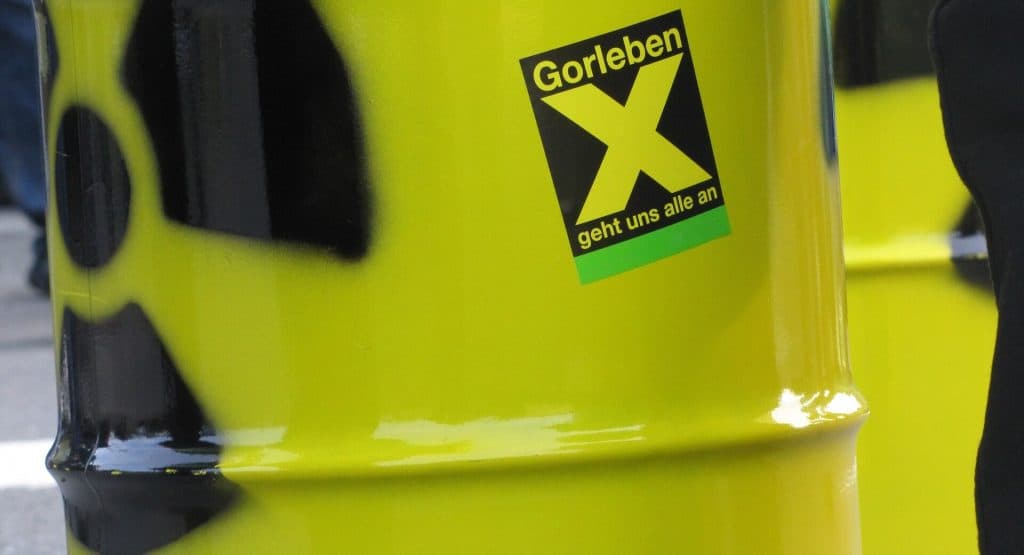
The Platform Against the Deep Geological Repository, which brings together 40 municipalities and towns and 18 associations from the Czech Republic, opposes an amendment to the Building Act that the Senate is due to debate in August. Under the amendment, the radioactive waste repository being considered for four sites in Czechia would be classified as a public-benefit structure, limiting the ability of municipalities and regions to defend their legitimate public interests and making expropriation easier, the platform said in a press release. It will ask senators to reject the amendment in its current form.
Senator for the Rokycany and Plzeň regions Miroslav Kroc (STAN) and mayor of Břasy today told CTK that he would not vote for the amendment to the Building Act and would propose returning it to the Chamber of Deputies. As rapporteur for the Constitutional and Legal Committee, he said the proposal was almost impossible to amend, since the main bill alone runs to 250 pages, with stacks of additions and comments on top. “If we try to fix anything in 30 days, the text could end up even worse,” he said.
Under the amendment, the platform said, the deep geological repository would be designated a structure for the state's energy security. “Appeals against its approval would then be inadmissible, and short permitting deadlines would apply, with no possibility of extension. Public authorities responsible for protecting the public interest would also have just 20 days to issue comments or a binding opinion on such a complex project, which could affect the lives of thousands of future generations,” the platform said. It added that there would be only one month to file a potential lawsuit challenging the approval.
“The planned changes to the law drastically restrict citizens’ property rights not only when the repository is being approved, but also during the site search, which in practice could mean significant intervention in the area even before a decision is made on the construction itself. This is what is known as the ‘salami-slicing’ approach, which further weakens the position of affected municipalities and property owners,” said Michael Forman (independent), the platform’s spokesperson and mayor of Horažďovice, in the Březový potok site area in Pošumaví.
Other sites being considered for the repository are Horka and Hrádek in the Vysočina region, and Janoch near Temelín. The Radioactive Waste Repository Authority has already begun deep geological drilling at some sites. Municipalities in all the areas filed lawsuits against the exploration permits, but the court dismissed them. Appeals on points of law followed and are still pending, but, like the lawsuits, they do not have suspensive effect.
Companies carrying out the drilling must currently reach agreements with landowners, and some municipalities are now barring geologists from entering. But, according to the platform, the amendment would allow consent to be bypassed, enabling an investor or company to enter and drive onto any plot and carry out exploration without the owners’ consent.
“We believe the law will not pass in this form,” Forman said.
Municipalities and associations say the amendment is problematic because it contains an enormous number of changes.
According to Kroc, the deep geological repository is just one hundredth of the problem with the proposed amendment. He has already received 80 emails asking him not to vote for it. “Not one has asked me to support it so far,” he said. The amendment was sent to three Senate committees on Thursday. “I’ve made up my mind, and we’ll see what the others think. Above all, I need to study it now. I have a meeting on it as early as Tuesday,” he said. The senator objects to the proposal’s list of major construction projects, for which history, the environment and local residents are disregarded. “It’s for developers. But if someone in a village wants to build a garage, they’ll go mad. Yet an 80-storey apartment block could be approved in 30 days. An official couldn’t read 2,000 pages in that time,” he said.
The deep geological repository, where mainly thousands of tonnes of spent fuel from nuclear power plants are to be permanently stored half a kilometre underground, is to be built in Czechia by 2050. The site is to be selected by 2030. Other countries are also preparing their own repositories.
The platform advocates changes to the state’s approach to managing spent nuclear fuel and other radioactive waste, arguing that it should not be limited to a deep geological repository. It also wants the site-selection decision to require the consent of the affected municipalities.
Translation disclaimer
This article is a machine translation of the Czech original and has not yet been fully reviewed. In case of any doubt, please refer to the Czech version.
Sdílejte článek prostřednictvím:
You might also like
3 October 2026, 07:43

2 October 2026, 21:55

2 October 2026, 15:14