25 September 2026, 09:51
Loading...
Fast reactor developer leaves UK; Czech Republic still lacks comparable player
Barbora Zimová
9 August 2025, 09:41
Fast reactor developer newcleo is changing course. It will now focus on areas that support advanced modular reactor technologies and the closed fuel cycle. Rather than the unfavourable environment on the British Isles, it is betting on partnerships in Central Europe and the Baltics. The Czech Republic currently has no comparable industrial player.
newcleo is suspending its lead-cooled fast reactor development programme in the United Kingdom and plans to significantly reduce its activities in the country. This follows a press release published at the end of July, according to which the company’s board decided to focus on regions supporting the closed fuel cycle and advanced modular reactor technologies.
Until now, the company had more than 1,100 employees at 19 locations across Europe. Since its establishment in 2021, it has focused on the design, construction and operation of Generation IV advanced modular reactors. Specifically, these are molten lead-cooled reactors using reprocessed spent fuel from nuclear facilities.
In the UK, the company had sought to build its first site with up to four reactors with a combined capacity of 800 MW. These were intended to supply approximately 1.6 million households. Its broader goal was to build up to 20 reactors with a capacity of 4 GW. The plan included the potential use of UK plutonium stocks and reprocessed spent nuclear fuel from the new nuclear sites of Hinkley Point C and Sizewell C.
The relocation of the company’s headquarters from London to Paris in September 2024 can, in retrospect and in the context of recent developments, be interpreted as a signal of the coming strategic consolidation of its activities.
Rather than the British Isles, newcleo bets on Central Europe and the Baltics
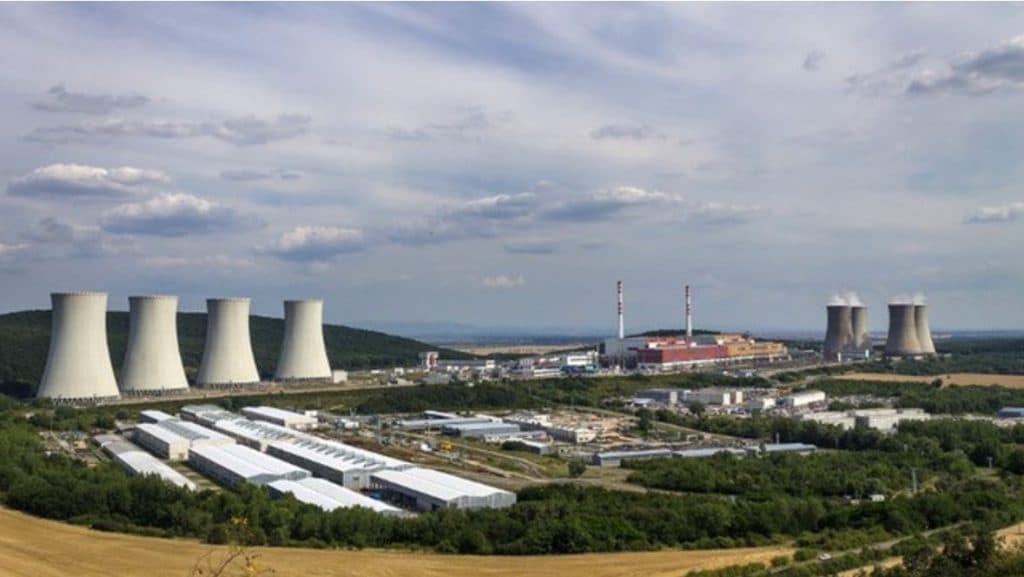
In recent months, the company has expanded its activities in two directions. In Slovakia, newcleo established a joint venture with state-owned company JAVYS. The aim is to build up to four lead-cooled fast reactors at the Jaslovské Bohunice site, powered by the country’s spent nuclear fuel stocks. This was followed by the signing of a memorandum of understanding with Lithuanian company Ignalina NPP. This opens the way for feasibility studies on the potential construction of these reactors in the Baltic country.
Compared with the lack of state support for advanced modular reactors in the United Kingdom, the company views the market environment in Slovakia and Lithuania as more favourable.
"In its decision-making, the board took into account the intense international race to close the fuel cycle using Generation IV nuclear technologies. In this race, the United States has significantly accelerated efforts to develop advanced modular reactors, as evidenced by recent presidential executive orders. France has likewise shown a strong commitment, with state support, to closing the fuel cycle by the end of the century," states the press release announcing the reduction of activities in the United Kingdom.
Generation IV reactor technologies in the Czech Republic
According to the classification of Generation IV reactors by the Generation IV International Forum, there are six types. In addition to lead-cooled fast reactors, these include gas-cooled fast reactors and sodium-cooled fast reactors. The remaining three are very-high-temperature reactors, molten salt reactors and supercritical water-cooled reactors.
At the Nuclear Research Institute in Řež, research is under way into the concept of the ALLEGRO demonstration helium-cooled high-temperature reactor with a capacity of 75 MW. Czech researchers are developing the reactor within the Visegrád Group consortium for fourth-generation nuclear reactors.
Czech Republic to cooperate with UK on development of small and medium nuclear reactors
Another project of ÚJV Řež is HeFASTo – a helium-cooled fast reactor with a closed fuel cycle, modular design and innovative passive safety systems. These features correspond to the attributes of Generation IV reactors. Its expected thermal capacity is 200 MW, and the schedule envisages completion of the pre-conceptual design this year.
In terms of using already used nuclear fuel, the Teplator project, focused on the supply of thermal energy, is also worth mentioning. The reactor design envisages heavy-water cooling and moderation, with capacity between 50 and 150 MW. It also envisages the use of spent nuclear fuel from commercial light-water reactors which has not been used up to the applicable regulatory and design limits.
Translation disclaimer
This article is a machine translation of the Czech original and has not yet been fully reviewed. In case of any doubt, please refer to the Czech version.
Sdílejte článek prostřednictvím:
You might also like
24 September 2026, 11:23

24 September 2026, 10:30
24 September 2026, 06:56