2 October 2026, 21:55
Loading...
French nuclear plants on the Rhône struggle with heat, output must be curtailed
Erik Novotný
20 June 2026, 07:55
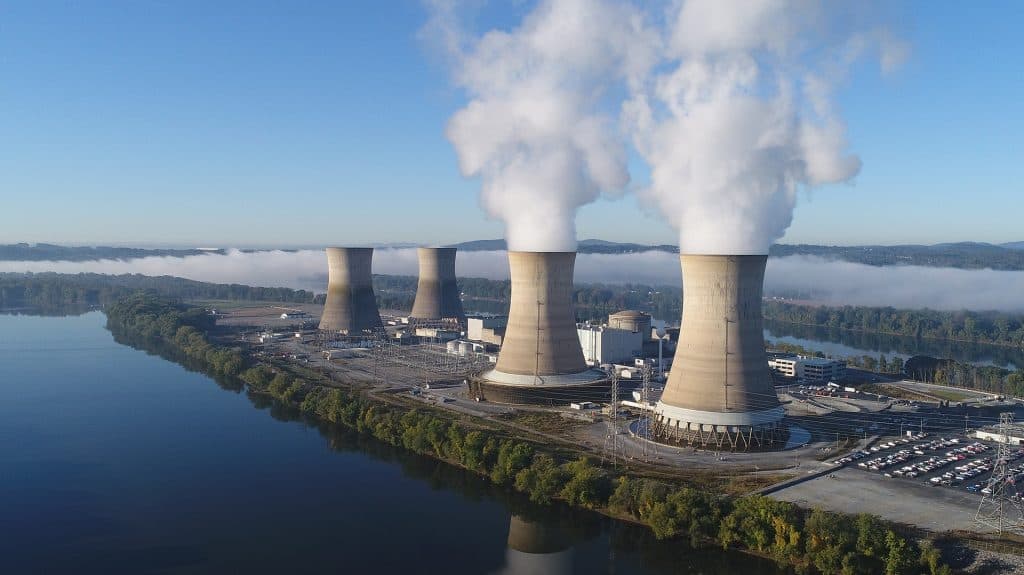
A record June heatwave is forcing French nuclear operator EDF to warn of output restrictions at three sites. Saint-Alban and Bugey on the Rhône have been joined by the Blayais plant in southwest France, with restrictions possible from June 17. Weekly electricity prices have meanwhile topped 100 euros per megawatt-hour, four times the average for the previous week.
EDF first issued a warning on June 11 for Saint-Alban, southeast of Lyon, with possible restrictions from June 20. Five days later, Bugey was added to the alert, with a total capacity of 3.6 gigawatts and measures likely from June 23. Bugey-2 is already offline for a scheduled annual outage lasting until August, while Bugey-4 is only just restarting after a brief market-related shutdown.
The latest addition to the warning list, Blayais on the Garonne, signals that the problem is affecting two of France’s main river basins at once. EDF makes a final decision on specific restrictions one day in advance.
Why are rivers so important for French nuclear power plants?
The cause is purely physical. Some French reactors use what is known as a once-through cooling system. It draws water directly from a river, uses it to cool the steam circuit, then returns the heated water to the river. At Bugey, this applies to two of the four operating units, while the other two use cooling towers.
European and French legislation strictly limit how much the discharged water can raise the river’s temperature, to prevent fish deaths and damage to aquatic ecosystems. When the Rhône warms and river flows fall, the operator must reduce output.
For France, where nuclear power supplies around seventy percent of annual electricity consumption, this is no minor issue. Summer is traditionally the season for planned refuelling outages, so any additional heat-related restrictions can significantly affect market supply. Similar EDF notices in previous years have repeatedly pushed electricity prices for delivery a month ahead higher. This time, too, markets reacted immediately. Weekly electricity prices on EEX surged above 100 euros per megawatt-hour, from an average of just 26 euros the previous week.
Dukovany, Temelín and hydrology
The Czech nuclear power plants Dukovany and Temelín are much less sensitive to summer warming of rivers because, unlike the French plants, they use closed cooling circuits with cooling towers. Most waste heat is therefore released into the atmosphere through evaporation—in Dukovany, summer evaporation at full output is a maximum of about 1 m³ of water per second, and the plant’s raw-water system is practically closed.
Although the cooling towers mean the Czech plants do not have to drastically reduce output during heatwaves, the risk is not entirely eliminated and remains dependent on the overall availability of water resources. The future Dukovany II project also includes an extensive cooling-tower system and will draw water from the Dalešice Reservoir and, specifically, the smaller Mohelno pumped-storage reservoir.
Translation disclaimer
This article is a machine translation of the Czech original and has not yet been fully reviewed. In case of any doubt, please refer to the Czech version.
Sdílejte článek prostřednictvím:
You might also like

2 October 2026, 15:14
2 October 2026, 10:06
2 October 2026, 06:14