2 October 2026, 21:55
Loading...
Fuel could slow the nuclear renaissance. The West is racing to break Russia’s uranium enrichment monopoly

Lukáš Lepič
21 July 2026, 16:19
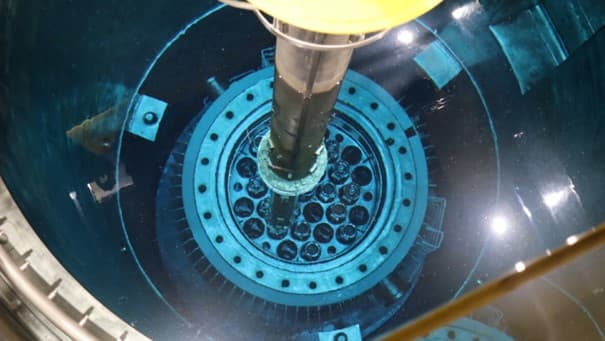
The world is planning a return to nuclear power, including a wave of small modular reactors. But only Russia currently supplies the fuel required by many of them, known as HALEU, on a commercial scale. A group of Western companies is therefore seeking to build its own production capacity before a full US ban on imports of Russian enriched uranium takes effect in 2028. New facilities will not reach full production until around 2029 to 2031, raising the risk of shortages between 2026 and 2028. Experts say the future of small reactors may depend to a large extent on how quickly the West can break the monopoly.
HALEU (High-Assay Low-Enriched Uranium) is uranium enriched to 5 to 20 percent uranium-235. Conventional nuclear reactors today use fuel enriched to around 5 percent. However, many new and small modular reactors require higher enrichment to be more compact and powerful, and to run longer on a single fuel load.
Translation disclaimer
This article is a machine translation of the Czech original and has not yet been fully reviewed. In case of any doubt, please refer to the Czech version.
The article continues for subscribers
Premium content
The rest of this article is available to premium subscribers only. Get access to all premium articles on oEnergetice.cz.
You have read only 23% of the article — unlock the remaining 77% with a premium subscription.
Best value: annual subscription
Monthly option 4 € / month
3.25 €/ month
You might also like
2 October 2026, 15:14
2 October 2026, 10:06
2 October 2026, 06:14