
17 October 2026, 13:09
Loading...
German minister denies government is planning EU shift on nuclear power

oEnergetice.cz, ČTK
23 May 2025, 12:10
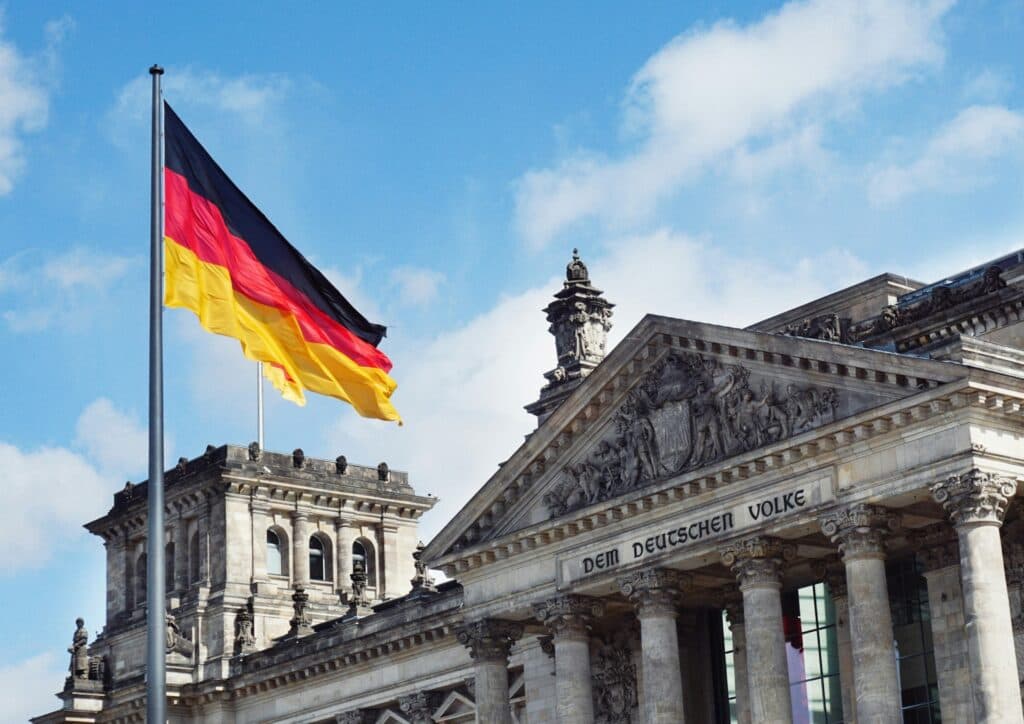
Berlin, May 23 (CTK correspondent) - German Environment Minister Carsten Schneider today denied that the German government was preparing to adopt a more favourable stance towards nuclear power at the European Union level. Any such statements are the private opinions of members of the government, he told DPA in an interview. On Thursday, DPA reported that Germany would accommodate France and stop opposing nuclear power in the EU.
According to a joint German-French document published at the beginning of May, Berlin and Paris agreed on a fresh start in energy policy, based on “climate neutrality, competitiveness and sovereignty”. Among other things, this would mean, DPA reported, that all low-carbon forms of energy production, including nuclear power, should be placed on an equal footing at the European level.
Among others, German Minister for Economic Affairs and Energy Katherina Reiche of the Christian Democratic Union (CDU) expressed support for nuclear power after taking office. She ruled out Germany returning to nuclear power generation, but stressed that it is part of the energy mix in other EU countries.
“Statements by individual members of the federal government about a new openness (towards nuclear power) are private opinions,” Environment Minister Schneider, a member of the Social Democratic Party (SPD), told DPA today.
“The German government has no common position on this, and will not have one in the future with the SPD,” he added.
The European Commission approved the temporary inclusion of nuclear power and gas among clean energy sources in 2022, on which EU member states hold sharply differing views. Through its so-called taxonomy, the Commission accommodated countries such as France, Poland and Czechia, which want to rely on nuclear power and gas as they phase out power plants and heating plants that use coal or oil. The previous German government, a coalition of Social Democrats, Greens and Free Democrats (FDP) led by Chancellor Olaf Scholz, criticised the inclusion of nuclear power among clean energy sources because it produces nuclear waste.
“Nuclear energy is significantly more expensive than renewable alternatives, whose development Germany has already advanced considerably,” Minister Schneider also said today.
Nuclear power, he added, also entails “unpredictable risks” in the event of possible accidents. “I cannot seriously describe such technologies as sustainable,” he added. Germany rejects funding for nuclear power plants from EU funds, he said. “This also applies to attempts to put nuclear energy on an equal footing with generation from renewable sources,” he added.
Renewables accounted for almost 60 percent of electricity generation in Germany last year. The decision to end electricity generation from nuclear power in Germany was originally made in May 2011 by the government of Chancellor Angela Merkel of the Christian Democratic Union (CDU). The trigger was the accident at Japan’s Fukushima nuclear power plant that same year. Czechia continues to include nuclear power generation in its energy mix.
Translation disclaimer
This article is a machine translation of the Czech original and has not yet been fully reviewed. In case of any doubt, please refer to the Czech version.
Sdílejte článek prostřednictvím:
You might also like




16 October 2026, 10:16