25 September 2026, 09:51
Loading...
Havlíček: Czech Dukovany plant could operate for 80 years, requiring billions in investment

oEnergetice.cz, ČTK
9 April 2026, 13:25
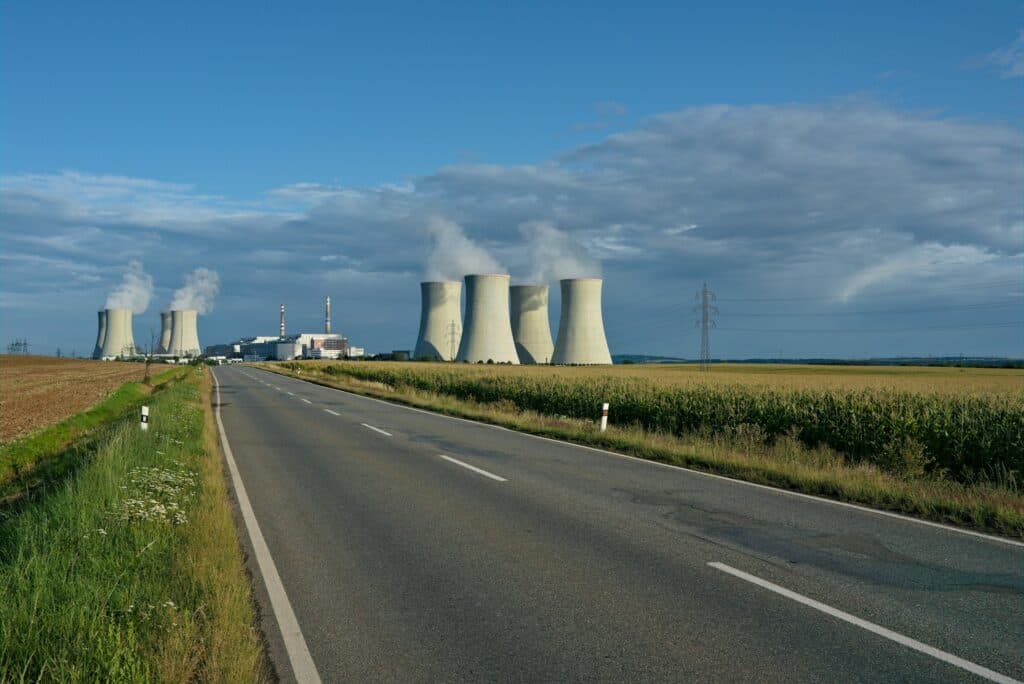
The existing nuclear units at Dukovany could be operated for up to 80 years in total from their commissioning, i.e. until 2065 to 2067. This follows from an analysis by energy company ČEZ, the results of which were presented to journalists today by Industry and Trade Minister Karel Havlíček (ANO). Until now, ČEZ had envisaged operation until the mid-2040s. According to ČEZ CEO Daniel Beneš, extending the plant's lifetime will require billions of crowns in investment in its modernisation.
Four nuclear units are currently in operation at Dukovany, each with a capacity of 510 megawatts (MW). The first was commissioned in 1985, while the others came online over the following two years.
According to Havlíček, the continued operation of the existing units will be necessary because of the expected growth in electricity consumption and generation. The Ministry of Industry and Trade (MPO) is therefore also counting on them in its long-term energy strategy.
ČEZ had previously envisaged around 60 years of operation for the units. "Every day, we see that they are in excellent condition. Current economic and safety analyses confirm that it will be possible to operate Dukovany for longer. Eighty-year operation is becoming a trend internationally, and a number of units already have licences for 80 years of operation. We see this as realistic here as well, naturally subject to regular assessments of equipment condition and operational safety," Beneš said.
According to Beneš, extending the plant's lifetime will require billions of crowns in investment in its modernisation. ČEZ is currently investing around seven billion crowns in the modernisation of its nuclear facilities. This will include replacing certain components in the turbine halls, such as generators and other major equipment, refurbishing selected piping routes, valves and electrical components, as well as the gradual introduction of new control and safety systems.
Havlíček further stressed that operating Dukovany for up to 80 years is not a substitute for new units, but a logical complement to them in the Czech energy strategy. "This does not change the need to continue building new nuclear capacity and preparing small modular reactors, because the Czech Republic will need stable, secure and competitive electricity in the greatest possible volume," the minister said.
Štěpán Kochánek, head of the State Office for Nuclear Safety (SÚJB), pointed out that extending operation is possible only if the specified conditions are met. According to him, the operator must demonstrate that the facility meets all safety requirements, has effective management of equipment ageing in place and that its technical condition complies with current standards. It must also have the necessary staffing resources in place. "We will always assess every step and every submitted evaluation very strictly and in detail," Kochánek added. The SÚJB reviews the safety of nuclear power plants every ten years.
The results of the analysis do not yet concern longer operation of the units at Temelín. ČEZ is also currently conducting an analysis of extending their lifetime.
The current units are to be supplemented in future by two new units that South Korean company KHNP is preparing at Dukovany. At last year's prices, the cost of building them is 407 billion crowns for both units. The first of the new reactors at Dukovany is expected to be completed in 2036. Geological surveys of the site are currently continuing. Construction of the first unit is expected to begin in 2029.
The government will also decide next year on the construction of two new nuclear units at Temelín, Havlíček said. If construction is approved, it should then exercise the option included in the contract with South Korean company KHNP for the construction of the Dukovany units. However, awarding the contract to the South Koreans is not certain, as other interested parties will also be able to submit bids, according to the minister.
Translation disclaimer
This article is a machine translation of the Czech original and has not yet been fully reviewed. In case of any doubt, please refer to the Czech version.
Sdílejte článek prostřednictvím:
You might also like

24 September 2026, 11:23

24 September 2026, 10:30
24 September 2026, 06:56