Kaleidos microreactor heads to Idaho for testing

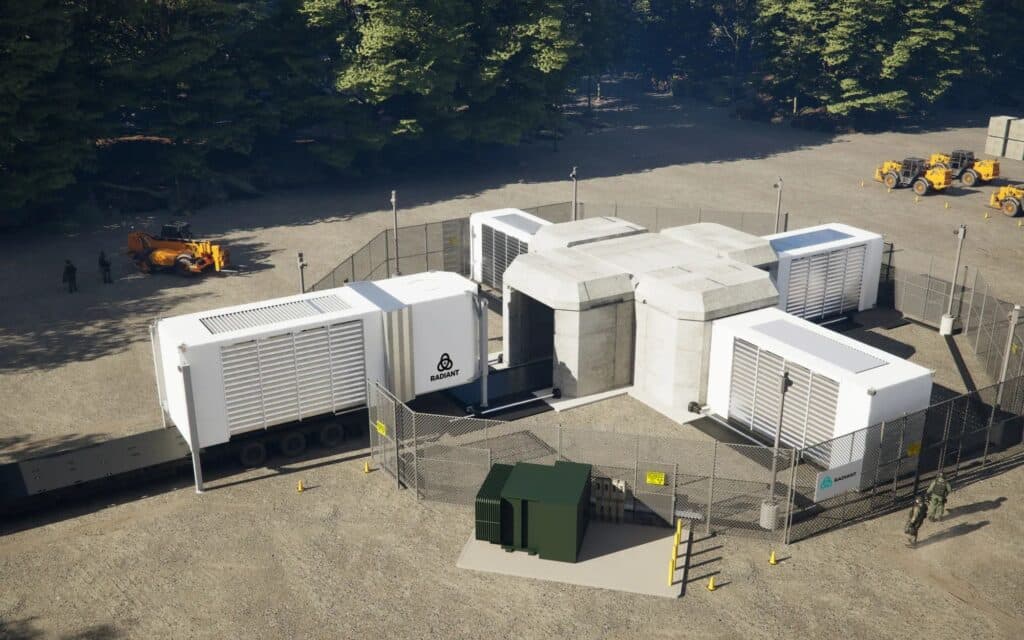
US company Radiant is transporting its Kaleidos demonstration microreactor to Idaho National Laboratory, where it will undergo a series of tests, from initial criticality to long-term operation at rated power. The programme is intended to verify the operational characteristics of the reactor system and the concept of a factory-manufactured, transportable microreactor designed for future commercial deployment.
The Kaleidos microreactor left Radiant's manufacturing facility in El Segundo, California, on 12 August and is headed for the DOME test facility at Idaho National Laboratory (INL). It will travel the more than 1,000-mile route on a road trailer. The transport will also demonstrate one of the design's core features: the ability to move the reactor unit from the manufacturing plant to its deployment site.
From initial criticality to 150 hours of autonomous operation
The DOME (Demonstration of Microreactor Experiments) facility was created by converting the containment structure of the former EBR-II experimental fast reactor. Operated under the National Reactor Innovation Center, the test facility enables testing of microreactors with thermal output of up to 20 MW and the collection of data needed to verify their safety and operational characteristics and support subsequent licensing.
Radiant has prepared a five-phase test programme for Kaleidos. Following initial criticality at zero power, output is to be raised to 1 MWt, followed by tests at rated thermal output and design operating temperatures, and a final continuous operating test of at least 150 hours without operator intervention. The data obtained will be used to verify the reactor's neutronic, thermal-hydraulic and operational characteristics and support further licensing of the technology.
According to Radiant, the demonstration unit is not a scaled-down experimental model, but matches the intended commercial version in scale and basic design configuration. The TRISO fuel intended for the tests has already been delivered to INL. It was manufactured by Standard Nuclear to Radiant's specifications and is to be loaded into the core at the DOME facility under the supervision of the US Department of Energy and INL.
High-temperature gas-cooled reactor with output of around 1 MWe
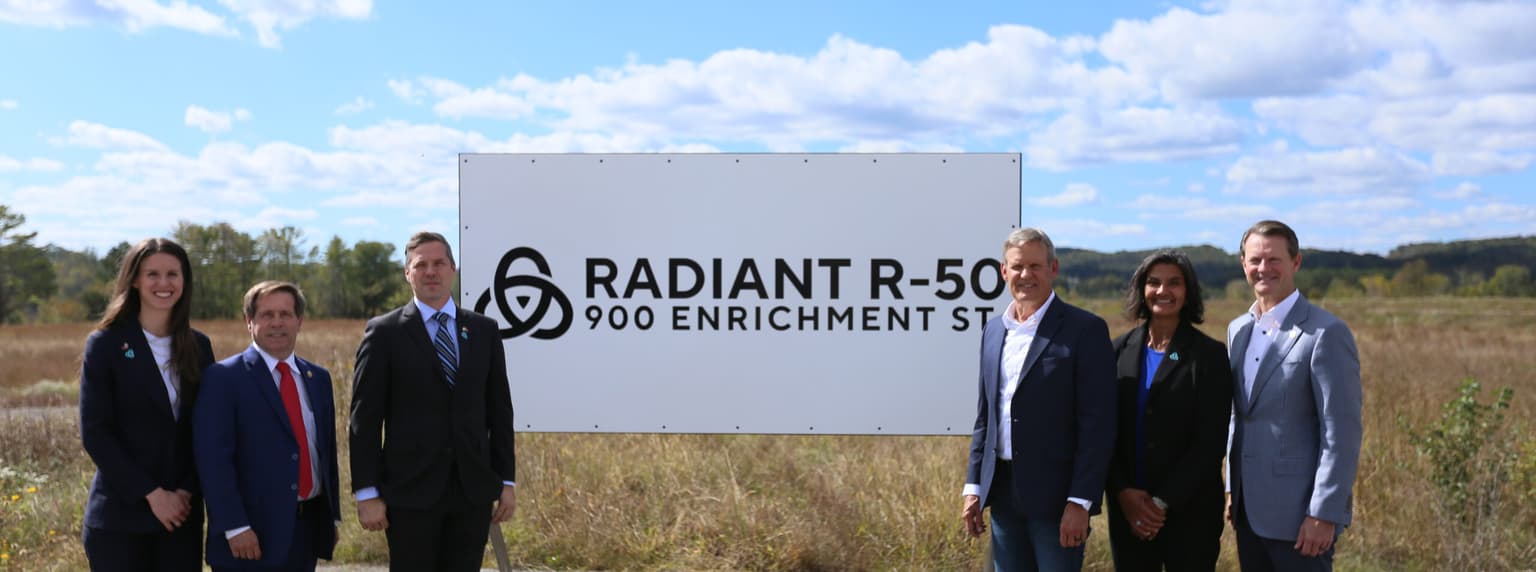
The US Nuclear Regulatory Commission (NRC) lists Kaleidos as having a rated thermal output of 3 MWt and electrical output of approximately 1 MWe. It is a high-temperature gas-cooled reactor (HTGR), in which helium removes heat from a graphite-moderated core. The reactor uses TRISO particle fuel, and its design emphasises transportability and rapid deployment at the operating site. Radiant plans to manufacture future commercial units at the planned R-50 plant in Oak Ridge, Tennessee.
Radiant previously announced that, following a gradual ramp-up, the R-50 plant is expected to reach production capacity of up to 50 microreactors per year. The company aims to deliver its first commercial units to customers in 2028.
First deployment planned at military base
One of the first sites being considered for Kaleidos deployment is Buckley Space Force Base in Colorado. In April, the US Department of the Air Force, together with the Defense Innovation Unit, selected Radiant to continue preparing the microreactor project for the site. Before any implementation, the proposal must undergo, among other things, a site assessment, the relevant permitting processes and an environmental impact assessment.
Radiant says it aims to deliver the first unit for Buckley in 2028. The broader Advanced Nuclear Power for Installations programme seeks to bring at least one advanced nuclear reactor into operation at a US Department of the Air Force facility by no later than 2030. The results of Kaleidos testing in Idaho will therefore be important not only for technical validation and licensing of the design, but also for preparing the technology's first commercial deployment.
Translation disclaimer
This article is a machine translation of the Czech original and has not yet been fully reviewed. In case of any doubt, please refer to the Czech version.