New Chinese nuclear unit Taipingling 2 reaches criticality for the first time

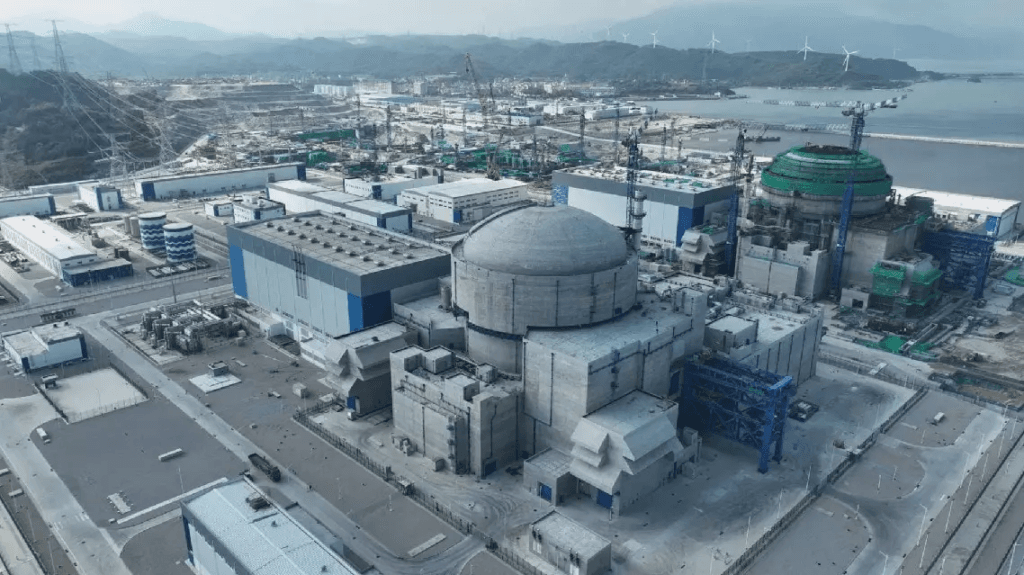
China’s new Taipingling 2 unit has reached an important milestone ahead of commercial operation. The Hualong One reactor, with an installed capacity of 1 202 MW (gross), has achieved criticality for the first time. Before official commissioning, the unit will undergo tests at various power levels. CGN began construction of the unit in October 2020. Two more units are under construction at the Taipingling plant, and another pair is in the planning stage.
China General Nuclear (CGN) announced that its second unit at the Taipingling nuclear power plant had achieved criticality for the first time, marking the start of a stable fission chain reaction. The Hualong One (HPR1000) pressurised water reactor has an installed capacity of 1 116 MW (net) and is expected to generate around 9 TWh of electricity a year. The company began construction on 15 October 2020.
“This milestone lays a solid foundation for the subsequent grid connection and commissioning of the second unit at the Taipingling plant,” CGN said.
China’s nuclear regulator granted Taipingling 2 a 40-year operating licence in April this year, after which CGN began loading 177 fuel assemblies into the reactor core. The unit still has a series of tests at various power levels to complete before entering commercial operation.
A wave of new Chinese nuclear power plants
Construction of Taipingling 2 officially began in October 2020, putting the unit on track to enter service within six years. CGN began construction of the next pair of units, Taipingling 3 and 4, last year and this year. The third phase, comprising another pair of units, is still at the planning stage.
“Once all six units are completed and commissioned, the plant’s annual electricity generation will exceed 55 TWh. At the same time, coal consumption will fall by approximately 16.65 million tonnes and carbon dioxide emissions by approximately 50.82 million tonnes per year,” CGN said.
China is now commissioning new Hualong One nuclear units rapidly. In April this year, for example, it commissioned the first units of the planned six-unit plants at San'ao and Taipingling. The Chinese government plans to approve the construction of 10 reactors every year until 2035.
The country currently has around 60 reactors in operation, with another 40 at various stages of construction. It is targeting 120 GW of installed capacity by 2035 and aims to take the lead in reactor numbers, a position currently held by the US with 94 nuclear reactors.
Translation disclaimer
This article is a machine translation of the Czech original and has not yet been fully reviewed. In case of any doubt, please refer to the Czech version.