25 September 2026, 09:51
Loading...
Nuclear power is key to EU energy independence, Macron says at summit

oEnergetice.cz, ČTK
10 March 2026, 13:32
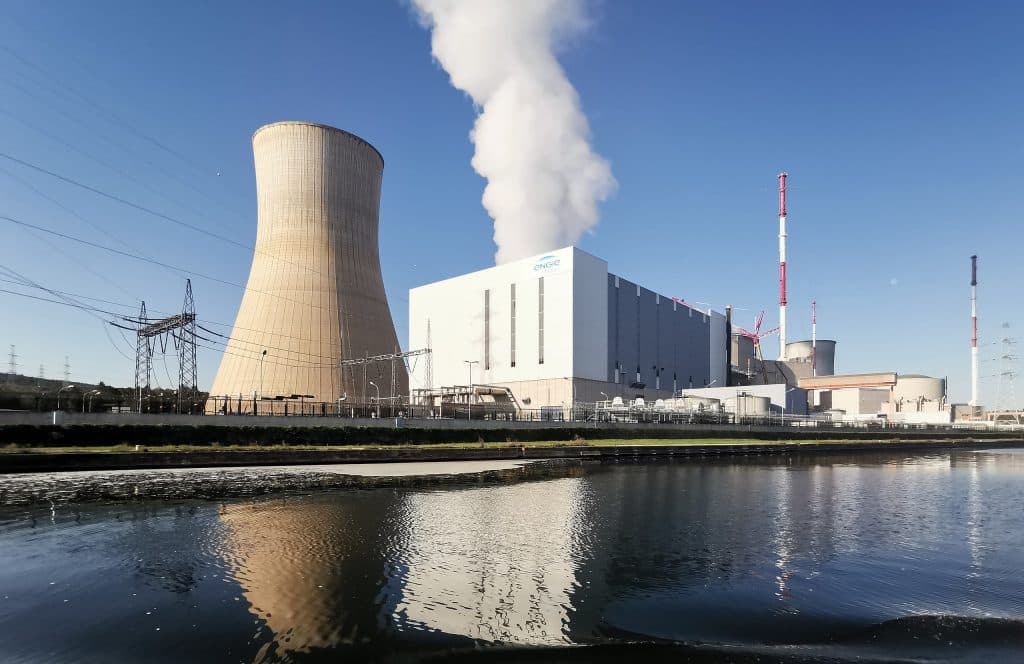
Nuclear power is key to achieving European energy independence, French President Emmanuel Macron said at the opening of today’s Paris summit on the civil use of nuclear energy. Europe must harmonise its standards, better interconnect its energy market and consolidate its state aid framework, Macron said, according to AFP. Slovak Prime Minister Robert Fico also spoke in support of nuclear power. European Commission President Ursula von der Leyen described Europe’s recent move away from nuclear energy as a mistake.
"Nuclear power is the key to achieving energy independence while also ensuring energy sovereignty, decarbonisation and, with it, carbon neutrality by 2050, competitiveness and, with that, new jobs in our economy," AFP quoted the president as saying in his speech.
According to Macron, the European Union has significant shortcomings, for example in its inconsistent support for nuclear power. Under the EU taxonomy, which is crucial for supporting energy sources, nuclear power is currently classified as a transitional green source. France and several other countries, including the Czech Republic, are seeking for it to be designated a long-term source. However, Germany and Austria, among others, oppose the use of nuclear power.
Slovak Prime Minister Fico also called for EU support for nuclear power today. In his view, the European bloc’s next budget for the 2028 to 2034 period should recognise nuclear power as a decarbonised source. This would not mean direct funding of nuclear reactors from EU money, but equal access to finance alongside other energy sources, Fico said, according to Reuters.
"I think it was a strategic mistake when Europe turned its back on a reliable and accessible source of low-emission electricity," von der Leyen said, referring to Europe’s move away from nuclear power at the start of this century, when, for example, her native Germany abandoned the source.
While as much as one-third of European electricity came from nuclear power in the 1990s, the figure is now around 15 percent, she added. According to her, Brussels is preparing to simplify and harmonise rules for nuclear energy, support the deployment of small modular reactors, and establish a fund containing 200 million euros (4.9 billion Czech crowns) for guarantees on private investment in innovative nuclear projects.
Greek Prime Minister Kyriakos Mitsotakis, for example, announced greater activity by his country in nuclear energy today. The Athens government will create a ministerial committee to plan the development of the aforementioned small modular reactors, which should contribute to Greece’s energy mix, he said, according to Reuters.
EU countries should also devote greater effort to their own uranium enrichment capacity, which should become central innovation projects in the bloc, according to the French president. Although Western companies are developing their capacity, the Financial Times reported that the EU still imports nearly a quarter of its uranium from Russia, allowing Moscow to exert pressure on the bloc.
Translation disclaimer
This article is a machine translation of the Czech original and has not yet been fully reviewed. In case of any doubt, please refer to the Czech version.
Sdílejte článek prostřednictvím:
You might also like
24 September 2026, 11:23
24 September 2026, 10:30
24 September 2026, 06:56