Nuclear power plant flexibility – an opportunity for nuclear advocates?
Tilting at windmills. Today, we could replace this phrase with “fighting renewable energy sources”. It is clear that such a fight is lost from the outset. Renewables are taking an ever larger slice of the “pie” – the energy mix. Around the world.
Yet even proponents of green energy are increasingly recognising that the idea of a 100% transition to renewables is, in the foreseeable future, nothing more than a utopia. And so “green” thinking is taking another direction: Which other source will gain the privilege of accompanying the sun, wind, water and biomass in their victorious advance?
Paradoxically, in the minds of many advocates of low-carbon energy, this privilege is being granted to a fossil fuel – natural gas, which can flexibly and rapidly balance the weather dependence of photovoltaic and wind power plants. Germany’s “real green policy”, however, has so far actually favoured a source with substantially higher greenhouse gas emissions – conventional coal.
According to a number of renewable energy advocates, zero-emission nuclear power is entirely out of the game. It is allegedly an inflexible source that can operate only at base load and cannot adapt to the new energy system. From the perspective of nuclear advocates, however, this is a myth. Technically speaking, nuclear power plants can already adjust their output today. France, for example, has entirely practical experience with this. And requirements for the flexibility and “manoeuvrability” of new nuclear power plants are increasing.
Representatives of the nuclear industry and power sector are therefore becoming increasingly vocal. They argue that, in terms of emissions, nuclear power as a clean source is the best possible partner for renewable energy. Not all advocates of nuclear power, or conventional power plants more broadly, are pleased with this argument. In effect, it represents too great a concession to renewables, as if the only question were how other sources can adapt to them. Proponents of a “balanced” energy system argue that considerations should be based on assessing all the strengths and weaknesses of individual sources, their application under specific conditions, and then determining an appropriate mix.
Foratom speaks up
One way or another, the fact is that developments are gradually moving towards ever greater flexibility at nuclear power plants. Foratom, the Brussels-based association of the European nuclear energy industry, recently highlighted this in its Position Paper.
“Despite the widespread perception of nuclear power plants as inflexible baseload sources, nuclear energy can in fact provide, on a large scale, a solution to the need for flexibility and grid stability in some Member States,” Foratom said.
Foratom further stresses that nuclear power is the main partner of renewables when it comes to decarbonisation within the European Union. The association recalls that nuclear power now provides 27 % of electricity in the EU and nearly 50 % of its low-carbon electricity. Nuclear advocates (not only from Foratom) also point out that it will not be possible even to come close to meeting the Paris climate agreement without nuclear power plants. In another paper last year, Foratom stated that the targets of the EU’s so-called winter package cannot be met without nuclear power, and that achieving Europe’s commitment to reduce greenhouse gas emissions by more than 80 percent by 2050 (compared with 1990 levels) is likewise unrealistic.
63 MW per minute
The Brussels association calculates that, for new nuclear reactors, it will become entirely standard to reduce or increase output by 5 percent of total capacity per minute when needed. It is also taken for granted that reactor output will range from 50 to 100 percent of maximum capacity. This was also recently stated by Zalán Bács, head of Rosatom in Hungary, when speaking about the planned construction of new units at the Paks nuclear power plant.
“This is no longer merely baseload; Generation III+ reactors can genuinely respond to the requirements of the transmission system,” Bács said at the Pro-Energy Forum conference in Pezinok, Slovakia. He expects this manoeuvrability to be used in practice.
Converting this into specific figures, Foratom gave the example in its paper of a reactor with installed capacity of 1260 megawatts. Its output can therefore range between 630 and 1260 megawatts, while output can be changed at a rate of plus or minus 63 megawatts per minute.
France and the Czech Republic
When it comes to the flexibility of existing reactors, this too is far from negligible from a technical perspective. However, not all operators use it. Foratom states that France, Germany, Slovakia and the Czech Republic in particular have some experience. The Czech Republic has so far used the manoeuvrability of its nuclear power plants rather exceptionally, while it is relatively common in France. This is logical – nuclear power accounts for a full three quarters of electricity generation there, making it necessary to rely on the flexibility of nuclear reactors.
With a total of almost sixty French reactors, considerable flexibility can be achieved even through relatively small output reductions at a larger number of units. Foratom nevertheless states that France can increase or reduce the output of all its nuclear power plants by 21 thousand megawatts in less than half an hour.
Czech nuclear power plants have also obtained certification to provide ancillary services for ČEPS, the Czech transmission system operator. However, power company ČEZ usually prefers other options for ensuring flexibility in the overall output of its power plants. The ideal approach is to use the pumped-storage hydropower plant at Dlouhé stráně. Nevertheless, individual Czech nuclear units are also expected to be able, for example, to change output by 100 MW at a rate of at least 5 MW per minute (as part of so-called secondary control). Even current reactors can technically change output between 50 and 100 percent at a rate of 10 MW per minute (as part of so-called tertiary control).
The economics do not add up
The question is why we do not make greater use of nuclear power plant flexibility today, in the Czech Republic or elsewhere. Foratom shows that the main reason is economic. While building nuclear power plants is becoming increasingly expensive, the costs of operating them, including fuel, are relatively low compared with other conventional sources. Operators are therefore under economic pressure to squeeze as much as possible out of their nuclear power plants and run them at full output, ideally with as few outages as possible. Unplanned outages due to technical problems, which the aforementioned France has also experienced in recent years, naturally further complicate the situation.
Foratom sees the solution in an overall change to market design. The European Union should take account of the specific features of long-term investment in low-carbon sources and reward the provision of flexibility. Critics may argue that this would be another distortion of the market environment – alongside so-called capacity payments for backup sources – but the question is whether any better solution is available in the current situation. It would also help if the European Emissions Trading System, itself a victim of market distortions, finally began to serve its purpose.
Technological limitations
At the same time, it must be added that the limitations on using “nuclear flexibility” are not only economic but also technological. Excessive manoeuvring of nuclear reactors would reduce the service life of individual components, while the fuel cycle of power plants must also be taken into account. The scope for manoeuvrability differs across the individual phases of this cycle. The question, therefore, is how successfully the overall technological capabilities of reactors can also be improved in the future.
As for the latest European requirements for future nuclear power plants (European Utility Requirements), they stipulate that a reactor must be capable of changing output between 100 percent and the “minimum operating level”. The rate of change must be at least 3 percent of reactor output per minute, with the option of increasing it to a maximum of 5 percent by agreement with the transmission system operator. Requirements concerning the frequency of such output changes are also important – they may occur twice during a day, five times during a week, and cumulatively up to 200 times a year.
And what will the future bring?
The future is difficult to predict. Much depends on whether and when a major breakthrough occurs in the potential for commercial deployment of batteries on a truly large scale. This would naturally reduce the need for nuclear power plant flexibility. On the other hand, future small modular reactors may offer even greater flexibility than existing units in the longer term. Nuclear advocates can therefore hope that progress in this area will prove crucial. That would be good news for the traditional nuclear industry, including in the Czech Republic.
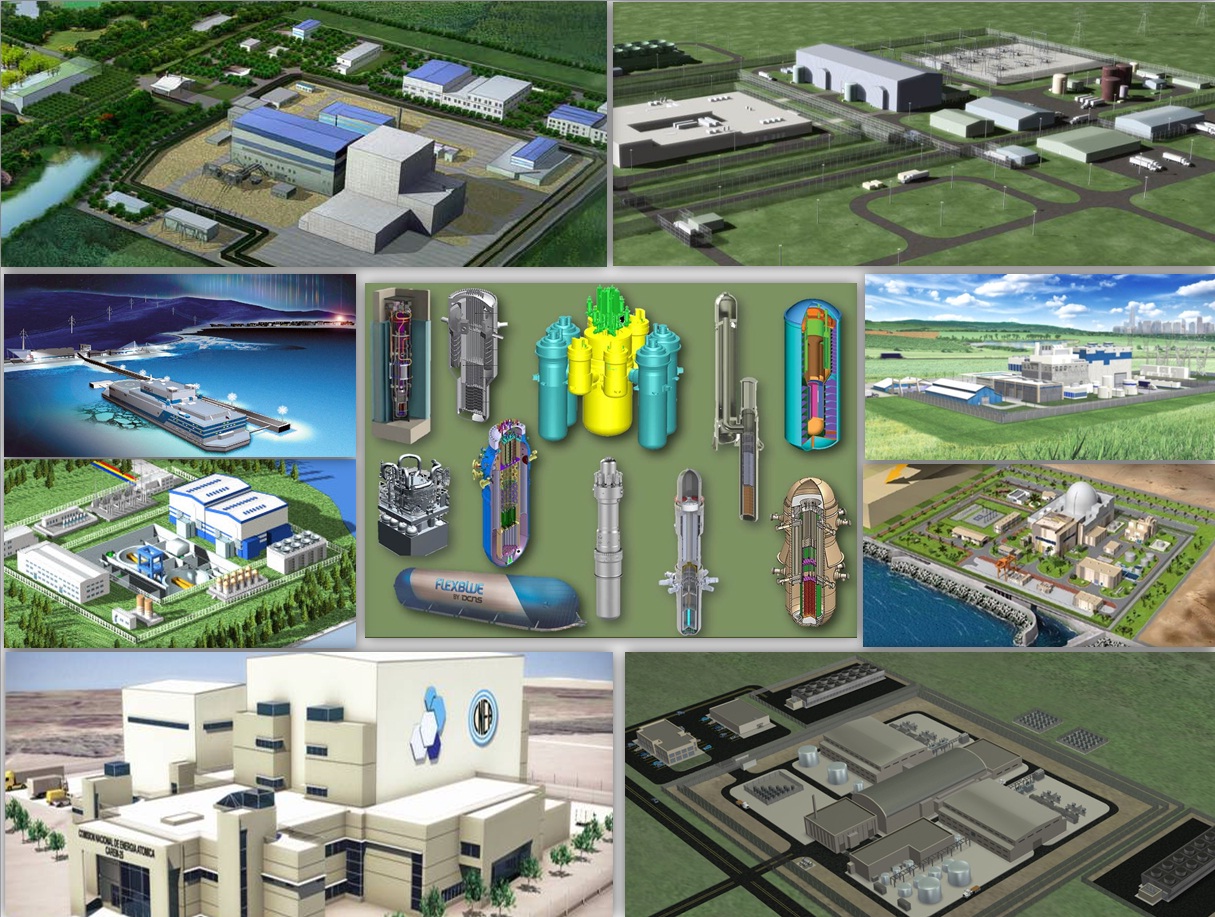
Martin Ruščák, former head of the Research Centre Řež, previously discussed the prospects for flexibility of small modular reactors in an interview with the oEnergetice website (here and here). In his view, the future lies in a combination of large and small reactors. While large reactors will continue primarily to provide baseload, the basic load of the grid, small reactors can offer greater flexibility. The start-up costs of small modular reactors will certainly be lower than the start-up costs of large reactors. Greater flexibility could potentially be offered by a combination of several small reactors – instead of one large one, for example.
The author is a consultant and energy project specialist at the HATcom agency.
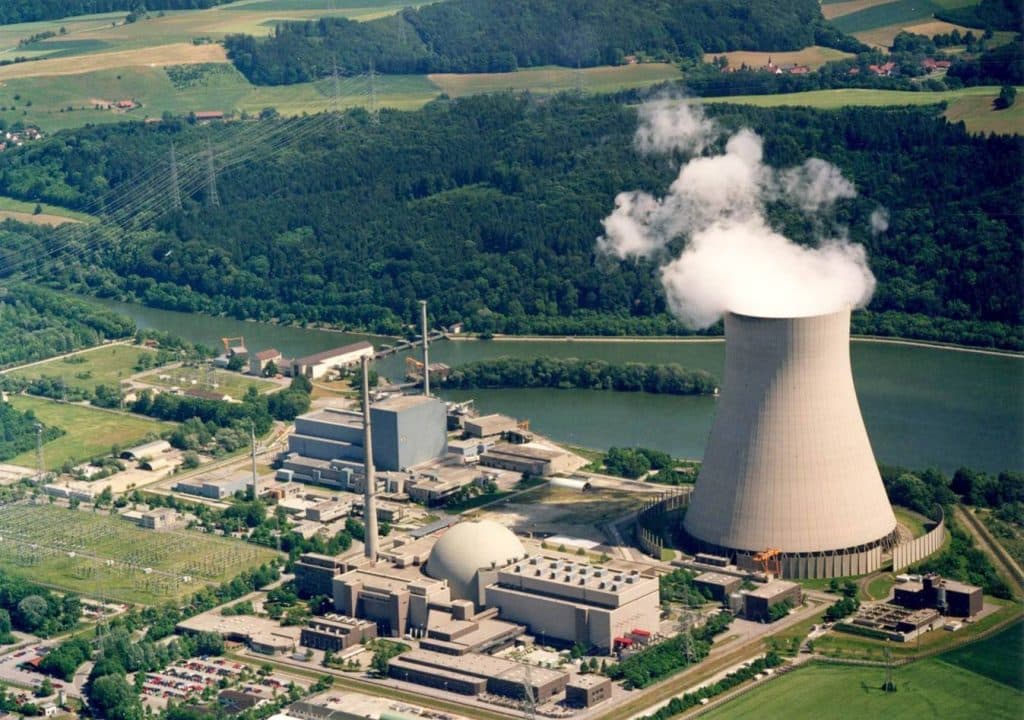
Lead photo: Isar nuclear power plant, Germany
Translation disclaimer
This article is a machine translation of the Czech original and has not yet been fully reviewed. In case of any doubt, please refer to the Czech version.