2 October 2026, 21:55
Loading...
Pressure vessel for second reactor installed at Hinkley Point C nuclear power plant

Jiří Puchnar
10 June 2026, 13:25
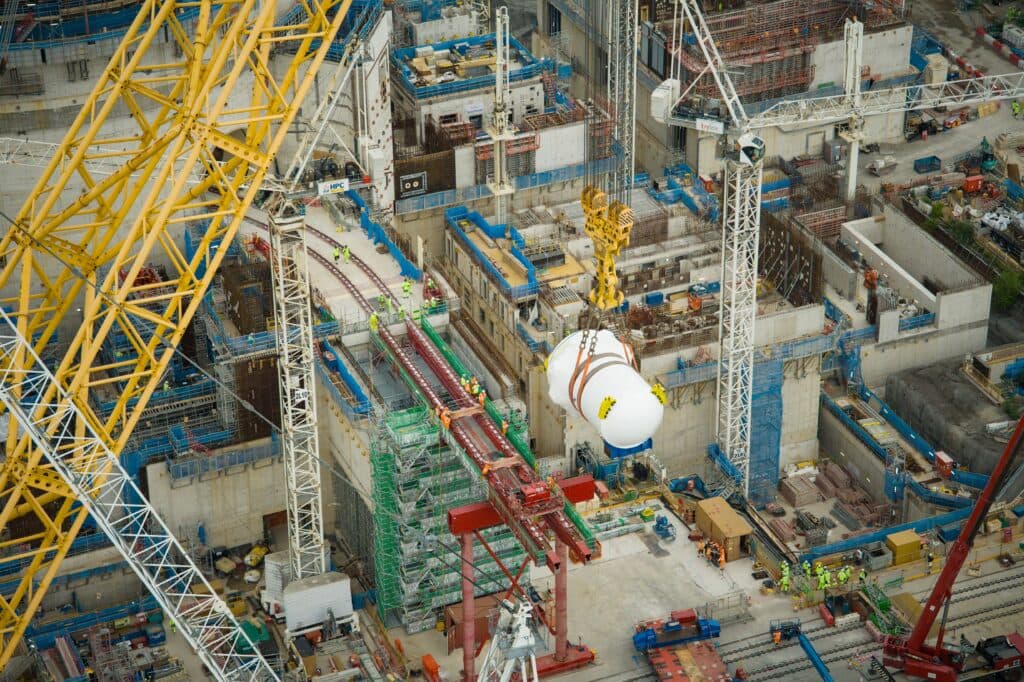
Construction of the UK’s Hinkley Point C nuclear power plant has reached another key milestone. The installation of the 500-tonne pressure vessel for the second EPR unit shows how EDF is drawing on experience from building the first unit to speed up construction both there and at the follow-on Sizewell C project.
EDF Energy has completed the installation of the reactor pressure vessel for the second unit of the Hinkley Point C nuclear power plant in Somerset. The two-day operation began on Thursday morning and ended on Friday afternoon, when the vessel was set in place in the second unit’s reactor building.
Big Carl replaces temporary lifting system
Unlike the first unit, where the pressure vessel was installed using a large temporary lifting system, the second unit used the Big Carl crane. According to EDF, this approach saved space, time and money, and is another example of applying lessons learned during construction of the first unit.
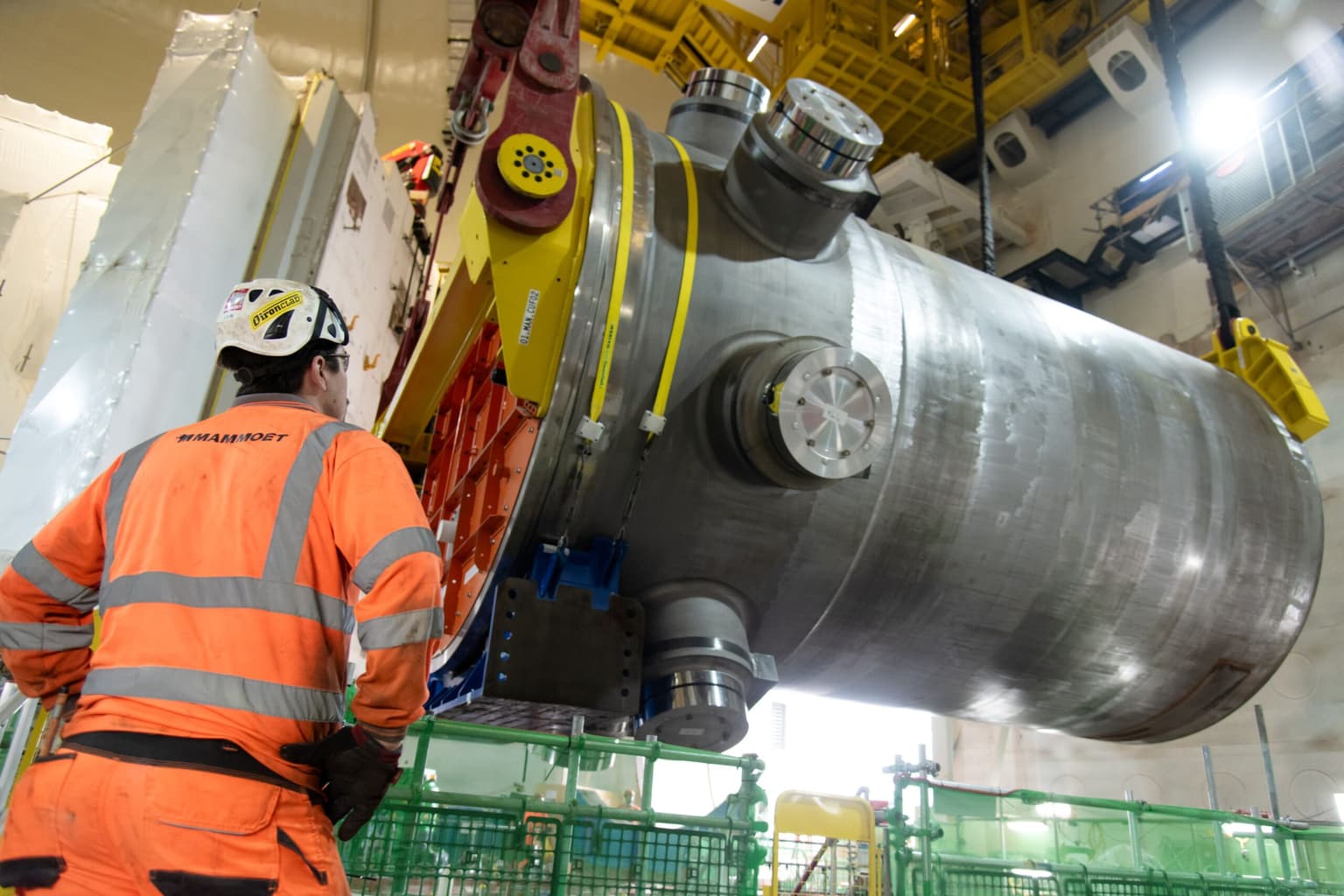
The polar crane carefully lowers the reactor vessel into position inside the building. Source: EDF Energy
The pressure vessel, weighing approximately 500 tonnes, was transported by crane to the reactor building and then brought inside through a 19.5-metre-high access opening. Inside the building, a large polar crane took over, rotated the 13-metre component into a vertical position and precisely set it on its support ring. According to EDF Energy, the clearance during installation was just 40 mm on each side.
A key component of the primary circuit
The reactor pressure vessel is one of the most important components of a pressurised water reactor. It houses the reactor core and internal components, which ensure the core is stabilised, direct the flow of coolant and enable the control rods to move.
The vessel for the second unit was manufactured by Framatome at its Saint-Marcel plant in Chalon-sur-Saône, eastern France. It was completed at the end of 2025 and arrived at the Hinkley Point C construction site in January 2026. Its installation will allow work to continue on assembling the remaining equipment needed to complete the second unit’s primary circuit.
Second unit progressing faster
EDF says the second Hinkley Point C unit is being built 20 to 30% faster thanks to experience gained during construction of the identical first unit. The company says the second unit’s reactor building is further advanced than the first unit was at the same stage of construction, partly thanks to a greater amount of equipment already installed, more steel structures and the completed outer layer of the containment building.
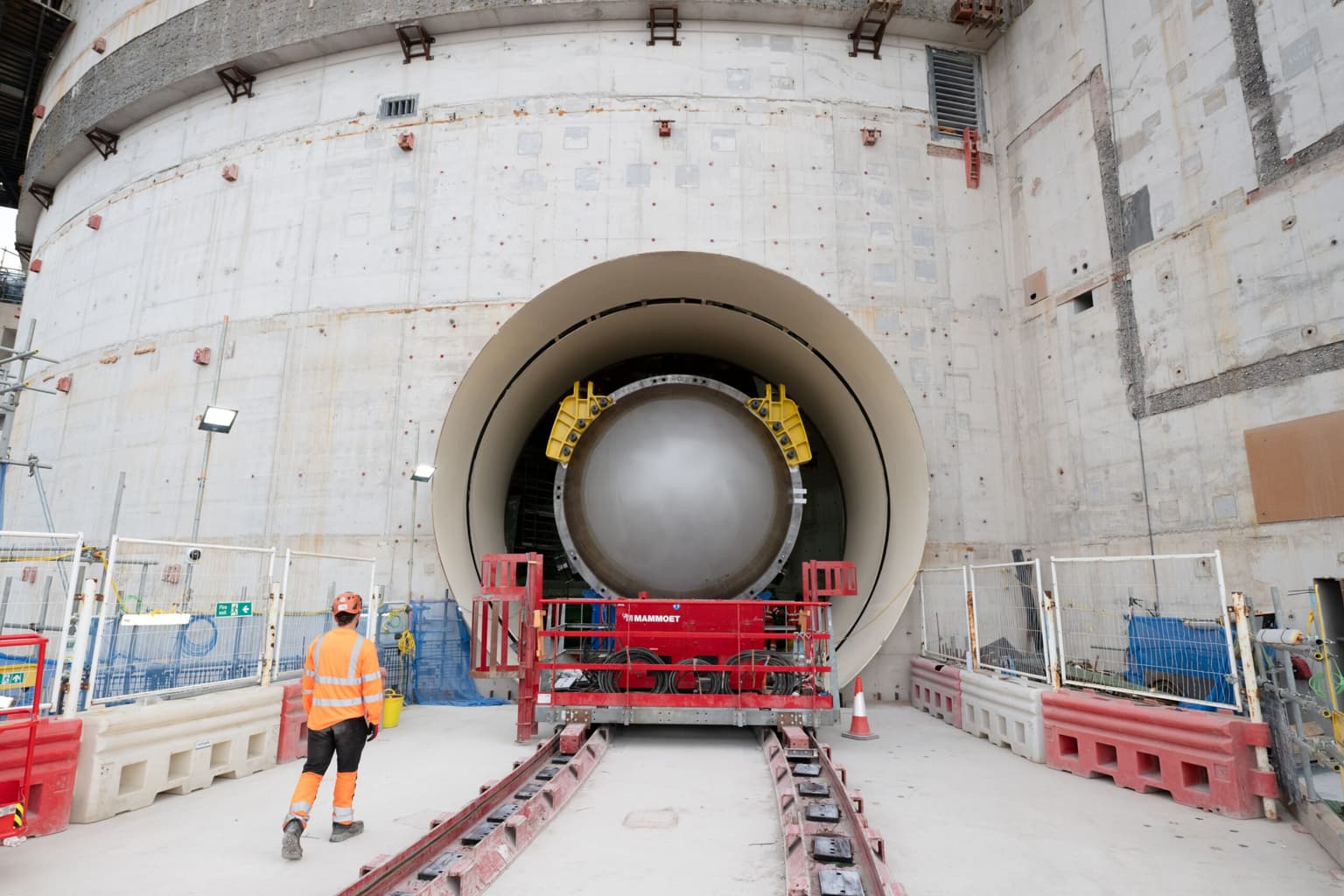
Transporting the reactor vessel on rails into the second reactor building. Source: EDF Energy
According to Simon Parsons, Hinkley Point C project delivery director, the installation was preceded by months of planning and close coordination among ten main contractors. EDF also stresses that the aim was not simply to repeat the process used for the first unit, but to apply the lessons learned to reduce the time and cost involved and minimise disruption to the organisation of the construction site.
Britain’s first new nuclear project in decades
Hinkley Point C consists of two EPR units, each with an installed capacity of 1630 MWe. Construction of the first unit began in December 2018, with the second unit following a year later. Once completed, the plant is expected to supply low-carbon electricity to around six million British households.
The project’s schedule and costs have been revised several times. While the first unit was originally expected to start operating by the end of 2025, the project’s original budget at the time of the final investment decision in 2016 was 18 billion pounds. However, in its 2025 results, EDF says Unit 1 is expected to begin generating in 2030 and estimates completion costs at 35 billion pounds in 2015 prices.
Experience will also be applied at Sizewell C
Lessons from construction of Hinkley Point C are also expected to be applied to the Sizewell C project in Suffolk. It will use the same UK EPR design and follow Hinkley Point C as the third and fourth units of this series in the United Kingdom.
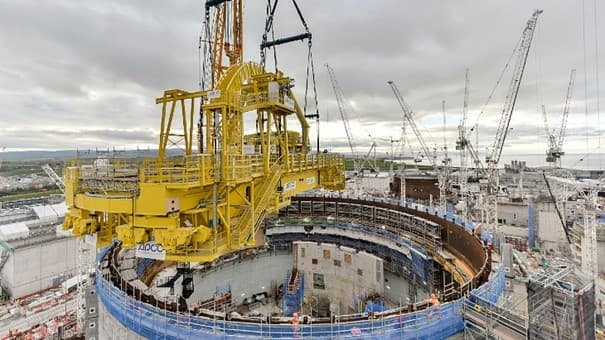
Positioning the gantry crane at Hinkley Point C’s first unit. Source: EDF
The UK government took the final investment decision on Sizewell C in July 2025. According to the National Audit Office, the project has a baseline cost estimate of 38.2 billion pounds and construction is expected to be completed in summer 2039. The UK watchdog also noted that although Sizewell C is expected to be cheaper to build than Hinkley Point C, the resulting cost of electricity for consumers could be higher due to higher capital costs and the fact that cost overruns at Hinkley Point C compared with the original estimates will be borne by EDF, the contractor.
Translation disclaimer
This article is a machine translation of the Czech original and has not yet been fully reviewed. In case of any doubt, please refer to the Czech version.
Sdílejte článek prostřednictvím:
You might also like

2 October 2026, 15:14
2 October 2026, 10:06
2 October 2026, 06:14