Research in Řež demonstrates options for cleaning up the Fukushima accident
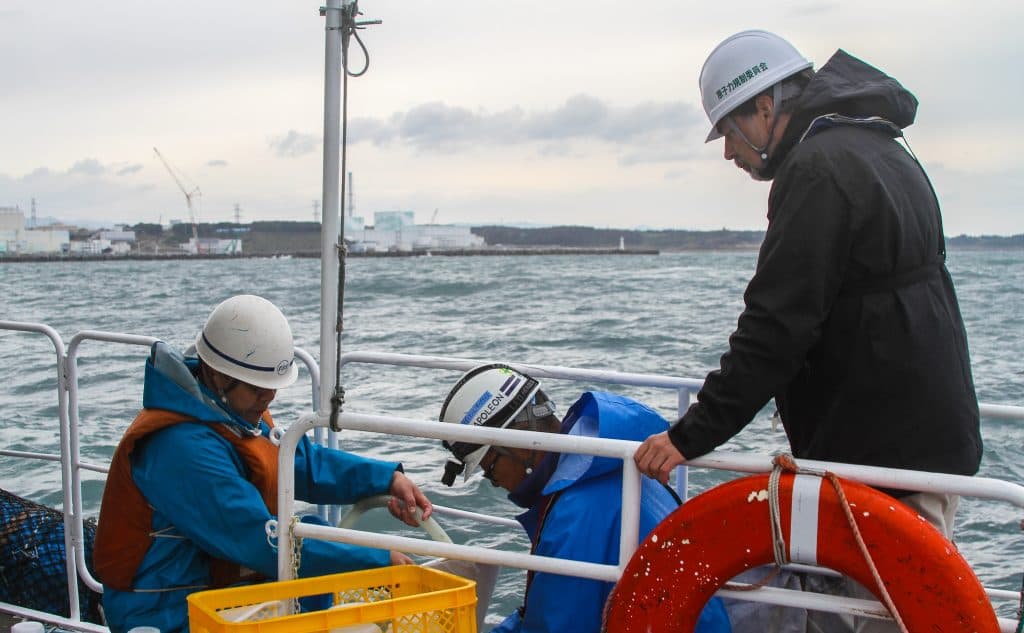
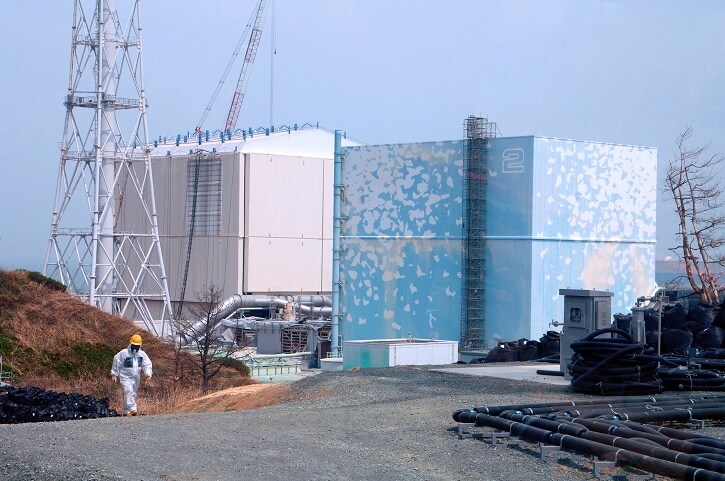
Japan’s bet on a unique method for disposing of molten nuclear fuel, which is being investigated at the Czech Research Centre Řež, is yielding its first positive results. Last year, a Japanese consortium led by Hitachi-GE commissioned contract research in Řež aimed at contributing to the remediation of the 2011 accident at the Fukushima nuclear power plant. During the first stage of the research, Czech scientists demonstrated that they can use fractional distillation to separate uranium from solidified melt, which in addition to radioactive elements also contains iron and zirconium from melted fuel elements.
As Research Centre Řež director Martin Ruščák confirms in an interview with OEnergetice, the next stage will need to verify whether plutonium can be separated in a similar way.
“Separating plutonium is more demanding in terms of the required safety conditions, because plutonium is a highly radiotoxic element. However, in terms of using fractional distillation, it does not represent any fundamental qualitative change compared with uranium separation,” says Martin Ruščák.
The only option
The fractional distillation method consists of separating chemical substances according to their boiling points by heating them to temperatures at which the individual components, or fractions, of a mixture evaporate – in this case in the form of fluorides after a prior reaction with fluorine. Everything indicates that this is the only way to remove radioactive elements from Fukushima’s solidified corium – the melt created when nuclear fuel and reactor components melt, mix together and subsequently solidify.
“The conventional method of separating substances in acids does not work in this case, as corium does not dissolve in them,” notes Jan Uhlíř of Research Centre Řež, who has been working on the use of fractional distillation in nuclear power for decades.
Information from Three Mile Island
At the start of the research, the Japanese provided researchers in Řež with data on the appearance of molten fuel after one of the best-known nuclear power plant accidents, at the US Three Mile Island plant in 1979.
“This enabled us to create a similar mixture, which is likely also present beneath the melted Fukushima reactors. The information thus allowed us to carry out further testing,” Jan Uhlíř explains.
The Japanese had access to this information thanks to their longstanding cooperation with the Americans. Hitachi, for example, has long worked with major US corporation GE on the development of boiling water reactors and the production of nuclear fuel.
Meanwhile, investigations continued at Fukushima to identify the solidified melt, which proved exceptionally challenging due to the high radiation levels there. As Tokyo Electric Power Co., the operator of the Fukushima reactors, announced, it was only this year that a robot was able to identify and photograph corium in November.
The actual disposal of the melt and separation of radioactive elements is scheduled to begin in 2021. At that time, it should concern corium from the first of Fukushima’s three damaged reactors.
Unique expertise in Řež
The fact that the Japanese turned specifically to Řež is linked to unique experience stemming from a history going back around half a century. At that time, the Nuclear Research Institute (ÚJV) in Řež began researching the behaviour of uranium fluorides and fluorides of other fission products. Of course, nobody then could have imagined how much this unique Czech expertise would one day be sought after in the Land of the Rising Sun.
Since the 1960s, researchers in Řež have examined the physicochemical properties of fluorides, but they also had to master, for example, the laboratory preparation of gaseous fluorine. A Western embargo was then in place on imports of this chemical into former Czechoslovakia.
Czechoslovakia worked with the Soviet Union on the fractional distillation method. It was originally intended for reprocessing spent fuel from so-called fast reactors. As Jan Uhlíř recalls, this cooperation ended after the 1986 accident at the Chernobyl nuclear power plant, when the Soviets devoted all funding to research aimed at improving the safety of RBMK-type nuclear reactors.
Not only Fukushima
The process based on the fractional distillation of fluorides has – at least according to available information – been experimentally studied and developed only in the Czech Republic since the late 1980s. This is apparently why the Japanese were unsuccessful when they initially explored the possibility of using the method in Russia.
The research of the former Nuclear Research Institute was later continued by the aforementioned Research Centre Řež, which belongs to today’s successor group, ÚJV Řež. This research was supported by the Ministry of Industry, the Radioactive Waste Repository Authority and the Grant Agency.
Thanks to research dating back half a century, Czechia has also acquired unique expertise in fluoride salts that can be used in developing fourth-generation molten salt reactor technology – cooled precisely by fluoride melts. “Besides Czechia, only the United States and China can boast similar expertise,” says Martin Ruščák. He notes that Research Centre Řež is cooperating with the US Oak Ridge National Laboratory on the development of small modular reactors of this type. (More information here and here.)
Further cooperation with the Japanese
The research being carried out in Řež for the Japanese consortium led by Hitachi-GE is not the only example of such cooperation between Czech and Japanese researchers. Martin Ruščák points out that Research Centre Řež also collaborated with the Tokyo Institute of Technology (TITECH) on investigating the properties of corium.
This research involved the use in Řež of a so-called cold crucible – a device for high-frequency induction heating used to melt materials. Researchers in Řež are also currently discussing further opportunities for cooperation with the Japanese.
The author is a consultant and energy projects specialist at HATcom agency.
Translation disclaimer
This article is a machine translation of the Czech original and has not yet been fully reviewed. In case of any doubt, please refer to the Czech version.