Russia wants to build the first nuclear power plant on the Moon, Roscosmos says

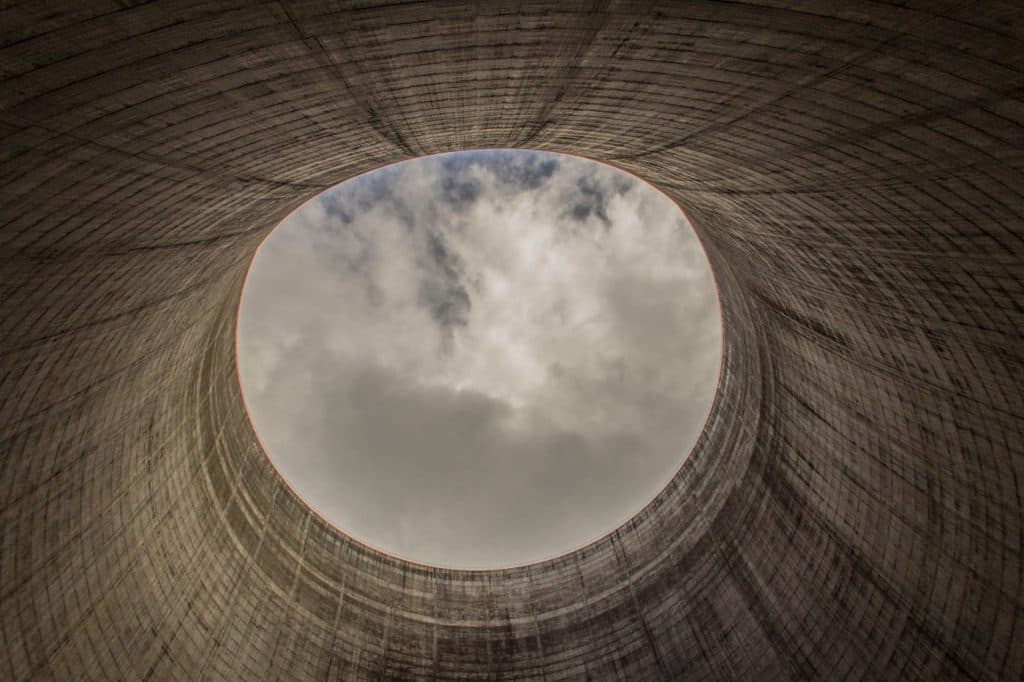
Russia plans to build the first nuclear power plant on the Moon, Russian space agency Roscosmos chief Dmitry Bakanov said on social media, in a post highlighted by The Moscow Times. Roscosmos mentioned plans last year to build a nuclear power plant on the Moon between 2033 and 2035.
"We are not only preserving the glory of past achievements, but creating new reasons to be proud, as well as the conditions for economic growth and a better quality of life," Bakanov wrote, stressing that to this end Roscosmos plans to send a large number of satellites into orbit to increase internet connection speeds and ensure access in every corner of Russia.
It also plans to improve the accuracy of the Glonass navigation system and is upgrading its launch vehicles and spacecraft. Its tasks also include creating a new Russian space station to replace the existing International Space Station (ISS), building the first nuclear power plant on the Moon as a foundation for future lunar bases, and continuing research on Venus. "We are the only country to have managed to land a space probe there," he wrote.
The Soviet Venera programme was the first and only mission to land a probe on the surface of Venus, in 1970, The Moscow Times noted.
Chinese lunar mission officials spoke in April about the possibility of building a nuclear power plant at a future lunar research station that China is planning with Russia, Reuters reported. Over the past three decades, Beijing has significantly developed its space programmes and invested billions of euros in them in a bid to become a leading space power. It aims to land people on the Moon by the end of the decade, a goal the United States is pursuing once again as well.
In addition to nuclear power, the energy network of the future International Lunar Research Station (ILRS) could rely on a solar farm, Pei Zhaoyu, chief engineer of the Chang'e 8 mission planned for 2028, said at a presentation in Shanghai. Its aim is to lay the foundations for construction of the ILRS.
After a hiatus of more than forty years, the Moon has once again become a focus of interest for the world's major powers in the new millennium. In December 2013, for the first time since 1976, China's Chang'e 3 probe landed on the lunar surface with the Yutu lunar rover. In recent years, several government agencies and private companies have made successful and unsuccessful attempts to reach the Moon with their probes; most recently, the Blue Ghost lander operated by US company Firefly Aerospace succeeded in early March this year.
China's lunar exploration timetable aligns to some extent with the plans of the Artemis programme run by the US National Aeronautics and Space Administration (NASA). According to a statement last December, it aims to land a crew on Earth's natural satellite in 2027. Beijing plans to send its astronauts to the Moon by 2030.
The last astronauts to set foot on the Moon were part of the US Apollo programme in 1972.
Russia's space programme has been hit hard by sanctions imposed after its aggression against Ukraine, but it had already begun to decline much earlier. China has taken Russia's place in space. The space industry, once a source of Russian pride, is moving ever closer to complete collapse, starved of contracts, spare parts, new technology and money. Alongside nuclear weapons, it used to be a key symbol of Russia's standing as a world power, the Polish newspaper Rzeczpospolita wrote some time ago. The serious problems facing Russia's space industry, which has tried with varying degrees of success to inherit the legacy of the former Soviet Union, began long before the attack on Ukraine. Elon Musk's SpaceX has dealt Russia a particularly severe blow, with its Falcon 9 rockets creating competition for Russian Soyuz launch vehicles. But the reusable Falcons can launch payloads into orbit much more cheaply. Musk's space company has increased its number of launches to record levels and, as early as the year before last, handled around 80 percent of all payloads launched into orbit worldwide. China accounted for ten percent, while the rest of the world combined—mainly Russia, India and Japan—accounted for the remaining ten percent.
Translation disclaimer
This article is a machine translation of the Czech original and has not yet been fully reviewed. In case of any doubt, please refer to the Czech version.




