Russian Rosatom targets a 100-year service life for its new reactors

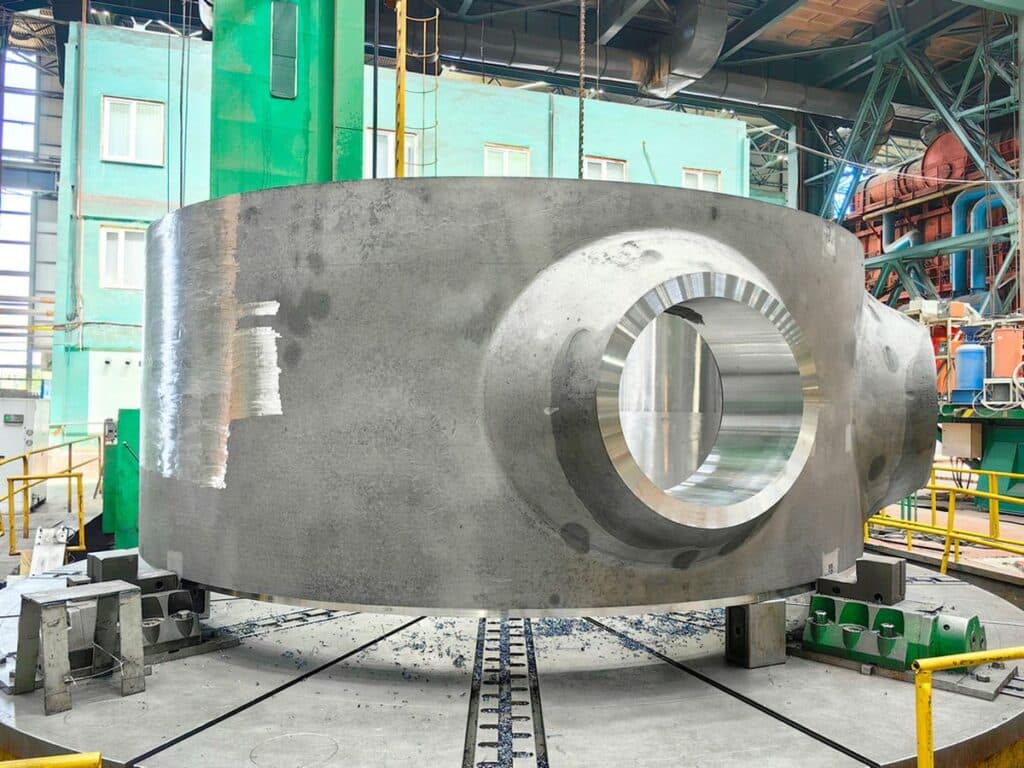
The service life of nuclear power plants is one of their key parameters, given the high cost of construction. While many existing units were designed for 40 years of operation, extending their service life has become a strong trend in recent years. Many nuclear units built in the 1980s could therefore operate for 50 or even 60 years. Russian company Rosatom has said that, thanks to new materials and technologies, modern reactors should have a service life of up to 100 years.
Building a nuclear power plant is typically a massive project costing hundreds of billions of crowns. The planned service life of a facility is therefore one of the important parameters determining its economic viability. In the case of nuclear power plants, the reactor pressure vessel is a key component, and its service life usually determines the lifetime of the entire facility.
According to Rosatom, innovative structural materials, new welding technologies and a reduction in the number of welds could extend the service life of modern nuclear power plants. Welds are often a weak point in any structure, not only in reactor pressure vessels and other components of nuclear power plants. Innovative materials and methods are expected to make it possible to extend the service life of modern plants to as much as 100 years.
"The reactor pressure vessel is a key component of every nuclear power plant, and its reliability determines the service life of the plant itself. That is why we draw on the long-standing experience of leading domestic universities and the research of modern scientists, while continually improving the metallurgical and welding technologies used to manufacture reactor components. This has already helped extend reactor service life from 30-40 years for first-generation reactors to 60-80 years for Generation 3+ reactors. We now see that this is not the limit—new materials will ensure that nuclear power plants have a service life of up to 100 years in the near future,"Viktor Orlov, CEO of the Central Research Institute of Machine-Building Technology, said, according to World Nuclear News.
According to the news site, Rosatom recently completed welding work on the upper section of a reactor pressure vessel intended for Unit 2 of Egypt's El Dabaa nuclear power plant. The welding work at the Atommasch manufacturing plant in Russia took 20 days. Approximately 3.5 tonnes of wire and 4.5 tonnes of flux were used for the two circumferential welds, and an anti-corrosion coating was applied to strengthen them.
Translation disclaimer
This article is a machine translation of the Czech original and has not yet been fully reviewed. In case of any doubt, please refer to the Czech version.




