10 October 2026, 07:37
Loading...
Small modular reactors in Poland: OSGE seeks support and plans first unit for 2032
Veronika Jurcová
12 July 2026, 08:15
Polish company Orlen Synthos Green Energy (OSGE) has asked the government to introduce a support scheme for the construction of 14 BWRX-300 small modular reactors (SMRs). If the European Commission approves the proposed support, this could be the first use of a Contract for Difference (CfD) mechanism for small modular reactors in the European Union. OSGE plans to bring the first unit online in 2032, according to a press release.
Poland is continuing to develop nuclear power on two fronts. Alongside preparations for the first large nuclear power plant at Lubiatowo-Kopalino, the small modular reactor (SMR) programme is now also moving into its next phase. Orlen Synthos Green Energy (OSGE) has asked Poland’s energy minister to launch a process aimed at introducing a support scheme for the construction of a fleet of GE Vernova Hitachi BWRX-300 reactors.
The application covers 14 reactors at three sites: Włocławek, Stawy Monowskie near Oświęcim and Stalowa Wola. It is the first phase of OSGE’s wider programme, which envisages building up to 26 BWRX-300 units. If these plans go ahead, Poland could become one of the first European operators of a large fleet of small modular reactors.
The company has already obtained initial approvals from the Polish government for all three sites and is continuing with the subsequent permitting processes, including environmental impact assessments and securing grid connections.
“Contracts for Difference for 14 units will enable us to build a fleet of BWRX-300 reactors in Poland. Through economies of scale, standardisation and modularisation, we will reduce unit costs, creating a cost-attractive electricity generation model for both individual and industrial customers. At the same time, approval of the Contracts for Difference will be an important step towards building a robust supply chain for SMRs in Poland,” said OSGE CEO Rafał Kasprów.
State aims to offer investors revenue certainty
A key element of the project is the Contract for Difference (CfD) mechanism. This form of public support ensures investors predictable revenue from electricity generation. The state and the generator agree on a reference electricity price in advance. If the market price falls below this level, the state pays the generator the difference. If it rises above it, the generator pays the difference back to the state. The mechanism thus limits investment risk and makes it easier to finance capital-intensive projects such as nuclear power plants.
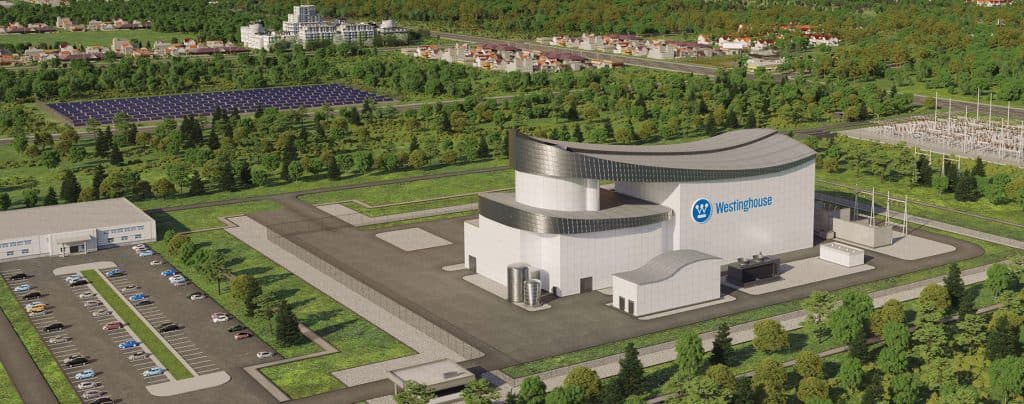
The European Commission approved this model at the end of last year for Poland’s first large nuclear power plant at Lubiatowo-Kopalino, where three Westinghouse AP1000 units are planned. OSGE is now seeking a similar support model for its SMR programme.
Following OSGE’s application, the Polish government will now prepare the documentation for the notification process with the European Commission. The company expects the approval process to be similar to that for the large nuclear project.
The Polish government has also signalled that it considers CfDs the main support instrument for future SMR projects. In June, Government Plenipotentiary for Strategic Energy Infrastructure Wojciech Wrochna said that establishing a support model for small nuclear projects was among the measures included in Poland’s National Energy and Climate Plan.
First unit is due to begin generating power in 2032
According to OSGE’s plans, the first BWRX-300 reactor will enter service in Włocławek in 2032. The BWRX-300 is a small modular reactor with an electrical capacity of approximately 300 MW, developed by GE Vernova Hitachi Nuclear Energy. The reference project for this technology is currently under construction in Darlington, Canada.
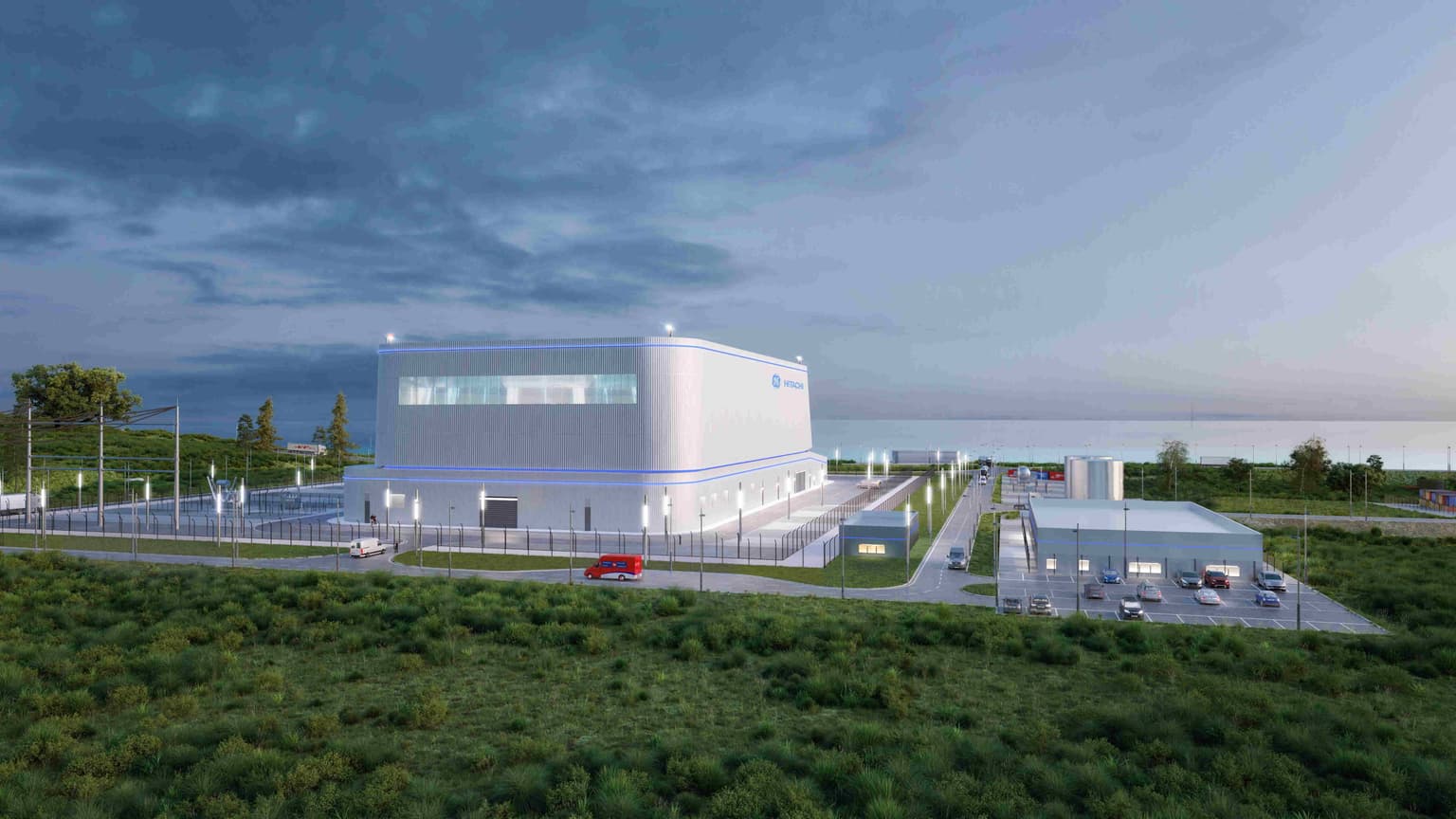
Source: GE Vernova Hitachi Nuclear Energy
OSGE spent almost a year preparing its support application in cooperation with international advisers. The documentation was prepared with the involvement of KPMG in the United Kingdom and the Czech Republic, as well as Swedish advisory firm ETARA.
For Poland, small modular reactors are a complement to the construction of large nuclear power plants, not a replacement for them. While large units are intended to provide electricity generation on a national scale, smaller reactors are expected to be used mainly in industry, district heating and regional energy systems.
Czechia is still looking for a support model
Meanwhile, the Czech Republic is moving ahead with preparations for its own small modular reactor programme. ČEZ signed an agreement with UK-based Rolls-Royce SMR this year, opening the next phase of the project, which includes preparing documentation for the permitting process and environmental impact assessment. Alongside technical and licensing preparations, the two parties are also to work together on the investment model and potential sources of project financing.
Unlike Poland, however, the Czech Republic has not yet presented a specific public support model comparable to the Contract for Difference (CfD) mechanism. Financing is one of the key issues to be addressed as the project moves forward. ČEZ and the state announced in April that they had formed a joint working group, which is to address the investment model, potential sources of financing and possible notification of public support to the European Commission, alongside regulatory issues
Translation disclaimer
This article is a machine translation of the Czech original and has not yet been fully reviewed. In case of any doubt, please refer to the Czech version.
Sdílejte článek prostřednictvím:
You might also like

10 October 2026, 07:02


9 October 2026, 13:47