South Korean election frontrunner backs only existing nuclear power. Will the election affect the Dukovany expansion?

South Koreans are electing a new president. However, the two main rivals have fundamentally different views on nuclear energy. Lee Jae-myung, now considered the election frontrunner, takes a highly pragmatic and cautious approach to nuclear energy – he primarily wants to support extending the operating lives of existing units. He is reserved about new units and would rather rely on renewable sources, Bloomberg reports.
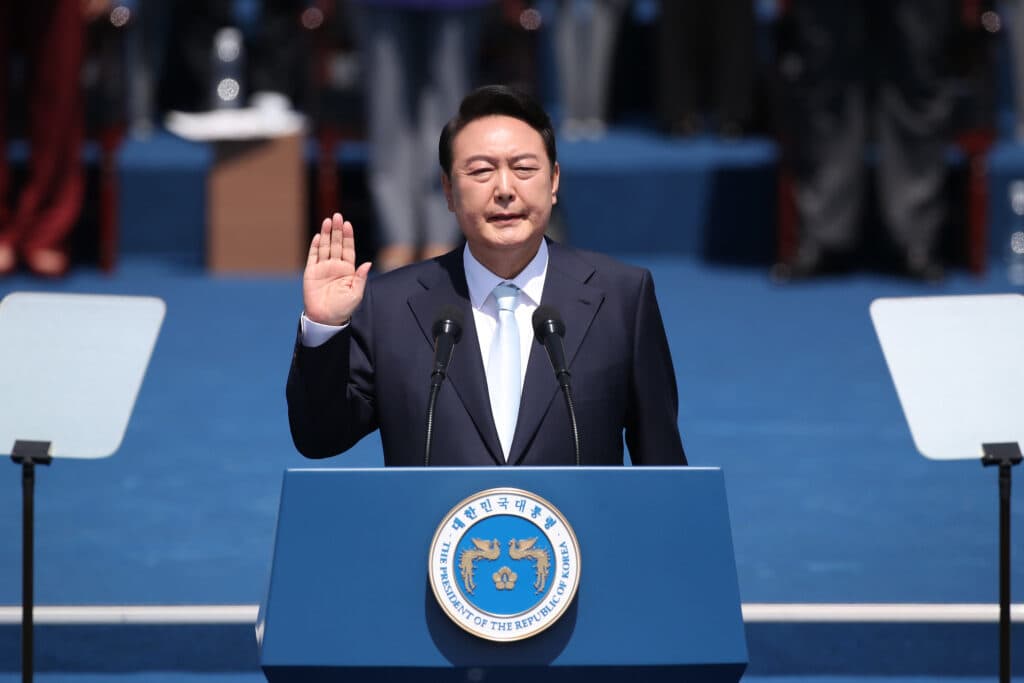
South Korea's presidential election begins this Tuesday. South Koreans are electing a new president nearly two years earlier than originally planned. After declaring martial law last December, the last president, Yoon Suk Yeol, was removed from office by South Korea's Constitutional Court in April. He had pursued a pro-nuclear policy in the energy sector.
However, Yoon Suk Yeol's pro-nuclear policy, which promoted nuclear energy as a means of reducing emissions and increasing the country's energy security, is now at stake. Nuclear energy, or rather the export of Korean nuclear technology, was intended to strengthen Korean industry.

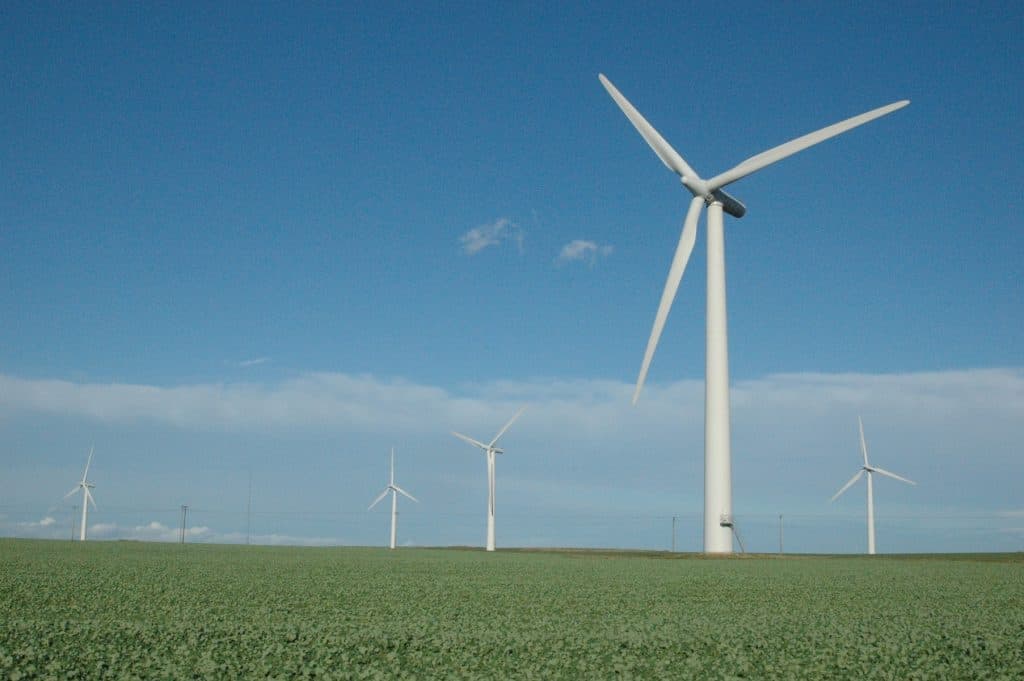
If current frontrunner Lee Jae-myung wins, Korea's pro-nuclear policy is unlikely to continue. The leading candidate considers renewable, rather than nuclear, sources to be the priority in the energy sector. Existing nuclear sources should only help achieve an energy system based primarily on renewables. Lee even considers nuclear energy dangerous.
“Nuclear energy is inherently dangerous and there are issues with its sustainability. Let us use it, but not too much. And we should transition to renewable energy sources,” Bloomberg quotes Lee Jae-myung, the slight election favourite.
The pro-nuclear candidate is Kim Moon-soo, the candidate of the conservative People Power Party and Lee's main rival, Bloomberg reports. Kim Moon-soo previously promised to raise nuclear energy's share to 60% – from approximately 32% in 2024 – but later withdrew this target. Kim currently supports the construction of six new reactors, a policy mirroring that of the outgoing president.
The two candidates agree on the issue of small modular reactors – both support their development and export abroad. In this context, Bloomberg reports that current election frontrunner Lee Jae-myung wants to push for greater profitability of overseas contracts, following criticism that they had been underpriced.
The profitability of the Czech nuclear tender for KHNP is also a topic in South Korea. The Korea Times daily noted that there are doubts about profitability, including due to the 60% requirement for the involvement of local suppliers.
“The more closely you look at the nuclear contract for the Czech Republic, the clearer it becomes that it is more of a flop than a breakthrough,” The Korea Times quoted Chung Cheong-rae, a National Assembly member from the Democratic Party of Korea (DPK).
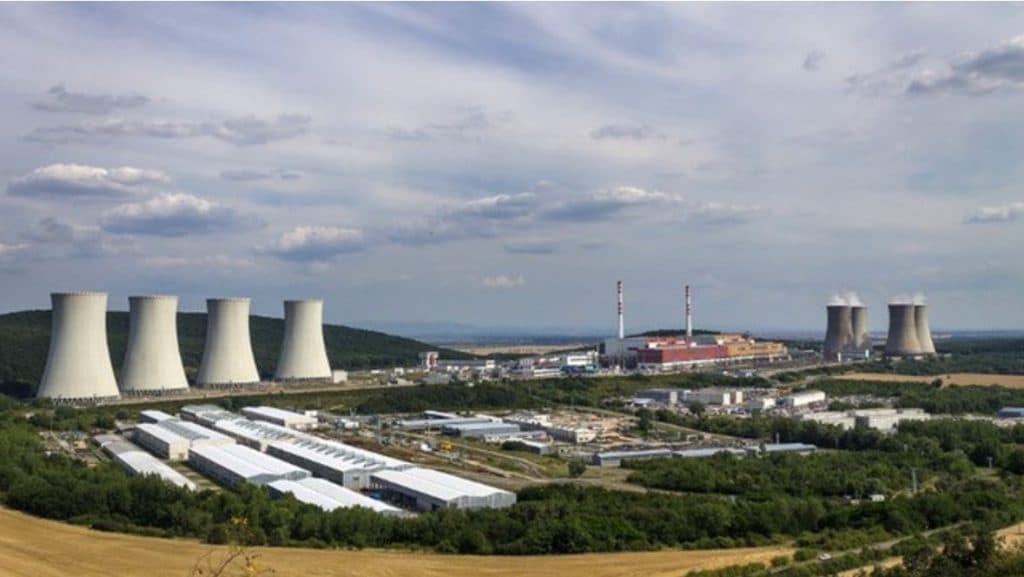
South Korea currently has 26 nuclear power plants in commercial operation and two large APR1400 pressurised water reactor units under construction at the Saeul nuclear power plant in the southeast of the country.
South Korean state-owned KHNP's bid for the Dukovany expansion is valid until the end of June; an extension is uncertain
The presidential election and South Korea's future nuclear policy may also affect the expansion of the Dukovany nuclear power plant. The current pro-nuclear policy, which has moreover focused on exporting nuclear technology, may gradually change after the election.

The tender for the construction of two units at the Dukovany site and an option for two units at the Temelín site, won by South Korean state-owned KHNP, is now at a "standstill".
After the Regional Court in Brno issued an interim injunction prohibiting Elektrárna Dukovany II, a.s. from signing a contract with South Korea's KHNP, the next step by the court is awaited. Elektrárna Dukovany II, a.s. has already filed both cassation appeals against the interim injunction and a motion to have it lifted. A decision is still pending, and it is uncertain whether the court will rule by the end of June.
It should be added that KHNP's bid is valid only until the end of June, and KHNP representatives have already publicly stated that its extension is not entirely certain. If a contract were not signed by the end of June, KHNP would have to reassess the current circumstances of the bid before deciding whether to extend or revise it.
Only the coming weeks and months will indicate whether, and if so how, the outcome of the South Korean presidential election will affect the Dukovany tender. However, nuclear energy has significant political implications, and the election results therefore cannot simply be overlooked.
Translation disclaimer
This article is a machine translation of the Czech original and has not yet been fully reviewed. In case of any doubt, please refer to the Czech version.