3 October 2026, 13:01
Loading...
Analysts warn: Oil through Hormuz may never flow as it did before the war

oEnergetice.cz, ČTK
30 May 2026, 22:43
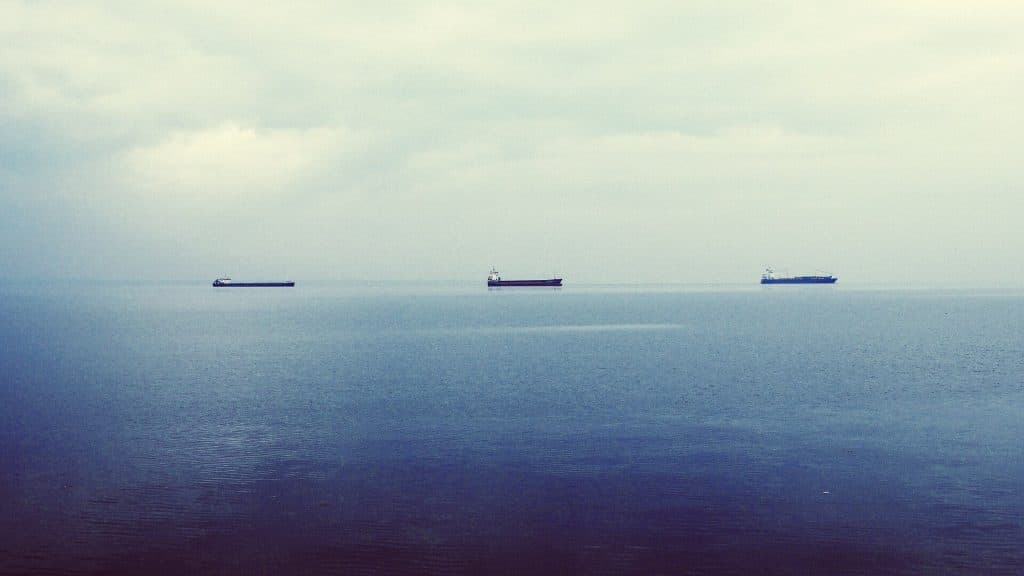
According to some analysts, oil shipments through the Strait of Hormuz may not return to pre-war levels even if Washington and Tehran reach a peace deal. Shipowners, they say, will continue to weigh security risks in the Persian Gulf, including the possibility of renewed fighting. This could restrict traffic along one of the world’s most important shipping routes for the long term. The CNBC website said so in its analysis.
Amos Hochstein, a former energy and national security adviser to US President Joe Biden, said regional states already effectively regard the Strait of Hormuz as an area under Iranian control.
"No matter what happens, the Iranians will control the Strait of Hormuz for the foreseeable future," he told CNBC.
"It doesn’t even matter what the agreement says. Everyone in the region thinks that," he added.
Helima Croft of RBC Capital Markets said the number of tankers passing through the area before the war may prove to be a peak that cannot be reached again for a long time.
Richard Meade, editor-in-chief of specialist publication Lloyd’s List, estimates that traffic could recover to only 60 to 70 percent of pre-war levels. "Something more insidious will emerge," he said. "A permanently divided strait, where access depends on political alignment rather than freedom of navigation," he added.
Analysts also point to the experience in the Red Sea, where attacks by Yemen’s Houthi rebel movement caused a sharp drop in shipping at the start of 2024. Although the attacks have recently stopped, traffic has not returned to its previous level even after more than two years.
"You don’t need a massive navy to create a major disruption in a maritime chokepoint," said Lloyd’s List analyst Tomer Raanan.
The Middle East war, which began in late February with US-Israeli strikes on Iran, brought shipping through the Strait of Hormuz to a standstill. Around one-fifth of the world’s oil, petroleum product and liquefied natural gas (LNG) supplies normally pass through it, as well as roughly one-third of seaborne fertilizer shipments.
Saudi Arabia and the United Arab Emirates do use pipelines that bypass the Persian Gulf, but experts say these cannot fully make up for the disruption. Gulf countries are therefore accelerating the construction of additional alternative routes that could reduce their dependence on the route through the Strait of Hormuz in the future, CNBC added.
Translation disclaimer
This article is a machine translation of the Czech original and has not yet been fully reviewed. In case of any doubt, please refer to the Czech version.
Sdílejte článek prostřednictvím:
You might also like
3 October 2026, 07:43
2 October 2026, 21:55

2 October 2026, 15:14