3 October 2026, 13:01
Loading...
Middle Eastern producers continue exporting oil and LNG despite attacks in the Strait of Hormuz

oEnergetice.cz, ČTK
29 June 2026, 12:33
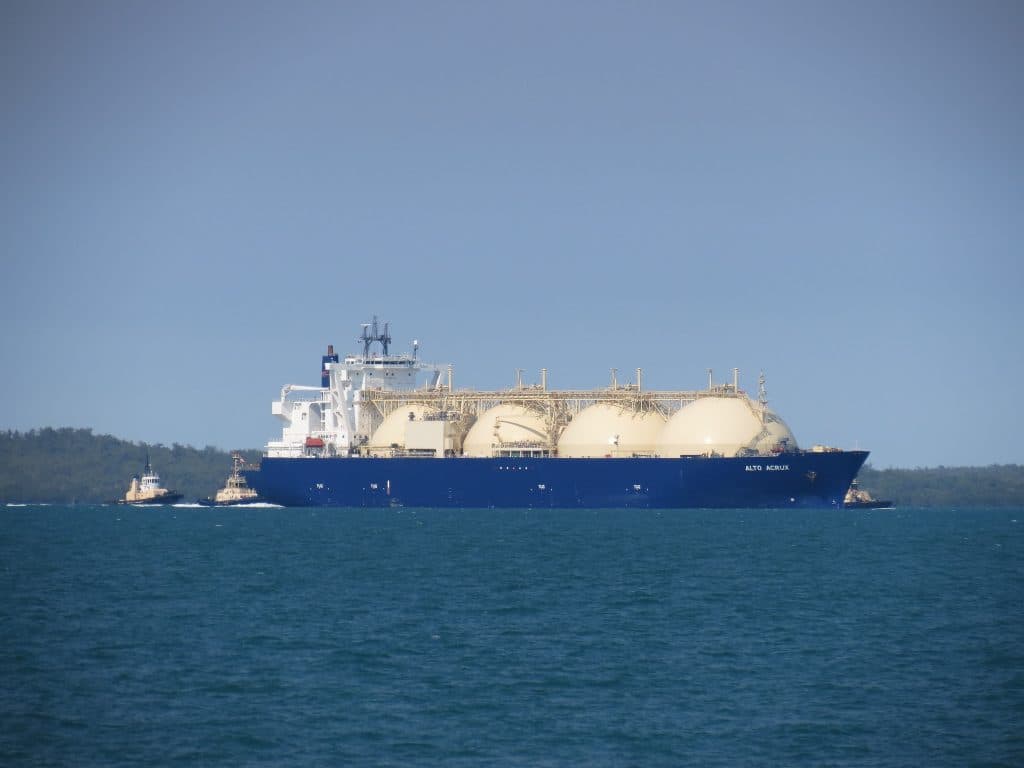
Oil and liquefied natural gas (LNG) producers in the Middle East are continuing to load cargoes despite new attacks on ships in the strategically important Strait of Hormuz and renewed strikes between the United States and Iran in recent days. This is according to shipping data cited by Reuters today. However, vessels are switching off their transponders for security reasons, stopping them from transmitting identification signals.
Energy commodity shipments through the Strait of Hormuz have slowed after Thursday’s attack on a container ship and Saturday’s attack on an oil tanker triggered a new round of retaliatory strikes. These then disrupted the fragile truce between Washington and Tehran.
On Sunday, however, a US official said the two countries had agreed to halt the fighting and resume talks over the strategically important strait. Before the escalation of the conflict in the Middle East, which began on 28 February with US-Israeli strikes on Iran, about a fifth of the world’s oil and LNG supplies passed through the Strait of Hormuz.
A fourth supertanker was moored at Saudi Arabia’s Ras Tanura terminal today to load cargo, according to data from LSEG. The vessel can carry up to two million barrels of oil. It was loading oil there despite a helicopter belonging to oil company Saudi Aramco crashing near the terminal on Sunday. Fourteen people died in the accident; the cause was not immediately known.
Three other supertankers loaded oil there over the weekend, but after leaving the terminal they went dark, meaning they switched off their transponders to prevent identification. The measure is intended to reduce the risk of attack while sailing through the Persian Gulf.
One of these supertankers reappeared in the vessel-tracking system today after successfully passing through the Strait of Hormuz. It is now heading to Japan. Two other supertankers entered the Strait of Hormuz on Sunday and anchored at a terminal in the United Arab Emirates, where they are loading oil.
Saudi Aramco declined to comment on the situation. Abu Dhabi National Oil Company (ADNOC) said that, in line with its policy, it does not provide information on the locations, movements or routes of its vessels.
The escalation of the conflict in the Middle East at the end of February caused a sharp rise in prices for energy commodities and, for example, fertilisers, which are also shipped through the Strait of Hormuz. Brent crude rose to nearly 120 dollars a barrel at the end of April, compared with around USD 70 in February. Following a recent partial easing of tensions, Brent is currently trading above USD 72 a barrel.
Translation disclaimer
This article is a machine translation of the Czech original and has not yet been fully reviewed. In case of any doubt, please refer to the Czech version.
Sdílejte článek prostřednictvím:
You might also like
3 October 2026, 07:43
2 October 2026, 21:55

2 October 2026, 15:14