
17 October 2026, 13:09
Loading...
Oil prices rise above $100 as war in the Middle East escalates

oEnergetice.cz, ČTK
9 March 2026, 09:01
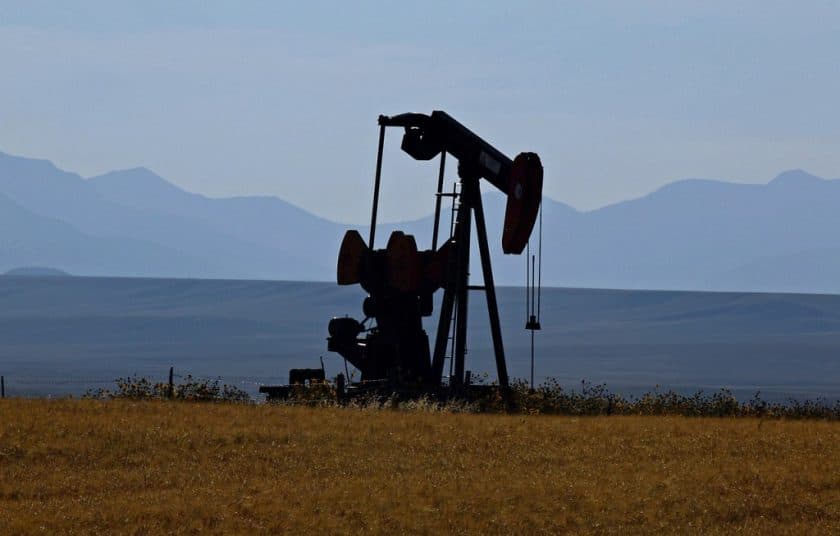
Oil prices began the week with a sharp rise, surging well above the psychological threshold of $100 per barrel and reaching their highest level since mid-2022. Some major producers have cut supply, and concerns about a prolonged disruption to supplies amid the escalating war in the Middle East have taken hold of the market. Energy markets are especially nervous because the crisis is unfolding around the Strait of Hormuz, through which roughly a fifth of the world’s oil supplies normally pass.
At around 08:15 CET, the price of North Sea Brent crude was up more than 15 percent, trading at nearly $107 per barrel. US light crude WTI had gained more than 12 percent and was trading above $102 per barrel. In morning Asian trading, prices for both contracts rose as high as around $119.5 per barrel. Last week, the price of Brent crude rose 27 percent and WTI 35.6 percent.
Disruptions to tanker traffic and rising security risks have already slowed the transport of oil. This leaves Asian buyers particularly vulnerable, as they rely heavily on oil supplies from the Middle East. In Asian trading, Brent crude rose by as much as 29 percent and WTI by more than 31 percent.
"If supplies through the Strait of Hormuz are not restored soon and regional tensions do not ease, upward pressure on prices is likely to persist," said Vasu Menon, an analyst at Singapore-based OCBC.
Iraq and Kuwait have begun cutting oil production. The cuts by both countries came after Qatar announced a reduction in liquefied natural gas (LNG) supplies. Analysts expect the United Arab Emirates and Saudi Arabia will soon also have to cut production because they will run out of available oil storage capacity.
"The $100-per-barrel level is also an important psychological threshold for energy markets. Once it was breached, it attracted further speculative capital and increased volatility," Petr Lajsek, an analyst at Purple Trading, told the Czech News Agency.
"Daily moves of tens of dollars are no longer unusual, and oil is seeing its biggest price swings since 2022," he added.
Lajsek also warned that such a rapid rise in prices would inevitably feed through to fuel prices. However, it will depend on how long Brent crude remains around $110 per barrel. The last time oil was at similar levels, around the summer of 2022, petrol in the Czech Republic cost around 47 crowns per litre and diesel was around 48 crowns per litre.
Oil prices were also driven up by the announcement that Iran’s Assembly of Experts had chosen Mojtaba Khamenei, the second son of the slain Ayatollah Ali Khamenei, as Iran’s new supreme leader. This signals that the hardline faction remains firmly in power in Tehran. Analysts say the appointment of a new leader has put US President Donald Trump’s goal of regime change in Iran further out of reach, accelerating oil purchases as markets expect Iran to continue closing the Strait of Hormuz and attacking oil facilities in other countries.
Even if the war were to end quickly, consumers and businesses around the world could face weeks or months of higher fuel prices because of damage to facilities, logistical disruption and increased shipping risks. If countries also have to start shutting in oil wells, it would take even longer to restore supplies after the conflict ends.
Oil production from Iraq’s main southern fields has fallen by 70 percent to 1.3 million barrels per day because the country cannot export oil through the Strait of Hormuz, industry sources told Reuters. Storage capacity is at its limit.
Oil prices in dollars per barrel (around 159 litres)
| EXCHANGE | TYPE | CONTRACT | CURRENT PRICE | PREVIOUS CLOSE |
| London - ICE | Brent | May | 106,97 | 92,69 |
| New York - NYMEX | WTI | April | 102,41 | 90,90 |
Translation disclaimer
This article is a machine translation of the Czech original and has not yet been fully reviewed. In case of any doubt, please refer to the Czech version.
Sdílejte článek prostřednictvím:
You might also like




16 October 2026, 10:16