4 October 2026, 21:07
Loading...
The Strait of Hormuz opens, but Trump keeps blockade of Iran in place

oEnergetice.cz, ČTK
17 April 2026, 20:16
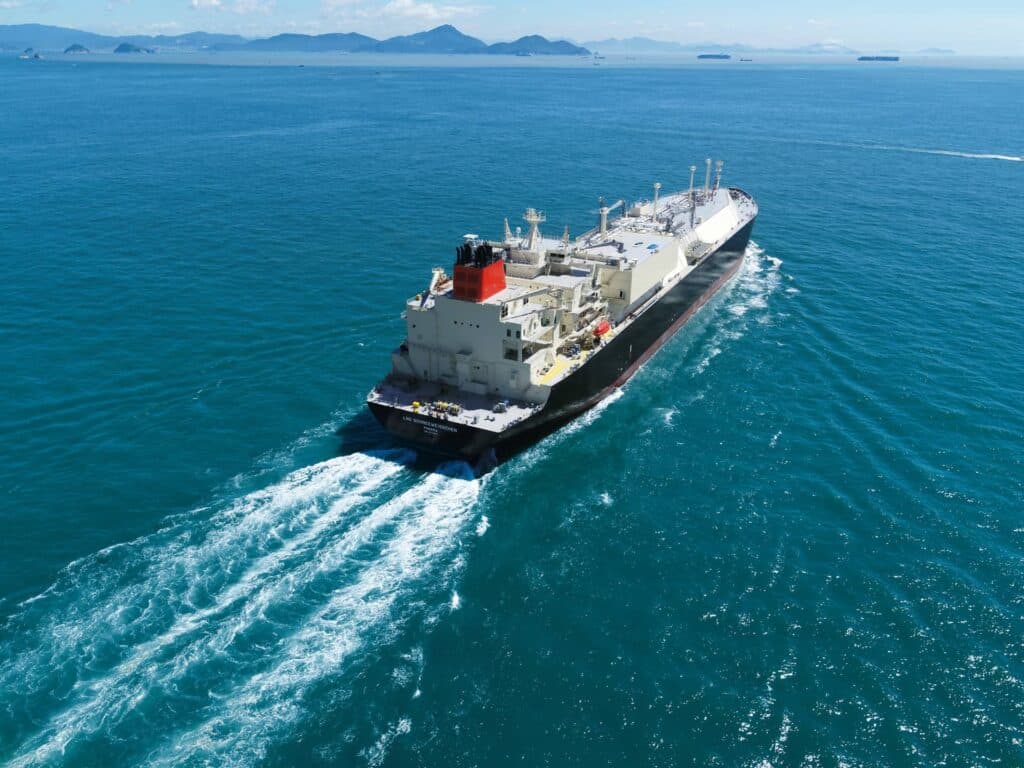
The Strait of Hormuz is fully open to all commercial vessels now that a ceasefire in Lebanon has taken effect, Iranian Foreign Minister Abbas Araghchi said today on X. Despite this, the U.S. naval blockade of Iran will not be lifted, U.S. President Donald Trump said on Truth Social. He also said Iran had agreed never to close the Strait of Hormuz again. However, a representative of the Iranian regime told local media that Tehran would once again restrict traffic through the strait if the U.S. blockade continued, Reuters reported.
According to Trump, the blockade will continue until the U.S. “transaction” with Iran is 100% complete. Most of the points have already been agreed, so the whole process should be very quick, the president added. Apart from reopening the strait, the question of Iran’s nuclear program has so far been a key point of contention in peace talks between Tehran and Washington.
“Iran has agreed that the Strait of Hormuz will never be closed again. This waterway will no longer be used as a weapon against the world,” Trump said in another post.
A representative of the Iranian regime, meanwhile, told the Fars news agency that Tehran would consider the continuation of the U.S. naval blockade a violation of the ceasefire and would close the Strait of Hormuz again.
After the United States and Israel attacked Iran on February 28, Tehran retaliated by crippling traffic through the strait with a combination of several attacks on vessels and threats of further strikes. Before traffic was disrupted, about a fifth of global oil supplies and a significant volume of liquefied natural gas passed through the strait. Restrictions on shipping through the strait therefore contributed to a sharp rise in oil and gas prices on world markets. Prices began falling sharply after Araghchi’s announcement today. The Iranian foreign minister said vessels would follow a coordinated route previously announced by Iran’s Ports and Maritime Organization (PMO).
Reopening the strait was one of Trump’s conditions for ending the current conflict. Although the United States and Iran agreed last week to a two-week ceasefire, Tehran did not fully reopen the strait and demanded that the agreed ceasefire also cover the conflict between the Israeli army and the pro-Iranian Hezbollah movement in Lebanon.
However, limited numbers of ships and tankers authorized by Iran’s armed forces continued to pass through the strait. According to some reports, Tehran charged vessels fees for passage.
The situation in and around the strait became even more complex after U.S.-Iranian peace talks in Islamabad failed, prompting the United States to blockade ships sailing to or from Iranian ports. One aim is to restrict Iran’s revenues from oil sales.
On Thursday, however, Trump announced a ten-day ceasefire agreed by Iran and Lebanon, which suspends fighting between the Israeli army and Hezbollah.
Last week, following the announcement of a ceasefire between the United States and Iran, Iran’s PMO said the safe route for vessels passing through the Strait of Hormuz from the Gulf of Oman to the Persian Gulf runs along the northern coast of the Iranian island of Larak. The safe route for leaving the Persian Gulf through the strait into the Gulf of Oman runs along Larak’s southern coast. The agency added that there was a risk of naval mines outside these routes, but warned that ships must coordinate their passage with Iran’s Islamic Revolutionary Guard Corps.
Trump also said on Truth Social that Iran was working with the United States to remove all naval mines. According to Reuters, the U.S. Navy warned today that the extent of the threat posed by mines in some parts of the Strait of Hormuz was not entirely clear. It said ships should consider avoiding those areas.
Translation disclaimer
This article is a machine translation of the Czech original and has not yet been fully reviewed. In case of any doubt, please refer to the Czech version.
Sdílejte článek prostřednictvím:
You might also like

3 October 2026, 13:01
3 October 2026, 07:43
2 October 2026, 21:55