
17 October 2026, 13:09
Loading...
Washington allows countries to buy Russian oil already loaded onto tankers for 30 days

oEnergetice.cz, ČTK
13 March 2026, 11:53
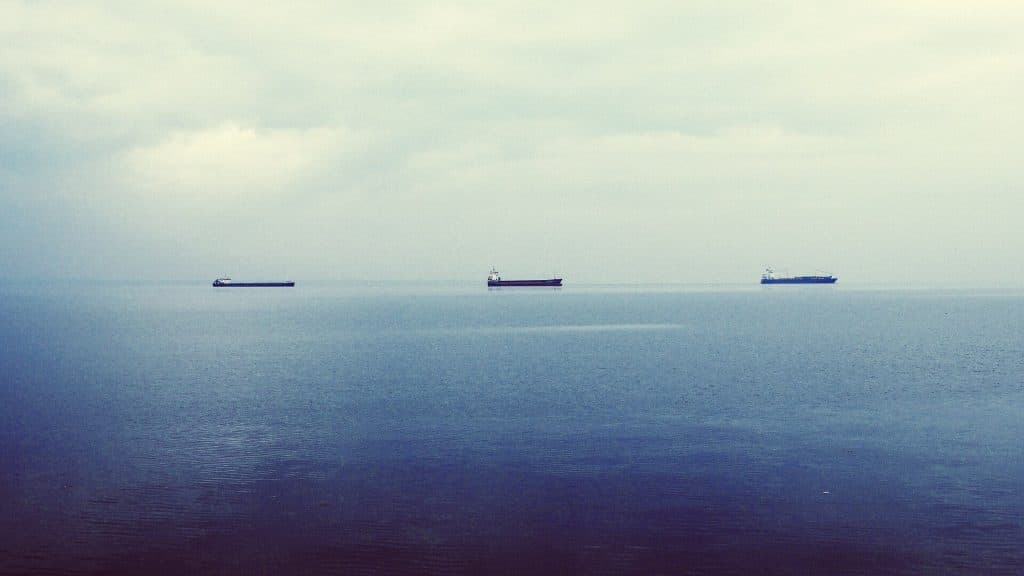
The United States on Thursday allowed countries to buy Russian oil already loaded onto tankers at sea for 30 days. The move is intended to help stabilize global energy markets, US Treasury Secretary Scott Bessent announced on X. According to Russian envoy Kirill Dmitriev, who discussed the issue with US officials in Florida on Wednesday, the exemption will cover about 100 million barrels of Russian oil.
Oil prices continued to surge on Thursday, closing near $100 a barrel, their highest level in almost four years. After news of the exemption allowing Russian oil purchases broke, prices edged down in Asian morning trading, but later resumed their rise, with benchmark North Sea Brent crude selling for more than $101 in the morning. Markets have been tense in recent days because of the war in the Middle East, triggered by US-Israeli strikes on Iran.
The US Treasury Department issued a license on Thursday evening allowing the sale of Russian oil and petroleum products loaded onto ships before midnight on March 11-12, until midnight on April 10-11 Washington time. According to Bessent, the measure will not provide significant financial benefits to the Russian government. “This narrowly targeted, short-term measure applies only to oil that is already in transit and will not provide significant financial benefits to the Russian state, which receives most of its energy revenue from taxes collected at the point of production,” Bessent said.
Kremlin spokesman Dmitry Peskov described the US decision as an effort by Washington to stabilize global energy markets and said Russia shared that interest. However, such stabilization is not possible without significant volumes of Russian oil reaching the market, the spokesman for Russian President Vladimir Putin noted.
Putin’s envoy Dmitriev said this morning that the exemption granted by the United States to countries buying sanctioned Russian oil would cover about 100 million barrels. “Against the backdrop of a deepening energy crisis, further easing of restrictions on Russian energy supplies appears increasingly inevitable, despite opposition from some Brussels bureaucrats,” Dmitriev wrote in a post on Telegram.
Dmitriev, who is the Kremlin’s envoy for economic cooperation, met with US President Donald Trump’s envoys Steve Witkoff and Jared Kushner in Florida on Wednesday. According to Dmitriev, the main topic of the talks was the situation in the global energy market.
The US Treasury Department’s announcement comes a day after the Department of Energy said the United States would release 172 million barrels of oil from its strategic reserves in an effort to curb the sharp rise in oil prices caused by the war in Iran. The release is part of a broader commitment by the 32 member countries of the International Energy Agency (IEA) to release a record 400 million barrels of oil. The US government had already authorized imports of sanctioned Russian oil for 30 days on March 5, but only to India.
US and Israeli forces launched an attack on Iran on the last day of February. Iran has retaliated by attacking Israel and Arab countries in the region that host US military bases. Traffic along the key route through the Strait of Hormuz has almost ground to a halt as a result of the war, although under normal conditions about a fifth of global oil and natural gas supplies pass through the strait. Citigroup estimates that disruption to traffic through the Strait of Hormuz is taking seven to 11 million barrels a day off the oil market.
Iran’s new supreme leader, Mojtaba Khamenei, said on Thursday that the Strait of Hormuz should be closed and used as a means of putting pressure on the enemy. Iranian Foreign Ministry spokesman Esmaeil Baghaei, meanwhile, said many vessels could continue to pass through the strait if they coordinated their passage with the Iranian navy.
Translation disclaimer
This article is a machine translation of the Czech original and has not yet been fully reviewed. In case of any doubt, please refer to the Czech version.
Sdílejte článek prostřednictvím:
You might also like




16 October 2026, 10:16