Who owns Russian oil? Questions over influential minister’s arrest
Nothing like this has happened in Russia since the failed coup attempt in the former Soviet Union in 1991. Russian police arrested a high-ranking state official – Economic Development Minister Alexei Ulyukayev – while he was allegedly accepting a bribe. This happened at the headquarters of Russia’s largest oil company, Rosneft, from which Ulyukayev was said to have demanded two million dollars in exchange for approving its takeover of another oil producer, Bashneft.
The fate of Alexei Ulyukayev is one thing; the fate of Russian oil is another. Questions are once again emerging: Who really owns Russian oil? And who controls the country’s oil industry? This is no trivial matter – Russia is among the world’s three largest oil producers, alongside Saudi Arabia and, following the US shale boom, the United States.
Without needing to spread conspiracy theories, one fact understandably draws attention – Ulyukayev had previously been fairly resolute in opposing the transaction between Rosneft and Bashneft. A number of other economists took a similar view, questioning the need to build an overgrown system of “state capitalism” in Russia.
Privatisation into state hands
What exactly is at stake? Russia announced another wave of privatisation involving a number of its state-owned companies, and Bashneft was among the first to come up for sale. Bashneft is one of the country’s five or six most important crude oil producers. This year, the federal government was selling its just-over-majority 50.08% stake in Bashneft, while the 25% stake held by the Republic of Bashkortostan, a constituent entity of the Russian Federation, was not for sale.
The outcome of this “privatisation” was curious, however – the company ended up back in state hands, with a roughly half stake taken over by state-controlled Rosneft, led by one of the most influential figures in Russian politics and business, Igor Sechin. There is speculation that Sechin may have objected to Ulyukayev’s previous negative stance on such a transaction.
“Privatisation” into state hands is not solely a Russian speciality. Privatisations of energy companies in Poland have followed a similar path. In France, it is not a declared “privatisation”, but part of the business of state-controlled Areva is also set to be taken over by another majority state-owned company, EDF.
In Bashneft’s case, other connections are also of interest. The company had already been in private hands once – from 2003 to 2014. It was gradually taken over by businessman Vladimir Yevtushenkov, or more precisely by his financial holding company AFK Sistema. However, the Moscow Arbitration Court subsequently ruled that it should be renationalised.
A battle for assets
As the Bashneft case itself shows, the answer to the fundamental question of who owns Russian oil can be highly complicated in Russia. There are several possible answers, and their validity changes fairly quickly over time. It concerns the division of power among different factions in the Kremlin, the division of powers and “property” between federal and local governments, the involvement of private players and the sustainability of their ownership.
Foreign investors, whom the current privatisation is intended to encourage, are also in the picture. The battle here is over which assets are too strategic to pass to foreign owners and which are not.
Bashneft was long controlled by the “local” rulers of the Republic of Bashkortostan. They too opted for a form of “privatisation”, which had a controversial outcome in 2003 – the oil company was acquired by Ural Rakhimov, the son of then-president Murtaza Rakhimov.
However, the Arbitration Court did not rule on Bashneft’s renationalisation until later – in 2014, many years after the company had been bought by the private businessman Yevtushenkov (sometimes described as an oligarch close to the Kremlin). Under him, the company apparently prospered relatively well and expanded production into other Russian regions. Nevertheless, the court ruled that the 2003 privatisation had already been illegal – it had been carried out by local representatives without the relevant authority and without the consent of federal bodies.
Strengthening Moscow’s centre
Other circumstances surrounding the Arbitration Court’s decision are also noteworthy. At precisely that time, businessman Yevtushenkov was placed under house arrest for several months on suspicion of money laundering. The charges were later dropped.
Weekly magazine The Economist interpreted the events at the time as follows: Yevtushenkov had allegedly already rejected Igor Sechin’s proposals for Rosneft to become Bashneft’s new owner. He was subsequently placed under house arrest and his company was taken over by the state.
The fact is that Yevtushenkov later did not challenge the Arbitration Court’s ruling, but instead began seeking compensation from Bashneft’s previous owners – Ural-Invest, a company founded by Ural Rakhimov. The arbitration judges recognised that Yevtushenkov was entitled to compensation.
Importantly, unlike in the situation of the 1990s, Bashneft subsequently came under the control of Russian federal authorities. This is fully in line with the long-term policy of Vladimir Putin, who has strengthened the Moscow centre and put an end to dubious flows of money at the regional level.
More powerful than Gazprom
At the centre of any analysis of Russian oil must be the company now embarking on further acquisitions – Rosneft. Many foreign observers who have examined Russian energy and commodity policy have long focused on another Kremlin-controlled company – gas giant Gazprom. Today, however, much indicates that Rosneft has gradually become more powerful than Gazprom itself.
The situation in this respect began to change more visibly around three or four years ago. At that time, Gazprom paradoxically became something of a punching bag within Russia itself. Criticism began appearing in Russian newspapers that the gas company was pursuing unrealistic plans, had failed to adapt to the new conditions of the shale gas era, liquefied natural gas and imports of cheap coal from America, and faced the prospect of being gradually pushed out of the European market.
Sechin’s star is rising
Meanwhile, the star of Igor Sechin, a former deputy prime minister and close associate of President Putin from the ranks of the so-called siloviki, was rising. As Rosneft’s new chief, he suddenly became perhaps the most influential figure in Russian business. Sechin himself also said that Gazprom had been slow to react to the US shale boom.
Long before that, state-controlled Rosneft had cheaply acquired the assets of private oil company Yukos (preceded by the arrest of businessman Mikhail Khodorkovsky), as well as those of another private company, TNK-BP.
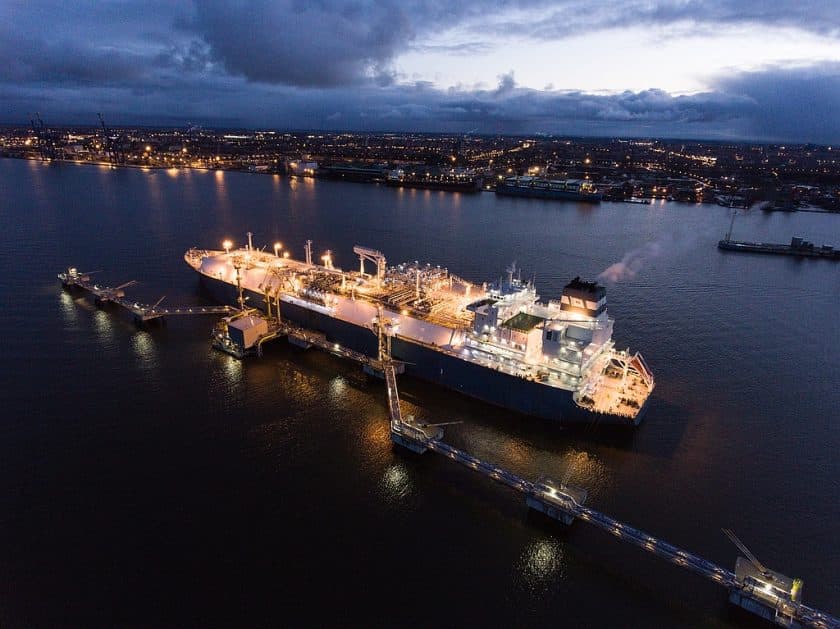
A real shift in the balance of power is demonstrated by the fact that Gazprom lost its monopoly position as a gas exporter, which was restricted to pipeline exports. As for exports of LNG, it is state-controlled Rosneft that is entering this business. However, another major player in this area is private company Novatek, co-owned by Gennady Timchenko – according to available reports, another of Putin’s favourites.
What next for privatisation
Developments surrounding the current transaction between Rosneft and Bashneft show that Igor Sechin has not yet lost his strong position in the Kremlin. However, it would be a mistake to conclude simplistically that this means the defeat of any further privatisation – including the privatisation of energy companies.
The current privatisation was meant to have two main goals – attracting investors and raising money for the state budget at a time when Russia is facing the effects of the financial crisis in the form of a weakened rouble, Western economic sanctions and falling oil prices. The country’s debt is not yet particularly high (12-13% of gross domestic product), but financial reserves are being depleted and, if the government took no action, the situation could deteriorate further. Rosneft’s profit is also falling.
Given its contribution to the state budget, even Bashneft’s “strange” privatisation into state hands still partly makes sense. This could also explain the change in Minister Ulyukayev’s position (now dismissed and, for the time being, under house arrest) – unless, of course, he was persuaded by the prospect of a bribe, a matter to be decided by a court. Everything suggests that President Vladimir Putin’s stance also gradually changed in a similar way, as he apparently was not initially a major supporter of the Rosneft–Bashneft transaction either.
Lukoil would not go for it
Rosneft paid RUB 330 billion (roughly USD 5 billion) for the stake in Bashneft, more than the company’s original estimated value of no more than RUB 306 billion. Leonid Fedun, vice-president of private company Lukoil, said his company could not have paid such an amount.
It will now be interesting to see what happens with the planned sale of a 19.5% stake in Rosneft itself. Its value could rise following the absorption of Bashneft.
At the beginning of November, dismissed minister Alexei Ulyukayev still gave an interview to Reuters in which he admitted the possibility that Rosneft could buy back its own shares from state holding company Rosneftegaz. This remarkable method of privatisation would thus continue, although in this case the state budget would gain more than RUB 700 billion.
The author works as a consultant and energy projects specialist for the HATcom agency.
Lead photo author: Administration of the municipal formation of the city of Novy Urengoy
Translation disclaimer
This article is a machine translation of the Czech original and has not yet been fully reviewed. In case of any doubt, please refer to the Czech version.