Czech debate on the path to carbon neutrality
Debate continues in the Czech Republic over when coal-fired power plants should close and how to transition to low-emission energy. Unfortunately, this debate is to a considerable extent ideological rather than focused on rational, realistic solutions. Let us take a closer look at some of the fundamental obstacles related to this issue.
Recently, some politicians have been competing over who will do more to bring about the Czech Republic’s rapid exit from coal-fired power generation. The Coal Commission, using an analysis by ČEPS, the operator of the Czech electricity grid, recommended closing all coal-fired power plants only in 2038. And even then, on condition that the necessary replacement sources can be built. It should be recalled that it is necessary to secure not only the required total annual generation, but also electricity grid balancing.
The date advocated by a large proportion of politicians, and regarded as too late even by green activists, is 2033. By then, the Dukovany nuclear power plant will have been operating for fifty years. It could most likely operate for sixty years from both a technical and economic perspective, but the question is whether pressure from our anti-nuclear neighbours in Austria and Germany will allow this. If Dukovany had to be shut down, then even if a very massive build-out of renewable sources including storage were achieved, we would face extreme problems in the winter months.
What shutting down coal units in 2033 would lead to
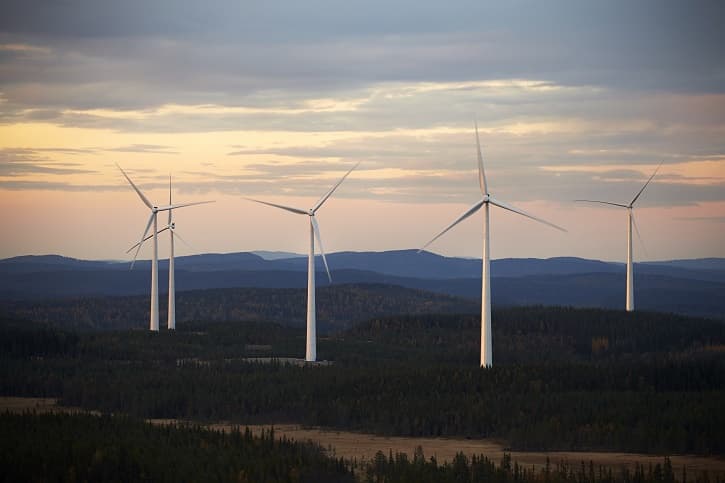
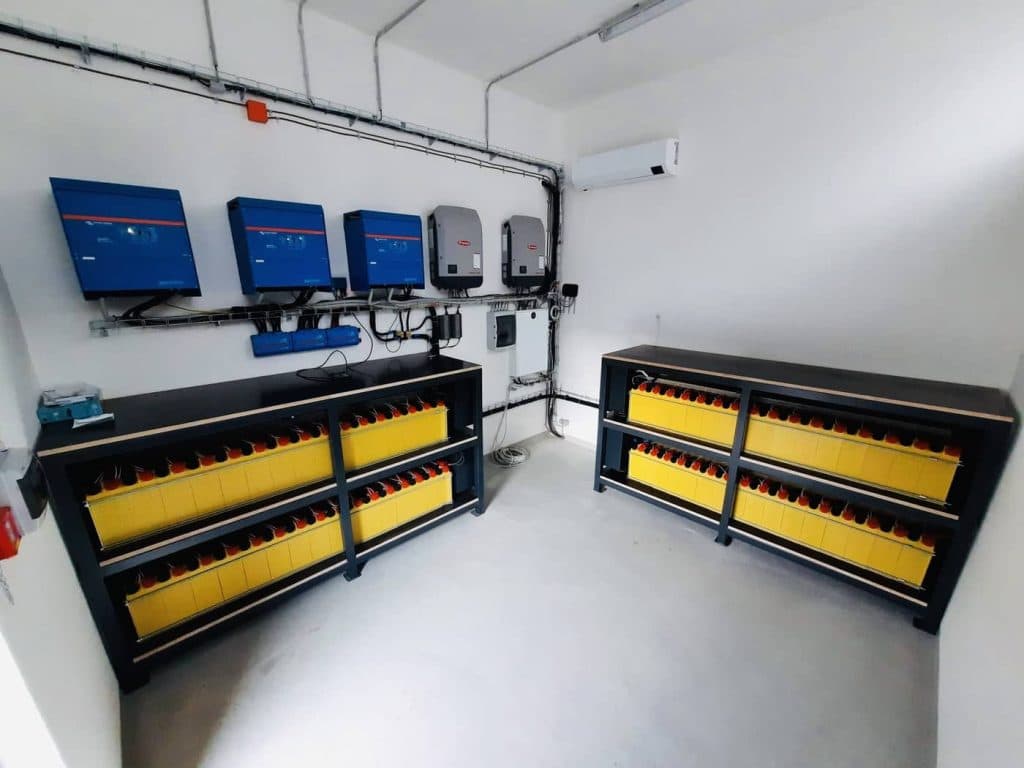
This can be seen in a model example. It assumes that only the two units at Temelín (orange) remain from our nuclear fleet, while all coal-fired sources are shut down after 2033. At the same time, almost 3 GWp of wind capacity has been built, representing nearly 1,000 new turbines (light blue). Most existing turbines will have reached the end of their service life by then. In addition, almost 10 GWp of photovoltaic panels has been built (yellow). This must also include replacement of existing installations, a large proportion of which will have reached the end of their service life. They are assumed to be supported by 20 GWh of batteries. Another strengthened renewable source is roughly 0.9 GW of biomass (brown). Hydropower capacity is assumed to remain at its current level.
It must be stressed that this is an unrealistically optimistic vision, particularly regarding wind development. For nuclear units, we have an approved construction site, a number of approval processes relating to siting and environmental impacts have already been completed, and local residents support construction. Nothing of the kind exists for one thousand turbines of the largest size built here. Individual turbines can certainly be built somewhere during those fifteen years, but building a thousand of them in the face of residents’ opposition is not very realistic.
The chart shows consumption and weather conditions in December 2020. Of course, we can rely on savings, but consumption will be pushed up by electric mobility, the massive deployment of heat pumps and the electrification of other sectors. Thus, assuming that consumption remains at the same level is rather optimistic. Output from wind and photovoltaic sources was rescaled to the stated capacities. Under these December weather conditions, the given mix does not make it possible to use storage because, apart from one day during the Christmas consumption minimum, renewables do not supply more electricity than is needed. Hydropower and biomass sources must likewise supply continuously, so they could not be used for balancing.
The red colour shows what will be missing. Germany will become a net importer from 2022. During winter inversion periods, when wind and solar sources supply little, it will even suffer a significant electricity shortage. The idea that we could import electricity from our neighbours at that time is not realistic. Naturally, we could replace coal units with gas. The problem is that although gas produces half to one-third of the carbon dioxide emissions when burned, once methane emissions from its extraction and transport are included, it does not differ much from coal in terms of greenhouse-gas emissions. In the future, it could also be disqualified by high carbon allowance prices and European Union pressure for carbon neutrality.
A feasible low-emission mix
The European Union and the Czech Republic both declare their commitment to transition to a low-emission mix, and even to carbon neutrality. France, Sweden, Switzerland and the province of Ontario have shown that low-emission energy systems can be built on a combination of nuclear and renewable sources. Conversely, apart from highly specific geographical conditions such as those in Norway and Iceland, nowhere has succeeded in creating a low-emission mix using renewables alone. Germany, by contrast, clearly demonstrates that this cannot be achieved even with extreme costs and effort. Germany will end up relying heavily on natural gas. After all, this is precisely why it is building the Nord Stream II pipeline. However, what could derail this is a very high allowance price and the inclusion of greenhouse-gas emissions released during extraction and transport. How Germany would address this situation is entirely unclear.
That the French and Swedish combination of nuclear and renewable sources works excellently is also evident from the video summarising carbon dioxide emissions of European Union countries in 2020. The development tracked on Electricitymap shows that, apart from Iceland and Norway, France and Sweden are green throughout the year and have low emissions. Germany is mostly brown, and sometimes very dark brown. And it still uses nuclear units. Let us recall that Finland is also moving towards low-emission electricity based on nuclear and renewable sources; it has now received permission to load fuel into the Olkiluoto 3 EPR reactor. The unit should therefore start producing electricity in October and enter commercial operation at the start of next year. Finland will thus have 90 % of its electricity production from low-emission sources. Slovakia is also moving towards a similar combination of low-emission sources, and the United Kingdom is seeking it too.
Video showing power-sector emissions in European countries in 2020. It clearly shows that France and Sweden have low-emission energy systems.
What is the situation with the new nuclear unit here?
It is therefore clear that the Czech Republic cannot achieve a low-emission mix without new nuclear sources. Let us look at the situation with the new nuclear unit here. The fundamental problem currently accompanying the path towards construction of new nuclear units to replace ageing Dukovany, and potentially also some decommissioned coal units, is politicians’ inability to agree on a reasonable compromise proposal for financing and supplier selection. None of the realistic financing methods, which reflect constraints such as the existence of minority shareholders in ČEZ, is ideal. Nor is any supplier-selection method ideal. Each has its positives and negatives. Unfortunately, the dominant share of our politicians are unwilling to seek solutions and contribute to delivering the construction project; instead, they use the issue solely for political conflict and political manoeuvring. They take advantage of the fact that they do not have to express support for any option and can thus appeal to voters both for and against nuclear energy. This expert issue is then finished off by intense ideologisation.
Security criteria are different from geopolitical ones
The inability to reach agreement is compounded by politicians conflating security issues with geopolitical and ideological ones. This can be seen in the debate over the possibility of including Rosatom’s VVER1200 reactor in the tender. This reactor evolved from the VVER reactors used at both Dukovany and Temelín. From a safety and technological perspective, it may even be among the best of the five potentially offered. Fuel and servicing for these units can be ordered from both East and West. Temelín was completed without Rosatom’s participation, using a Westinghouse control system. The completion of two units at the Mochovce nuclear power plant is likewise proceeding without Rosatom. Construction of these reactors is currently under way at two sites in the European Union: Finland’s Hanhikivi plant and Hungary’s Paks plant. In this case, the reactors are being built by a broader consortium, with Rosatom supplying the reactor, GE Power the turbine and Framatome the control system.
To blunt the ideological edges, there is an emerging possibility of further reducing Rosatom’s role in any tender. Under this proposal, if the VVER1200 reactor were selected, the new Dukovany unit would be built by a consortium of Czech and foreign companies, to which Rosatom would transfer all project documentation. Rosatom would serve only as the general designer and adviser. It would be a subcontractor only if Czech companies considered that advantageous. Czech companies would be responsible for detailed design documentation and the complete engineering delivery of the project. The Czech-led consortium would deliver the full scope of equipment, components and services, including design, construction, installation and commissioning works, as well as guaranteed system parameters. In principle, the model would be close to the proposal of leading Czech nuclear expert František Hezoučký, who participated in the commissioning of all nuclear units in Czechoslovakia. He proposed purchasing only the VVER1200 design and implementing construction entirely under Czech management. The described model comes close to this, except that the delivery consortium could rely much more on the project supplier’s support. Naturally, ideological and political conflict is not about facts but symbols, so it is unlikely that the views of ideologically entrenched politicians would change even under this option.
Czech companies are very extensively involved in constructing VVER1200 units, which are being built in large numbers in Russia and abroad. They supplied a number of components and equipment for Belarus’s Ostrovec plant and Turkey’s Akkuyu plant, and are also among suppliers for the Paks and Hanhikivi projects. Rosatom has nearly thirty reactors under construction or in preparation for the coming years. It will therefore need to significantly expand subcontractor capacity. If the experience and capabilities of Czech companies in nuclear power plant supplies expand in this way, Rosatom could use them for future contracts. For this reason, it need not object to dramatically reducing its own participation in delivering the Dukovany unit based on its design in order to increase localisation in the Czech Republic. If it successfully delivers the Paks and Hanhikivi projects, then a project under a different consortium model, if implemented at Dukovany, would give Rosatom an excellent start towards further contracts not only in the European Union. In my view, the EU will have to address the rapid construction of new nuclear units in order to achieve carbon neutrality.
Different approaches to supplier selection
It is naturally possible to use different criteria for selecting the supplier and assign them different weights. On the one hand, safety, technological and economic criteria can be given priority. These criteria do not in fact lead to exclusion of the Russian and Chinese bids. On the contrary, those bids have a very good chance of succeeding in that case. On the other hand, geopolitical and ideological criteria can be made primary. These naturally lead to the exclusion of Russian and Chinese suppliers. The first approach was used in our tender until opposition parties and some government politicians, mainly from the Social Democrats, began pressing on it. Poland chose the second approach, selecting its supplier predominantly on the basis of political criteria. Both approaches are legitimate and allow for a fair and transparent process.
Unfortunately, through political manoeuvring and misuse of the issue for political conflict, our politicians have created a situation in which it is unclear how and according to what criteria the supplier is even being selected. Politicians began transforming a tender originally focused on safety, technological and economic criteria into a selection based on their own ideological and political rules. However, in order to seemingly incorporate this into the existing tender, they began disparaging the safety and technological parameters of certain designs, the companies behind them and their subcontractors. This, particularly because of the very strong statements made by prominent Czech politicians who have no expert knowledge but hold very forceful ideological views, has helped discredit the tender in the eyes of potential bidders even before it was announced. Another huge problem became the attempt to impose geopolitical and ideological conditions on the owners of suppliers and subcontractors. The NATO membership condition is not met by the South Korean company, which would therefore also be excluded. The ownership structure could then lead to the exclusion of a number of Czech companies and reduce construction localisation. In other words, the very outcome that those advocating changes to the criteria did not actually want is occurring. Finding a suitable distortion of the tender that would lead to the ideologically most suitable candidate for the politicians concerned is thus becoming very difficult and is making the process non-transparent and discredited.
A major long-term project needs political consensus
A capital-intensive project that will be built over many years and operated for many decades cannot be delivered without broad political consensus. And this cannot be achieved in a situation where the sole effort of all major political parties is political manoeuvring, political conflict and exploiting every issue for that purpose. This is taking place in an atmosphere in which they are unwilling to cooperate constructively even when faced with full hospitals and thousands of deaths. It is then difficult to expect an effort to cooperate in energy policy.
On the one hand, the opposition criticises the government for failing to act on progress towards construction of a new Dukovany nuclear unit and for postponing the launch of the tender until after the election. On the other hand, it throws a spanner into every solution that would not already now lead to the irrevocable exclusion of the HPR1000 and VVER1200 reactors from the competition. For any industry minister, it is very difficult before an upcoming election to exclude a bidder that ranks among the best in terms of safety, technological and economic criteria. Above all, it is a bidder that could potentially result in the greatest involvement of Czech companies and the highest degree of localisation.
The result is deeply non-standard and will complicate the situation further. In order to move supplier selection forward after all, while not overly limiting the final choice for the future political representation, Minister Havlíček decided to send further procurement documentation materials to four of the five potential participants and ask them for their views on security restrictions. This was not meant to be an invitation to the tender; that should only be carried out by the government formed after the October election. Nevertheless, it triggered a very sharp response from the opposition. It is indeed a non-standard solution, but it was precisely the opposition that pushed the minister towards it. If the decision were based on safety, technological and economic parameters, there would be no point in excluding the Chinese HPR1000 reactor. Conversely, if the process were to follow geopolitical and ideological criteria, the Russian VVER1200 reactor should also be excluded. Here, the minister of industry and trade was willing to sacrifice the Chinese reactor from the competition to satisfy the opposition, but for the reasons described, this was not possible in the Russian case.
Conclusion
Unfortunately, it must be acknowledged that it is difficult to expect any progress in the future as well. There is currently no political party in the Czech Republic that prefers cooperation in addressing the country’s problems over political manoeuvring and political and ideological conflict. The same applies in energy policy. No party has presented a clear, comprehensive programme for energy and the transition to a low-emission mix. Thus, only individual politicians from the respective parties can be heard. In almost every party, some express support for construction of a new nuclear unit. Others are firmly opposed. The parties thus leave room to win all voters: those both for and against the use of nuclear energy. For example, the Spolu alliance is represented on energy issues by the staunch opponent of new nuclear sources Luděk Niedermayer, who promotes these views at European level. The Pirates are likewise involved in the anti-nuclear coalition at European level. They too have members who support construction of new nuclear sources. However, the parliamentary group to which they belong in the European Parliament is strongly anti-nuclear. All parties are in a similar position. None has shown even a somewhat more concrete energy strategy that it intends to implement should it take part in the future parliament and government.
The decision on the direction of Czech energy policy is a fundamentally political one and rests with politicians. On the other hand, they should rely on experts’ knowledge and proposals when making it. Given that experts are available and politicians can readily use their knowledge and advice, parties should already have an idea of how they intend to proceed on the Czech Republic’s key problems. Unfortunately, our politicians do not behave this way even in a crisis that is costing us thousands of unnecessary deaths.
There are clear statistics on coronavirus infections, hospital occupancy and deaths; there are a number of expert groups, such as Sníh, as well as individual experts who can be consulted and whose views are known. And naturally, every party should have its own expert team for the state’s most important problems. It is then truly absurd when politicians declare that they cannot decide whether to support an extension of the state of emergency and will decide only according to what the health minister or prime minister says on the day of the parliamentary vote. This clearly shows that they are engaging in pure political manoeuvring. They are targeting voters both for and against anti-epidemic measures. And whatever the outcome, they can then declare that the government is to blame for everything and that they would have done better. For them, it is still merely a game for voters and the destruction of a political opponent.
Unfortunately, I therefore fear that our politicians will not be able to unite in cooperation on resolving our energy policy and its transition to a low-emission mix even in the future. This is reinforced by the way ODS politicians have recently begun attacking Pirate politicians very sharply, purely on ideological grounds, simply because the Pirates have risen to the lead in political preference polls. As has been stressed repeatedly, broad political consensus is needed for major long-term investments. This applies particularly to nuclear energy, where major political pressure can be expected from our anti-nuclear neighbours. And just as in the case of the epidemic, the political manoeuvring of all our political parties will most likely lead us to very bad outcomes in energy policy as well.
Translation disclaimer
This article is a machine translation of the Czech original and has not yet been fully reviewed. In case of any doubt, please refer to the Czech version.