25 September 2026, 09:51
Loading...
Nuclear power in 2022 – Part 2: The path to closing the fuel cycle
Vladimír Wagner
18 February 2023, 13:10
In 2022, several significant steps were taken towards closing the nuclear fuel cycle. Let us take a closer look at them.
Russia and China are the furthest advanced in this area. We will therefore focus mainly on these countries in our overview of the current situation. Preparations are continuing for the construction of the BN1200 reactor at the Beloyarsk nuclear power plant. It would be the first commercial sodium-cooled fast reactor. A decision on its construction is approaching.
Two sodium-cooled fast reactors, BN600 and BN800, have already been operating successfully at the Beloyarsk plant for a long time. More than 1,000 new employees will need to be trained for the construction and operation of the new unit. Beloyarsk nuclear power plant is cooperating with Ural Federal University and Tomsk Polytechnic University in training future specialists. Its completion is planned for 2035.
In 2022, the BN800 reactor completed its gradual transition to using MOX fuel. By mid-September that year, it was operating entirely on this type of fuel. This is a breakthrough event on the path towards a closed uranium-plutonium fuel cycle. It should be recalled that in 2020, the annual capacity factor of this prototype reactor was 82 %.
In 2023, China’s first prototype sodium-cooled fast reactor, the CFR-600, should enter operation. Its construction began at the Xiapu power plant in China’s Fujian province in 2015. Construction of a second unit of this type began there at the end of 2020. Fuel for these reactors is supplied by Russia’s TVEL, as it was for their experimental Chinese predecessor, CEFR. The required fuel assemblies for the first years of operation were delivered in January 2023.
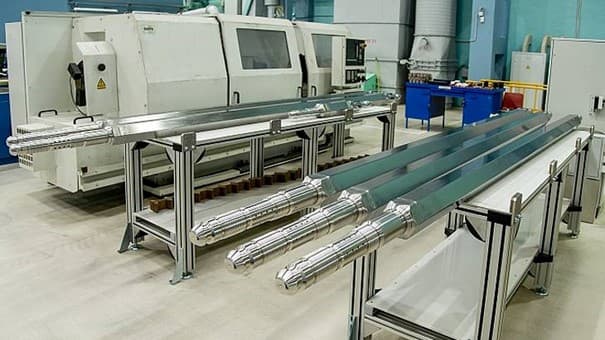
Fuel assemblies for the CFR-600 fast reactor (source: Rosatom).
In 2022, six REMIX fuel assemblies were loaded into the core of Unit 1 at the Balakovo nuclear power plant. While MOX fuel assemblies combine fresh uranium with plutonium separated from spent fuel, REMIX fuel assemblies combine spent fuel with enriched uranium. REMIX fuel contains less plutonium and differs less from conventional fuel. It is better suited to conventional units that are not designed for greater use of MOX fuel. The Balakovo plant is thus testing new modern fuel developed by TVEL using recycled spent fuel.
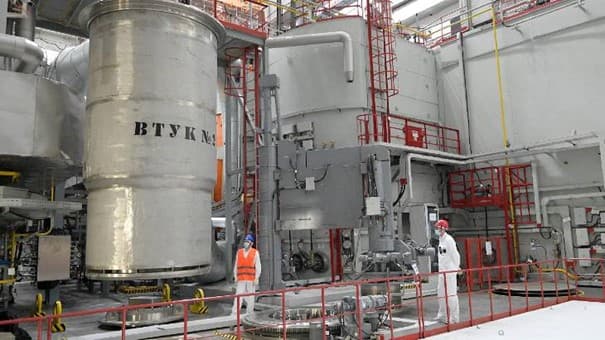
TVEL produces MOX fuel for the BN800 reactor (source: TVEL/Rosatom).
Construction continues on the experimental MBIR reactor in Dimitrovgrad, which is to test the potential of different types of fast reactors. It will have a thermal capacity of 150 MWt. In addition to liquid sodium cooling, it will also investigate lead and gas cooling. The planned fuel assemblies for this reactor were tested at the end of January 2022. MOX fuel will be used. In mid-January 2023, the 83 t reactor vessel was set in place. Completion and start-up of the reactor are expected in 2027. Currently, 1,400 workers are involved in its construction.
The BREST-300-OD reactor being built under the Proryv project is intended to test the possibilities of closing the fuel cycle using advanced Generation IV reactors. The site will also include facilities for fuel reprocessing and the production of advanced fuel types.
An important step towards closing the fuel cycle is also the development of reactors using liquid fuel in the form of molten salts. More details are available in an older article on Osel. An event has now taken place that could represent a breakthrough in this field. An experimental reactor using molten salt-based fuel has started up in China. It makes it possible to use thorium as fuel. Construction began in the Chinese city of Wuwei in Gansu province in September 2018. The Shanghai Institute of Applied Physics of the Chinese Academy of Sciences, SINAP (Shanghai Institute of Applied Physics), received permission to operate the reactor in August 2022. A system using thorium fluoride as fuel could also be ideal for accelerator-driven transmuters.
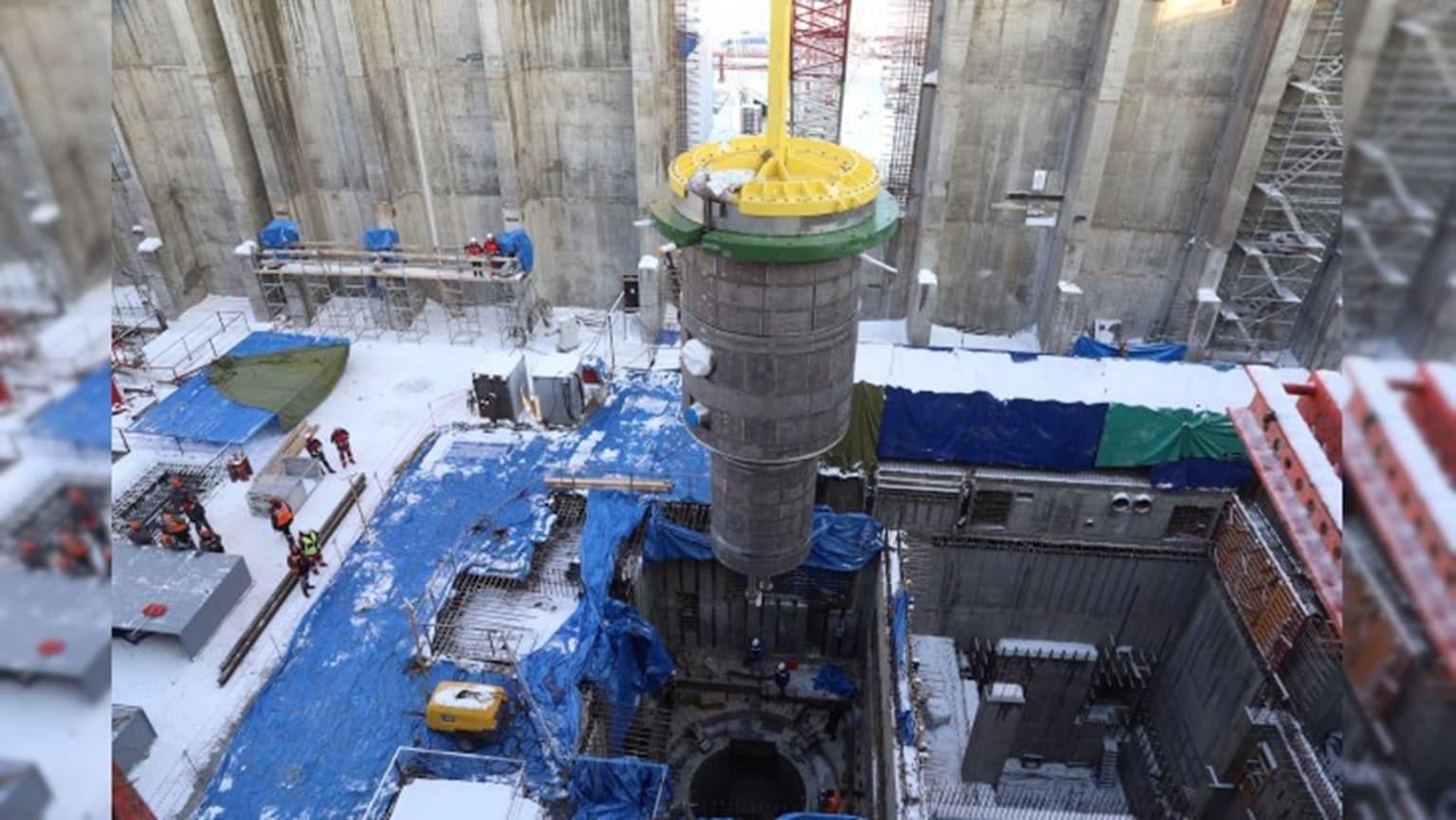
Installation of the reactor vessel for the experimental MBIR reactor (source: Rosatom).
Research in this field is currently experiencing a renaissance in China. The TMSR-LF1 (Thorium Molten Salt Reactor – Liquid Fluoride) described above is a high-temperature reactor with a thermal capacity of 2 MWt. It was completed as early as August 2021, although completion had originally not been expected until 2024. The project was significantly accelerated.
The reactor will use fuel enriched to up to 20 % uranium-235 and around 50 kg of thorium. The breeding blanket, in which thorium will be converted into uranium-233, will use lithium-beryllium fluoride (FLiBe) enriched to 99.95 % lithium-7 isotope. The liquid fuel will be uranium tetrafluoride (UF4).
Continuous operation is envisaged, with fuel replenished continuously and gaseous fission products removed. Every five to eight years, the liquid fuel salt would be completely removed and recycled. The most effective methodology for the continuous separation of fission products and minor actinides should be verified and refined. The reactor should gradually increase the share of energy generated from thorium from 20 % to 80 %.
If the project is successful, construction of a reactor of this type with a thermal capacity of 373 MWt is planned around 2030. An advantage of this reactor type is that it does not require water for cooling and can be successfully deployed in desert regions where water is scarce. Thorium reactors with liquid fuel are also being considered in advanced concepts for small modular reactors, but more on that in the next part.
Translation disclaimer
This article is a machine translation of the Czech original and has not yet been fully reviewed. In case of any doubt, please refer to the Czech version.
Sdílejte článek prostřednictvím:
Topics:Opinion
You might also like
24 September 2026, 11:23

24 September 2026, 10:30
24 September 2026, 06:56