25 September 2026, 09:51
Loading...
What next for European and Czech energy after Russia’s invasion of Ukraine?
Vladimír Wagner
14 April 2022, 10:54
The fundamental problems of European energy were already exposed by this winter. Russia’s invasion of Ukraine then escalated the crisis brought about by the ideologisation of European energy policy. Let us look at the state of European and Czech energy, and at the steps that should be taken to address its crisis situation.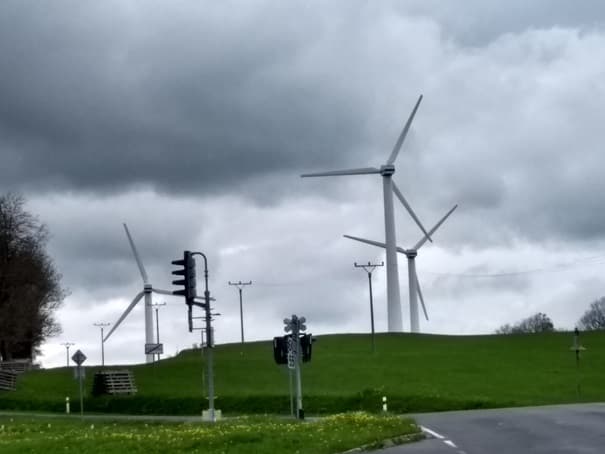
At the outset, it should be recalled that the current crisis in European energy was caused by the focus of the European energy concept on ideology, regardless of rationality and facts. On the one hand, there was a departure from the notion that energy is a strategic commodity and that the state should ensure and guarantee the long-term security of its supplies. It was assumed that energy was an ordinary commodity and that, instead of long-term strategic contracts and long-term strategic planning, the market and spot trading on exchanges would take care of everything. In gas, the Czech Republic thus got rid of long-term contracts as well as gas storage facilities and suppliers. It left everything to spot trading on the Leipzig exchange. It now therefore pays the highest price, as it buys resold gas at multiples of the price from those who have long-term contracts.
On the other hand, the market has been extremely distorted by subsidies and support for generation sources selected according to an ideological key promoted by green ideologues, activists and politicians. While they proclaim the need to dramatically reduce emissions, they also oppose nuclear energy at any cost. The nuclear and coal-fired capacity being shut down is then replaced by gas-fired capacity, which, when methane emissions from extraction and transport are included, is not much better than coal in terms of greenhouse gas emissions. This is very clearly demonstrated by the example of the German Energiewende. It has caused Germany to become hugely dependent on natural gas from Russia. Unlike most other European countries, Germany needs gas not only for industry but also uses it very intensively for electricity generation, where it replaces not only coal-fired but also nuclear units. It was precisely because the Energiewende is built on gas and required its cheap supply that intensive cooperation between Germany and Russia, and the construction of the Nord Stream and Nord Stream II pipelines, took place. Germany clearly shows that even with extreme support and financial resources devoted to renewables, a transition to a purely renewable energy mix cannot be achieved.
Had Greenpeace, Hnutí Duha and other green activists been entirely successful in the Czech Republic, Temelín would not exist and Dukovany would already have been shut down after thirty years of operation. It is easy to imagine what the share of low-emission sources would look like here. It is equally easy to imagine how useful Temelín’s third and fourth units would be now. We do not have a windy sea coast and the possibility of extensive wind deployment. The experience of Germany’s Energiewende therefore makes it clear that the ideas of our green activists—that we can easily replace fossil and nuclear sources with renewables—are detached from reality.
After Russia’s invasion of Ukraine, it will no longer be possible to conceal this reality through the use of gas, so it might seem that green activists and politicians would finally turn in a more realistic direction. However, their declarations do not bear this out. Lately, they have been calling even more intensely for an even greater focus on renewables, while continuing to fundamentally oppose nuclear energy.
In Germany, the simplest way to significantly reduce both Russian gas consumption and greenhouse gas emissions in the coming years would be to cancel the planned shutdown at the end of this year of the last three operating nuclear units. Alternatively, the three units shut down at the end of last year could be restarted. Clearly, their operators did not plan for this. It would require spending on maintenance, retaining staff and fuel supplies. At the same time, these companies would need guarantees that the possible operating period would be long enough to make the investment worthwhile.
This would require a fundamental statement and support from the government. However, the government includes the Green Party, which opposes nuclear power for ideological reasons, whatever the cost. At the same time, shutting down nuclear reactors is the only Energiewende objective that has been achieved. And the Energiewende was promoted by all governing parties. This is also why the government will not take such a step. On the contrary, as with previous unmet targets, it will announce even higher targets. Industry and Energy Minister Robert Habeck has thus announced that Germany will reach an 80% share of electricity generation from renewables as early as 2030 and 100% in 2035. This is despite a significant increase in electricity consumption as it replaces other energy sources in heating, transport and industry.
My personal view was that Germany in particular would show how nonsensical ideological ideas about energy are and would run into the limits of its plans. Following Russia’s invasion of Ukraine, this collision will, in my view, be faster and more dramatic. Whether I or Robert Habeck and the German government are wrong will be shown in the coming years. The responses of other European countries to current events are somewhat more rational. For example, Belgium has postponed the shutdown of its nuclear reactors. France and the United Kingdom plan to accelerate the construction of new units.
As for my recommendation to the Czech government, the worst course would be to copy Germany’s energy concept: the weather in the Czech Republic and Germany is often the same. This would mean that when there is a surplus of generation here, there will also be one in Germany. Conversely, when generation is lacking here, it will also be lacking in Germany. We should therefore have a different energy concept.
Phasing out domestic fossil sources only where replacement capacity exists
The closure of environmentally upgraded coal-fired power plants and CHP plants, and their replacement with gas-fired facilities, made no sense even before Russia’s invasion of Ukraine. While burning gas releases only half as much, or even less, carbon dioxide as coal, methane releases during gas extraction and transport largely erase that advantage. It was therefore purely a formal effort to achieve ideological targets set on paper. After the Russian invasion and the need to end dependence on Russian gas, it is truly necessary to keep environmentally upgraded coal-fired capacity using domestic coal in operation until an equivalent low-emission replacement has been built. It must ensure not only total electricity generation, but also grid balancing and stability—that is, the necessary supplies at all times and in every season.
The use of gas for electricity generation should be fundamentally limited to a minimum. Its use in district heating, particularly in local facilities where it has contributed significantly to improving the environmental quality of our towns and cities, should rather be supported. For decades, I have argued with those who oppose nuclear generation and advocate electricity generation using gas-fired sources. I have always warned them that such massive creation of competition for small gas consumers would lead to higher prices and threaten living standards. I also always pointed out that gas availability and prices could change dramatically. And that is precisely the situation we see now, additionally escalated dramatically by the war in Ukraine.
Renewables primarily in decentralised form
Let us look at which low-emission energy sources could replace fossil sources here. This is largely determined by our geographical conditions. Dams and hydroelectric power plants were built here in the last century. The potential of hydro resources has already been largely exhausted. Some opportunities are linked to flooding mined-out areas during their reclamation. There are also opportunities for pumped-storage plants, for which potentially usable sites are known. However, the fundamental problem is that, in particular, their upper reservoirs would have to be located in environmentally valuable mountainous areas. It should also be recalled how strong public opposition tends to be to the construction even of a small dam intended to retain water in the landscape. It is therefore necessary to seek to use at least part of this potential, especially where it can serve storage and balancing purposes, but major capacity cannot be expected. The share of hydroelectricity will most likely remain roughly the same.
Another potential renewable energy source that can also be used for balancing is biomass. However, it should again be recalled that its use for energy production competes with food production, timber for industry and construction, and the environmental function of the landscape. In my view, the possibilities here are therefore limited and should be concentrated in district heating and decentralised applications, to avoid transporting biomass over long distances. Mainly agricultural and forestry waste should be used, but only in a way that does not prevent nutrients from returning to the soil. Nor can a means of replacing fossil and nuclear power plants be found here.
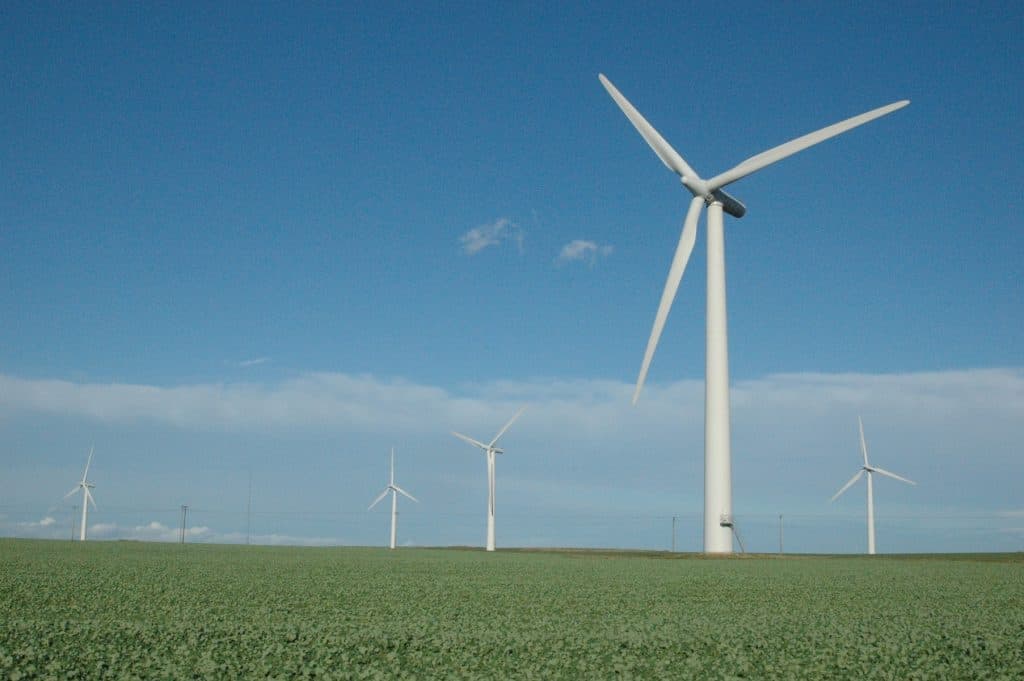
The remaining two potential sources are variable and highly weather-dependent. In wind energy, we do not have a windy sea coast. There are suitable areas for wind turbine construction here, but they are often environmentally valuable areas. Moreover, it should be recalled that most residents oppose the construction of wind turbines near their homes. This can be seen in the example of Bavaria. It has a high population density, as we do, and despite strong pressure to install wind turbines, the share of wind power in this federal state is low. Here, the annual capacity factor of wind turbines is just over 20%, and the largest turbines have a capacity of 3 MW. To replace one unit at Temelín, at least in terms of total annual generation, would therefore require around 1,300 such turbines. Another problem also arises here. When it is windy here, the weather is usually windy in neighbouring countries as well, which also have windy sea coasts and, at those times, large surpluses of wind power from turbines with which ours can hardly compete economically. The scope for using wind here is therefore also severely limited and should be concentrated in specific decentralised cases.
Probably the greatest potential here lies in photovoltaics. The problem is that the annual capacity factor for photovoltaics here is around 11%. At the same time, these sources deliver minimal output in winter, when consumption is highest. If we want to secure a larger share of photovoltaic electricity generation, we therefore have very high output surpluses during sunny periods. At night or during winter inversion periods, output is continuously zero. Without effective seasonal storage as well, such high installed capacity does not ensure secure electricity supplies. On the contrary, it contributes to grid destabilisation.
Photovoltaics can cover daily peaks very effectively, particularly if panel orientation is arranged so that a plant spreads out its production peak and is supplemented with storage capable of using the generated energy later. An effective mix should therefore include photovoltaic capacity covering precisely this peak. Depending on the distribution of peak output over time through different panel orientations and on storage possibilities, this could be between five and six installed gigawatts. As conditions for storage and the participation of photovoltaics in balancing improve, its installed capacity could gradually increase. It is therefore positive that the use of this source in decentralised form on buildings is given maximum preference here, and that the installation of storage and grid-balancing equipment is required. Such an approach should be supported.
Wind turbines are unlikely to be the source that solves Czech energy needs. Source: Vladimír Wagner
Nuclear energy
Energy sector development in France clearly shows that low-emission electricity generation can be built on nuclear and renewable sources. Looking at the current situation in France also yields another important lesson. France has been discussing reducing the share of nuclear energy for several decades. The question of how long France will operate its current units and when it expects to close them remains unresolved. This uncertainty over support for nuclear energy has significant effects on maintenance, upgrades and support for recruiting qualified personnel. This uncertainty is therefore one reason why France has experienced problems at some units in recent years and a higher number of unplanned outages. It shows that reliable, long-term operation of nuclear units requires continuous care.
The current winter and events in Ukraine have dramatically changed the attitude of France and other countries towards nuclear energy. It is now clear that France, and for instance Belgium as mentioned above, will seek to operate their existing nuclear units over the long term. France is thus prepared to devote the necessary care to them. At the same time, France envisages the construction of six new units, and more in the future. These should be EPR2 units, and France also plans to use small modular reactors in the future.
Even this overview shows that, at present, the most important need in the Czech Republic and other countries operating nuclear reactors is to ensure the longest possible safe and reliable operation of existing nuclear units.
In our case, this also means moving from Russian fuel from Rosatom to Western manufacturers. At Temelín, the situation is relatively simple. There is a two-year fuel supply. A tender for a fuel supplier for the next ten years is currently being completed. Three bidders have entered. They are Rosatom, which has supplied fuel for more than the past twelve years, Westinghouse, which supplied Temelín fuel from the start of operations until 2010, and Framatome. After Russia’s invasion of Ukraine, it is clear that Rosatom must be excluded from the competition. From 2024, Temelín fuel assemblies will therefore be supplied by either Westinghouse or Framatome.
The situation at Dukovany is more complicated. While there is fuel for three years, no Western supplier of fuel for VVER-440 units currently exists. It should be recalled that Westinghouse worked on this fuel for Finland’s Loviisa nuclear power plant as early as the 1990s. However, Loviisa remained with Rosatom for cost reasons. At Ukraine’s request, work has already been under way in recent years to begin production of this fuel type by Western suppliers. Interest in and support for its development should now be expressed, preferably together with other operators of these units in the European Union. It is also important to work on its licensing for our needs so that this can be completed within the aforementioned three years.
The second area where maximum effort is required is the construction of new units. Following recent events, France is determined to pursue this, seeking to build six to fourteen new reactors. The Czech Republic has launched a tender to build a fifth unit at Dukovany. It should also be linked to a non-binding option for the possible construction of another unit at Dukovany and two units at Temelín. It is therefore important to begin swiftly negotiating a financing model for these projects and prepare their implementation. Consideration should be given to whether certain formal deadlines in the preparation and execution of construction can be shortened. These must not be those related to safety, but, as with renewables, the disproportionately demanding and lengthy bureaucratic burden could be reduced.
Let us recall that three suppliers entered the competition. These are Westinghouse with the AP1000 reactor, South Korean company KEPCO with a scaled-down version of its APR1400 reactor, and a French company with a scaled-down version of the EPR reactor. Only the AP1000 reactor is currently in operation. However, the other companies have experience with their larger reactors and already have very well-developed designs for their smaller versions. They have also progressed in obtaining the necessary European licences. Given that interest in such reactors can now be expected to grow in the European Union and globally, we should not be the only country where they are built. This should also reduce construction delivery risk.
At the beginning of April, the site for the first small modular reactor at Temelín was announced, in an area outside the planned location of the two new large units. The Czech Republic and ČEZ are seeking cooperation with several companies developing small modular reactors. These include the US small modular reactor NuScale and one being developed in the United Kingdom by Rolls-Royce. The advantage of building the first such facility in Temelín would be speed. The site is prepared for the construction of nuclear facilities and there would be no problem obtaining a licence. Based on experience with its construction and operation, it would then be possible to establish a specific licensing regime for this type of facility that reflects the specific nature of its safety parameters and enables its use in decentralised form as local electricity and heat sources. The first unit would then primarily serve to gain experience for companies that would supply and deploy these units on a large scale as local power plants and CHP plants replacing coal-fired sources.
From the perspective of district heating, it is also very important to use the heat produced at Temelín and Dukovany. Construction of the hot-water pipeline from Temelín to České Budějovice should be completed as quickly as possible, supplying as much heat there as possible. Now that continuation of nuclear energy at the Dukovany site has been decided, a hot-water pipeline from there to Brno should be built as quickly as possible.
Conclusion
The current winter has already shown, and Russia’s invasion of Ukraine has highlighted further, that shutting down coal-fired sources makes sense only if we have a low-emission replacement for them. This must be capable not only of replacing the necessary total generation, but also of ensuring grid balancing and stability at all times and in every season. It is clear that achieving low-emission energy in Europe is not possible without nuclear energy. Far greater weight needs to be given to long-term strategy and the security and reliability of the energy sector. Without a transition to low-emission energy, there is little sense in pushing electrification in transport, district heating and industry.
Given our geographical conditions, the potential for using renewables here is considerably limited. Their use in decentralised form is meaningful, and photovoltaics probably have the greatest potential here. Their installed capacity must be adapted to storage capacity and grid-balancing capabilities.
The greatest potential for low-emission sources here is associated with nuclear energy. It is therefore necessary to maximise the period of safe operation of existing large nuclear reactors and build new units that supplement and replace existing ones at existing sites. Small modular reactors have potential to replace current coal-fired sources in electricity generation and decentralised district heating. However, it must be stressed that they will not be commercially available before the end of the decade. They therefore cannot serve as a replacement for large Generation III units, for which we have prepared sites and which can be available sooner.
It must always be borne in mind that the real final price of electricity is determined by the overall efficiency of the installed energy mix, which must be able not only to cover total required consumption but to ensure sufficient energy at every point of the year. We therefore cannot choose a single source, even one that happens to be the cheapest at a given time, and use only that. The mix of sources must be optimised. At the same time, sufficient emphasis must be placed on long-term strategy, security and genuine sustainability, rather than merely ideology and short-term political and economic gain, as was the case in recent years. Hopefully, the current winter and Russia’s invasion of Ukraine will finally wake up both Europe and the Czech Republic.
Translation disclaimer
This article is a machine translation of the Czech original and has not yet been fully reviewed. In case of any doubt, please refer to the Czech version.
Sdílejte článek prostřednictvím:
You might also like
24 September 2026, 11:23
24 September 2026, 10:30
24 September 2026, 06:56