15 October 2026, 14:19
Loading...
Analysts welcome tariff changes: they will ease pressure on Czech energy sector and cut household bills

oEnergetice.cz, ČTK
25 May 2026, 14:49
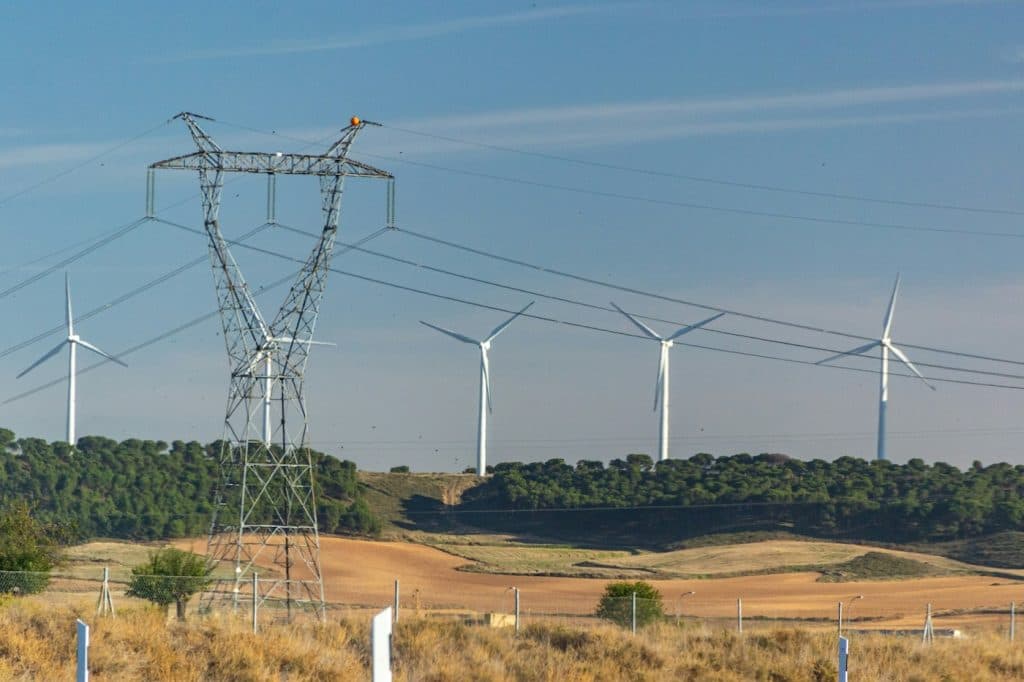
The planned changes to the tariff structure for high- and very-high-voltage networks, which the Energy Regulatory Office (ERÚ) is preparing for next year, will benefit the Czech energy sector by freeing up some unused network capacity. Households could also benefit in the future, as the measures should help ease pressure on prices. This is what analysts contacted by the Czech News Agency (ČTK) said. Some of them would propose further changes in the future.
From next year, ERÚ will adjust the tariff structure for high-voltage (HV) and very-high-voltage (VHV) networks. The changes are intended to free up as much as 3300 megawatts (MW) of input capacity in the networks, equivalent to 15 percent of system capacity. The office expects the adjustments to limit unnecessary investment, which could reduce spending on regulated charges by as much as three billion crowns a year in the future.
Consultancy EGU views the changes as a step in the right direction. “They address a weakness in the Czech regulatory framework: the fact that the current model, with 89 percent of charges tied to reserved capacity, creates a perverse incentive to retain access just in case, thereby blocking a large amount of guaranteed input capacity without actually using it. This guaranteed input capacity nevertheless creates a real cost, which we currently pay through regulated charges,” said Michal Macenauer, EGU’s director of strategy.
According to him, shifting from reserved capacity to technically substantiated and paid-for reserved input capacity and measured peak demand assigns costs more directly to the factors that generate them. However, he is skeptical that this will free up as much as 3300 MW of capacity. “That would be a major success and would make it possible to avoid unnecessary investment of as much as several tens of billions of crowns,” Macenauer said.
He said the reform should go further in the future to better reflect actual costs and prevent economically unjustified capacity from being blocked when it will be needed for network development. “Building new capacity today costs several times more than it did just two decades ago. Freeing up capacity without investment is the most economical thing we can do under the current system,” Macenauer added.
Jiří Gavor, an analyst at ENA and executive director of the Association of Independent Energy Suppliers, also spoke positively about the planned changes. “Industry responds very quickly to economic incentives, so I expect requirements for network capacity that is being blocked unnecessarily to really fall,” Gavor said.
He expects ordinary small consumers, such as households, to benefit as well. “Slowing the growth in necessary investment will translate into savings on electricity bills for all consumers,” Gavor added.
Tomáš Krejčí, chief analyst at Greenbuddies, also welcomed the direction taken by ERÚ. In his view, freeing up capacity in the domestic network is the price signal the Czech energy sector needs. “But this is a key parameter for the development of battery storage, and it is arriving at the last minute—ČEZ only allowed connections for standalone BESS (large-scale battery energy storage systems—ČTK note) a few months ago, and investors are making crucial decisions right now, amid the greatest uncertainty. Rather than a big-bang approach, we would welcome greater transparency and a phased, iterative rollout,” Krejčí noted.
Translation disclaimer
This article is a machine translation of the Czech original and has not yet been fully reviewed. In case of any doubt, please refer to the Czech version.
Sdílejte článek prostřednictvím:
You might also like

15 October 2026, 13:30

15 October 2026, 10:51

15 October 2026, 10:01