3 October 2026, 13:01
Loading...
Blackout? Still largely theoretical for Czechs, with supplies and backup power lacking

oEnergetice.cz, ČTK
4 July 2026, 11:24
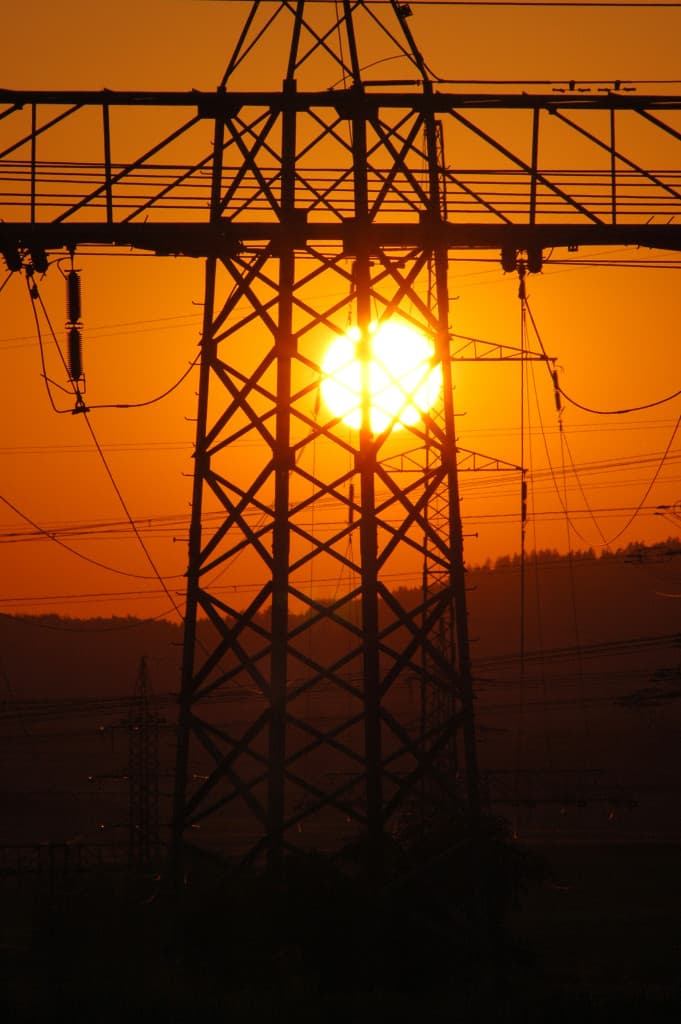
Czechs are not particularly worried about a large-scale power outage, and last year’s blackout in part of Czechia did not change how prepared they are for such events. Around 40 percent of the population actively seek information on what to do. For example, more than a third of households still do not have a supply of drinking water to last even 24 hours. Only around one in eight households has a backup power source. This is according to a June survey by Ipsos for energy company epet. Over the past year, households in Czechia have experienced fewer problems with outages.
The massive power outage on 4 July last year, which lasted several hours, affected around one million customers. There are 6.3 million electricity connection points in Czechia. According to the findings of an investigation by ČEPS, the main cause was a fallen cable on the V411 line, resulting from a faulty repair carried out earlier. This was followed by other, independent outages. The findings of the ČEPS analysis were recently confirmed by an international panel of energy experts. It was the most disruptive fault in Czechia since the transmission system was established.
The situation with power outages improved somewhat in terms of the number of incidents, despite the July event. In the survey, 63 percent of respondents reported an outage lasting at least an hour over the past year, compared with 74 percent a year earlier. The survey also found that outages have become shorter. Eight percent of respondents experienced problems lasting more than six hours, compared with 13 percent a year earlier.
But as the number of outages falls, households are paying less attention to their own preparedness. According to the survey, preparedness has remained practically unchanged from a year ago. Half of households have a charged power bank ready in case of a blackout. Two-thirds rely on a flashlight and three-quarters on candles. Three-fifths of respondents have a supply of food. However, almost 40 percent of households still do not have enough drinking water for all household members for 24 hours. There has also been little change in the equipment that matters during a longer outage. Only 13 percent of respondents have a backup power source, or approximately one in eight households.
According to the survey, four in ten Czechs actively seek information on what to do during a blackout, almost the same proportion as a year ago. Their sense of how well-informed they are has also remained unchanged. Just under half of the public say they have enough information about how to prepare for a power outage. The other half are still unsure whether they would know what to do in such a situation.
"Last year’s blackout showed that most households can manage quite well for several hours without electricity. Longer outages, however, bring completely different problems. Water starts to run short, communications are disrupted, and everyday activities become more difficult. Yet basic preparedness is neither complicated nor expensive. That is precisely why it should be as commonplace as a first-aid kit or a smoke detector," said epet Sales Director Roman Šmíd.
Czechs most often look to their energy suppliers for information on what to do during a blackout, even though distributors are primarily responsible for fixing faults and restoring supplies. According to the survey, firefighters and emergency services remain the most trusted institutions during outages, followed by energy suppliers. Ninety-three percent of respondents consider their own supplier a trustworthy source of information.
A thousand people took part in the survey in mid-June.
Translation disclaimer
This article is a machine translation of the Czech original and has not yet been fully reviewed. In case of any doubt, please refer to the Czech version.
Sdílejte článek prostřednictvím:
You might also like
3 October 2026, 07:43

2 October 2026, 21:55
2 October 2026, 15:14