2 October 2026, 21:55
Loading...
A Hungarian model for Czech nuclear power. But how?
Jan Žižka
10 September 2018, 17:02
Czechs continue to puzzle over how it is possible to build new nuclear reactors today. “We received a recommendation from Brussels to look at the model being implemented at Hungary’s Paks power plant,” new Industry Minister Marta Nováková said several times during this summer.
This may give the impression that the European Commission is advising us to select Russia’s Rosatom as the supplier – as the Hungarians did – and conclude the relevant intergovernmental agreement with Moscow. In reality, it is much more complicated. Indeed, Minister Nováková herself pointed out that the Hungarian model will still be reviewed by the European court in light of Austria’s complaint. She also noted that, in fact, no foreign project can be copied in its entirety in the Czech Republic.
On the other hand, it is clear that the Paks model does offer us a great deal of guidance. Perhaps more so in an area that does not directly concern the method of selecting a supplier, but rather the provision of public support – or state aid – without which no nuclear power plant construction project is likely to be viable. The European Commission is the highest authority in the European Union when assessing state aid. In the case of Paks, it ultimately approved it – despite its earlier doubts. In doing so, it indicated how it will probably approach further projects to build nuclear units elsewhere.
The Hungarians ultimately had to adapt to the European Commission’s requirements. Their original argument failed: that if the government in Budapest provided funding for the construction of new reactors at Paks – in this case also with the option of taking out a loan from Russia – this was not public support, but a commercially viable project. The European Commission, by contrast, said that it did constitute public support. Brussels stated that it had found that the Hungarian state was in fact willing to accept a lower return on investment than a private investor would require.
Separate from the old units
In the end, the two sides found a compromise solution, with certain Hungarian concessions to Brussels enabling the approval of public support. We now come to the absolutely crucial point: the operator of Paks’ new units will have to be strictly separated from the operator of the old units to avoid excessive market concentration. Hungary will therefore have two separate state-owned companies.
Looking at the three options currently being considered by the Czech government under its June resolution (No. 415), strictly speaking, none corresponds to the model preferred by the European Commission at Paks. Existing and future reactors cannot be combined under one roof – whether under ČEZ’s ownership or under 100% state ownership. Two options therefore fall away immediately from this perspective.
The option closest to the Hungarian model would see ČEZ subsidiaries such as Elektrárna Dukovany II or Elektrárna Temelín II (with the possibility of an equity stake by the technology supplier) limited solely to building the new reactors. However, if we wanted to follow Brussels’ Paks guidance, it would be necessary to ensure that they were strictly separated from their parent company, ČEZ. This naturally raises the question of whether the solution might ultimately be to sell these subsidiaries to the state after all.
It should be added that any strict separation of the current subsidiaries from their parent company by no means entails any fundamental division of ČEZ’s existing assets under other proposals that have emerged in the Czech Republic in the recent past.
Technological exclusivity
In Paks’ case, Hungary also committed that any potential profits from electricity generation at the nuclear plant’s new units would be used only to repay loans and ensure the operation of these reactors. These profits cannot be invested either in further nuclear construction projects or in power plant acquisitions.
The operator of the new reactors will also have to sell electricity transparently – at least thirty percent on the exchange, with the remainder through auctions.
There is, of course, still the question of how the separation of the old and new units will work in practice. In a way, such separation is – at least at first glance – paradoxical, because in another procedure before the European Commission, Hungary defended its decision to award the construction contract to Rosatom without a tender by invoking so-called technological exclusivity. The existing reactors, after all, were also built to a Russian (or previously Soviet) design, and the Paks II project ensures “technological affinity, continuity and linkage”.
However, Rosatom must seek subcontractors for at least 55 percent of the total contract volume through tenders under European rules.
A tip for the Hungarians...
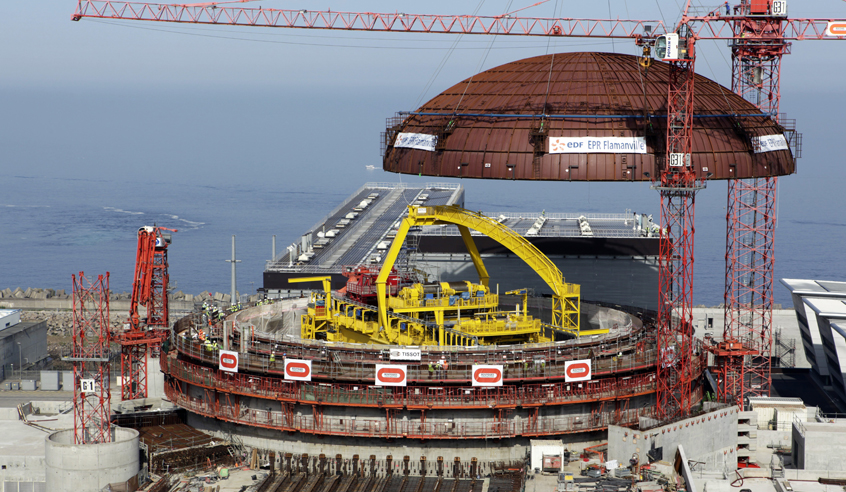
Somewhat amusing, then, are reports that appeared in reputable European media saying that the key technological-exclusivity argument may have been suggested to the Hungarians directly by European Commission officials. This apparently led those in Budapest to discover that they could succeed in defending their approach only once they invoked the French precedent at the Flamanville plant. The French government had previously had to justify why, in 2007, the contract to build a new reactor at Flamanville was awarded by French company EDF to another French company, Areva. Naturally, thanks to technological exclusivity...
If the Czechs wanted to use the technological-exclusivity argument in a similar way, it would mean that Rosatom would become the clear favourite among potential suppliers. At Dukovany and Temelín alike, we would naturally be building on existing Russian technology. A potential Russian bid is also backed by much of the Czech nuclear industry, as it is expected to provide the strongest involvement of domestic companies in construction.
On the other hand, no one in Prague has so far questioned that a tender should be held here among all potential suppliers – even if it were not to be conducted strictly under the Public Procurement Act, which is entirely unsuitable for such a large-scale (involving hundreds of billions of crowns) and strategic contract. At the same time, there is speculation about a Czech solution under which Czech companies would take on the role of final suppliers for the nuclear and secondary circuits of the new reactors, while one of the foreign companies would offer a technology design as a subcontractor.
In June, the government also approved the creation of a new working group at the Ministry of Industry – involving the intelligence services as well – to assess the state’s security interests in nuclear energy. It hardly needs explaining that this group will not exactly favour Russia and China as candidates to build new Czech reactors.
The magic of an intergovernmental agreement?
In connection with the Hungarian “model”, however, much of the discussion concerns the intergovernmental agreement model. If a project to build new reactors is carried out on the basis of such an agreement with a non-European country, it is in principle possible to bypass European public-procurement rules – and thus the aforementioned Czech law as well. In other words, to avoid rules tailored to entirely different types of projects that make the construction of a nuclear power plant impossible.
The question is whether it would nevertheless be feasible and desirable to organise a comprehensive, transparent tender that would take into account the involvement of Czech industry and broader aspects of energy security, which the Public Procurement Act does not allow. That is a matter for lawyers, or legislators. An intergovernmental agreement could then be concluded with the country where the potential winner of such a tender is based – provided it is a non-European country.
Even in such a scenario, however, uncertainty must be expected. It appears that the European Commission did not consider even the existence of an intergovernmental agreement to be a sufficient argument for approving new construction at Paks. Otherwise, the Hungarians would not have needed to put the technological-exclusivity argument on the table as well.
Come what may
Austria is now challenging the Hungarian project and the European Commission’s positive ruling on the construction of additional reactors before the European court in Luxembourg. However, the earlier complex approval process for the “Paks II model” in Brussels, which had to be supported by a range of arguments, shows that the European Commission sought to strengthen its position as much as possible in anticipation of potential litigation.
The European court recently, at first instance, approved state aid for the UK’s Hinkley Point power plant, which Austria had also challenged. This is encouraging news for Hungary as well, although the legal battle is not yet over.
Consideration of what might be applied from the Hungarian model at Dukovany or Temelín certainly makes sense. But the strongest lesson from Hungary lies elsewhere. The Hungarians set a clear goal and pursued it come what may, even though they initially did not choose the most fortunate path in every respect under European rules. They made it clear that building additional reactors was a national interest from which they had no intention of retreating. The fact that the European Commission ultimately decided to give Hungary the green light is closely linked to politics – in Brussels, some did not want further problems with Prime Minister Viktor Orbán, of whom they already have more than enough.
Everything would of course have been more complicated had the Euratom Treaty not existed – one of the founding treaties of the European Communities from which today’s European Union developed. The Euratom Treaty is criticised by many people, particularly in Austria and Germany, but it remains the case that under it the EU should support the development of nuclear energy in Europe.
The author is a consultant and energy-project specialist at the HATcom agency.
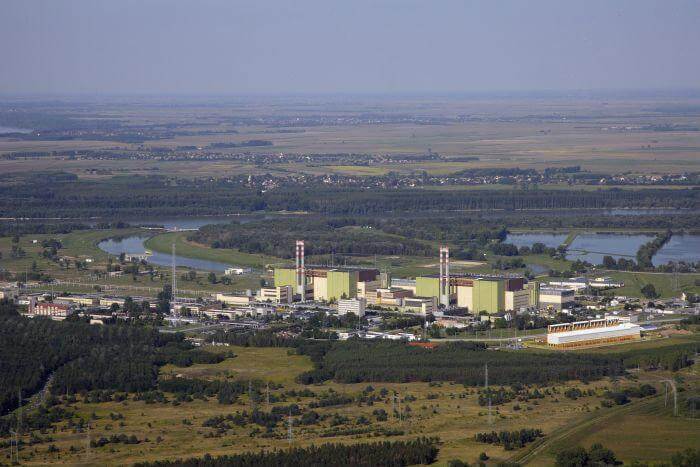
Lead photo: Paks Nuclear Power Plant turbine hall; Source: alstom.com
Translation disclaimer
This article is a machine translation of the Czech original and has not yet been fully reviewed. In case of any doubt, please refer to the Czech version.
Sdílejte článek prostřednictvím:
You might also like
2 October 2026, 15:14
2 October 2026, 10:06
2 October 2026, 06:14