Private investor plans to build nearly 400 MW of wind farms in North Macedonia

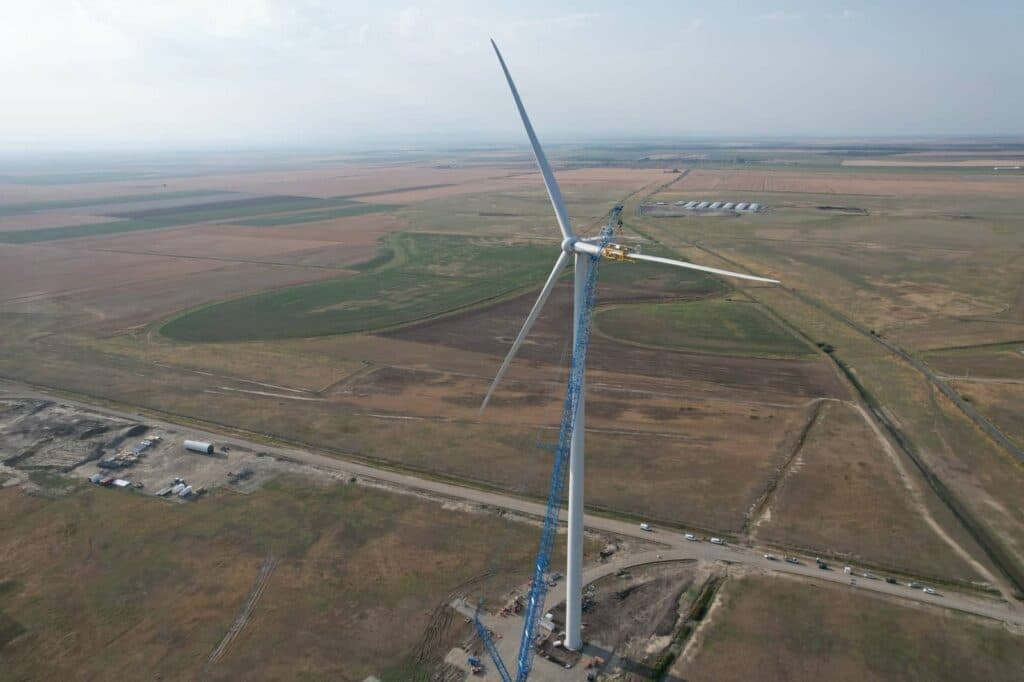
North Macedonia could become one of the new hubs for wind energy development in the Western Balkans in the coming years. A recent move by Alcazar Energy points in that direction: the company has launched a public consultation on a wind farm project with an installed capacity of 396 MW. If built, it would be one of the largest wind projects in the region. Growing investment in wind energy is also evident in neighbouring Balkan countries.
The project is entering the environmental impact assessment (EIA) process, and the developer's aim is not only to build a new power source but also to strengthen the country's energy self-sufficiency. North Macedonia has long been dependent on electricity imports—according to International Energy Agency (IEA) data, imports account for around 20 to 30% of its consumption, particularly in the winter months.
The domestic energy mix remains heavily oriented towards fossil fuels. Around 60% of electricity generation comes from lignite-fired power plants, around 30% from hydropower, and the rest from solar and wind power plants, which together account for less than 10% of generation. The low share of modern renewable sources creates room for new investment.
Wind energy is still minimally developed in the country. The key project remains the Bogdanci wind farm, with a capacity of 36.8 MW, which was commissioned in two phases between 2014 and 2020. Total installed wind power capacity therefore does not exceed 40 MW. Alcazar's project would increase this capacity almost tenfold.
Renewable energy development continues across the region
Wind energy development in Macedonia is not an isolated phenomenon in the region. In recent months, more similar initiatives have emerged across the region. For example, the European Bank for Reconstruction and Development (EBRD) announced in 2025 that it would increase financing for renewable energy projects in the Western Balkans to accelerate the shift away from coal. The European Commission has also earmarked billions of euros under its Western Balkans Investment Plan to modernise the energy sector and support clean energy sources.
Growing investment is also evident in neighbouring countries. Serbia has around 500–550 MW of installed wind capacity, Croatia exceeds 1 GW, and Romania has more than 3 GW (WindEurope, 2024). These countries show that the region has favourable conditions for wind development, while North Macedonia, with less than 40 MW, is significantly behind.
Another factor is the pressure to gradually close coal-fired power plants. According to government strategies, North Macedonia plans a gradual phase-out of lignite-fired power plants, and without rapid renewable energy development, its dependence on electricity imports would deepen further. Other countries in the region face similar challenges as they seek to align the energy transition with EU requirements.
Translation disclaimer
This article is a machine translation of the Czech original and has not yet been fully reviewed. In case of any doubt, please refer to the Czech version.