17 October 2026, 13:09
Loading...
Slovakia's largest hydropower plant to undergo major overhaul, first turbine due within two years

oEnergetice.cz, ČTK
31 August 2026, 14:23
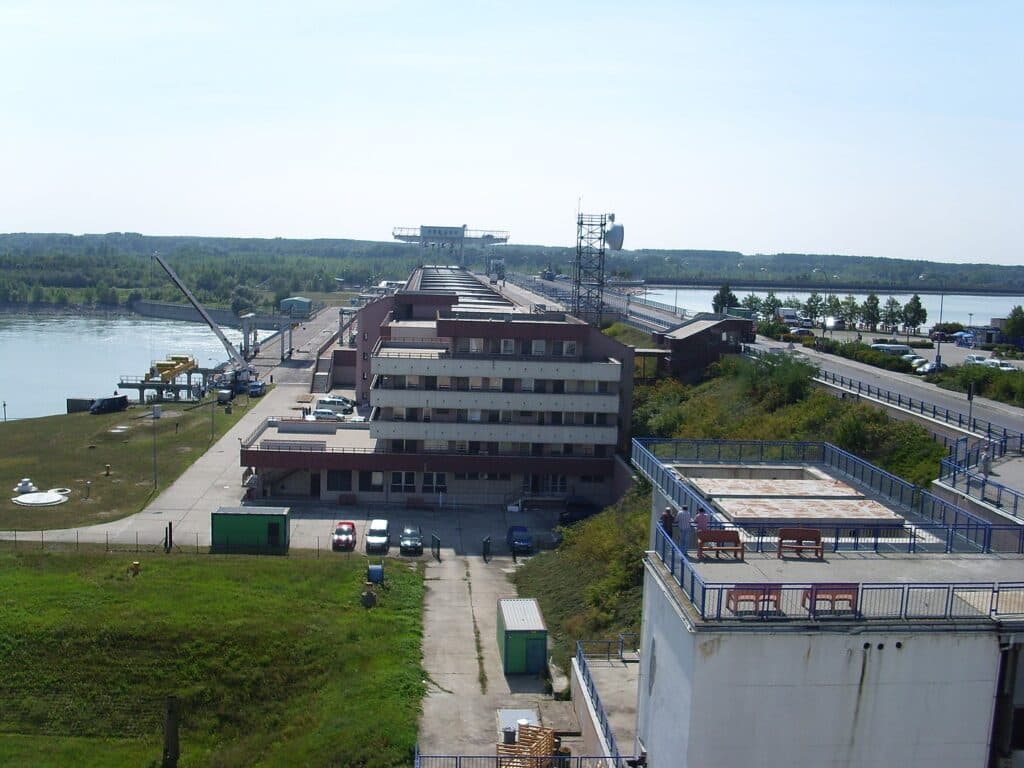
Slovakia will modernise its largest hydropower plant, Gabčíkovo on the Danube, for €465.5 million (CZK 11.2 billion) excluding value-added tax. The contract, won by a consortium comprising Austrian company Andritz Hydro and Slovak firm VUJE, includes the gradual replacement of all eight turbines at the plant. Representatives of the state-owned plant operator and the Slovak government announced this today at a press conference.
Work on modernising the plant, which was commissioned in the 1990s, is expected to be completed over ten years. According to Slovak Prime Minister Robert Fico, manufacturer Andritz Hydro will deliver the first of the new turbines within two years.
Slovak politicians had previously spoken of the need to repair the turbines at the Gabčíkovo plant. At the time, they estimated that the work would require considerably less money than it will following the results of the current tender.
The plant operator, state-owned enterprise Vodohospodárska výstavba (VV), expects its actual output to increase by ten percent after the modernisation, from around 630 megawatts currently. Although the plant has an installed capacity of 720 megawatts, VV said this has never been achieved in practice because Hungary did not complete its part of the originally planned Gabčíkovo-Nagymaros project.
Fico's second government took over operation of the Gabčíkovo plant in 2015. It had previously been leased to the country's largest electricity producer, Slovenské elektrárne (SE), as part of its privatisation by Italian group Enel. A Slovak court ruled that the lease agreement was invalid. Meanwhile, a majority stake in SE was acquired by Energetický a průmyslový holding, owned by Czech businessman Daniel Křetínský.
Slovakia began operating the Gabčíkovo waterworks in October 1992, after Hungary withdrew from the joint Gabčíkovo-Nagymaros project. The dispute between Bratislava and Budapest over the waterworks was considered by the International Court of Justice in The Hague, which in 1997 ruled in Slovakia's favour on most points, except for commissioning the waterworks solely on Slovak territory. It also upheld the validity of the 1977 treaty, under which Hungary committed to building the lower stage of the planned system. The court also ordered both sides to agree on implementing the ruling. This has not yet happened.
Translation disclaimer
This article is a machine translation of the Czech original and has not yet been fully reviewed. In case of any doubt, please refer to the Czech version.
Sdílejte článek prostřednictvím:
You might also like



16 October 2026, 10:16