The largest nuclear power plant in the US wants to operate for up to 80 years. Operator prepares application to extend its licence

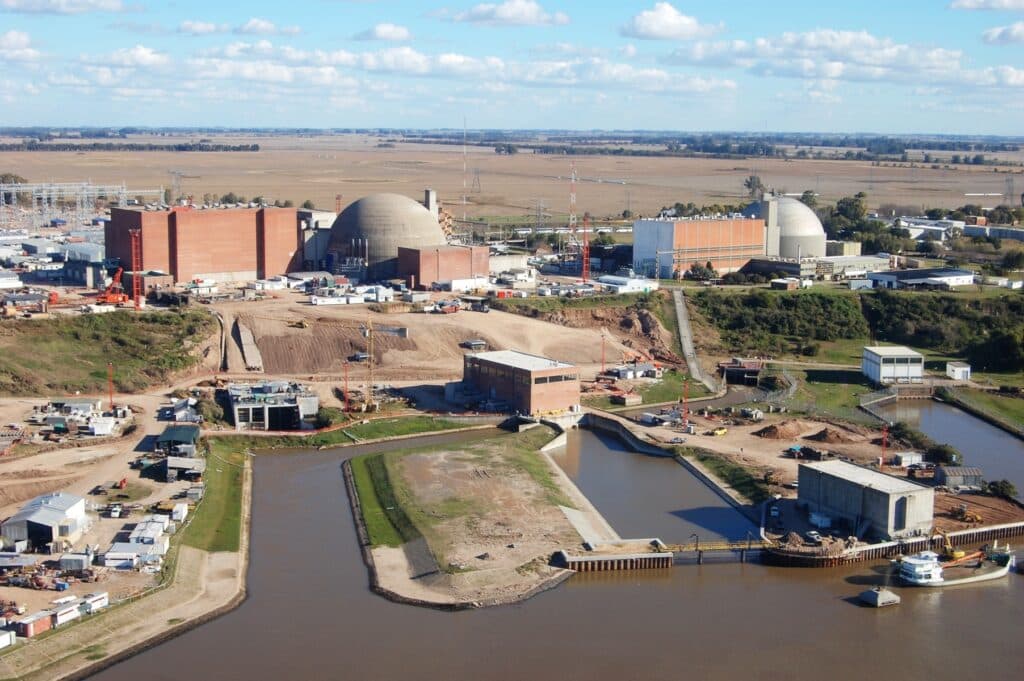
The largest nuclear power plant in the United States, Palo Verde, could operate for up to 80 years. Its operator, Arizona Public Service, plans to apply for a further licence extension in 2027, which could extend operations at its three units until around 2045 to 2047. The move is part of a broader trend in the US energy sector, where companies are increasingly betting on extending the life of existing reactors rather than building new power plants.
The operator of Palo Verde, the largest nuclear power plant in the United States by installed capacity, plans to apply for a further life extension. Arizona Public Service (APS) announced that it is preparing an application for what is known as a second licence renewal, which would allow the plant to operate for up to 80 years.
The Palo Verde nuclear power plant in Arizona, with an installed capacity of almost 4 gigawatts, is the largest nuclear power plant in the US. It consists of three reactors, which entered operation between 1986 and 1988. Their operating licences have currently been extended to around the middle of the next decade.
The application now being prepared could extend their operation by up to another decade, approximately until 2045 to 2047 for the individual units. If the regulator approves the applications, the plant could have a total operating life of up to 80 years, in line with the current trend in the US nuclear power sector.
APS plans to submit its application to the US Nuclear Regulatory Commission (NRC) in 2027. The approval process itself usually takes several years and includes a detailed assessment of safety and environmental impacts. The US regulator also allows nuclear power plants to extend operations to as long as 80 years under what is known as “subsequent license renewal”, provided they meet safety requirements.
Power for millions of households
The Palo Verde plant plays a key role in supplying electricity to the southwestern United States. In addition to Arizona, it also supplies electricity to California, Nevada and New Mexico. APS is its largest owner, while other stakes are held by companies including Salt River Project, El Paso Electric and Southern California Edison. According to figures from the US nuclear industry, Palo Verde supplies electricity to around four million households.
According to APS management, extending the plant’s operations is important in particular for ensuring stable electricity supplies and meeting climate targets. Nuclear power plants provide steady generation without carbon dioxide emissions and complement output from renewable sources, which depends on the weather. US nuclear power accounts for around 18 to 20% of the country’s electricity generation and more than half of its emissions-free generation.
As with other US nuclear power plants, extending Palo Verde’s operations is expected to involve investment in modernising and maintaining the facility. Operators also point out that extending the life of existing reactors is generally significantly cheaper than building new power plants, even compared with some low-emissions technologies.
Potential precedent for other plants and confirmation of a trend
The trend of extending nuclear power plant operations is becoming increasingly pronounced in the United States. Many facilities have already received an initial licence extension from the original 40 years to 60 years, and in recent years applications for further extensions to as long as 80 years have also become more frequent. For example, the Turkey Point plant in Florida and the Oconee plant in South Carolina have already received approval to operate for up to 80 years. This development has also recently been seen in Europe and, according to experts, is important for maintaining stable electricity generation as the share of renewables grows.
According to the American Nuclear Society, extending the life of existing reactors is one of the key tools for meeting climate targets while ensuring reliable electricity supplies. Without these sources, it would be difficult to replace large volumes of steady, low-emissions electricity generation.
The decision on the application for Palo Verde will therefore be an important test of the future direction of the US nuclear power sector. If approved, it will confirm the trend of the United States increasingly relying on the long-term operation of existing nuclear power plants as a stable pillar of emissions-free energy. It could also serve as a precedent for other operators considering similar steps.
Translation disclaimer
This article is a machine translation of the Czech original and has not yet been fully reviewed. In case of any doubt, please refer to the Czech version.