Czech solar sector slows down. Unless it picks up pace quickly, Czechia will fail to meet its targets

The solar sector in the Czech Republic began to stagnate slightly in the first half of this year. At least that is what fresh data from the Solar Association show, detailing additions to installed capacity in solar power plants and storage during the first half of this year. The trend could pose a problem for achieving the targets Czechia has set in its National Energy and Climate Plan.
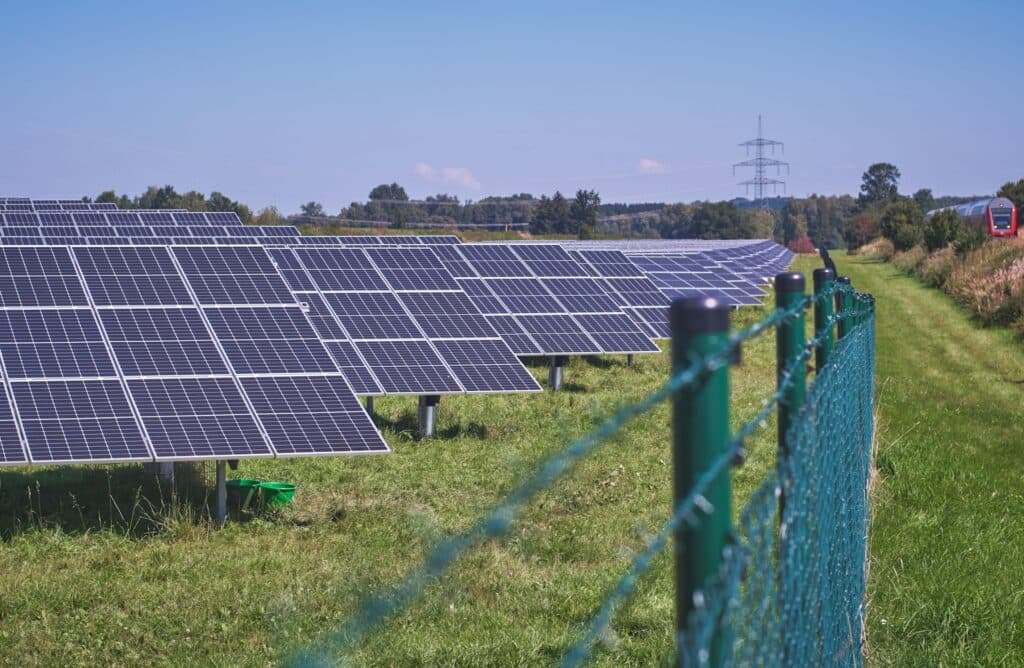
After two years of abundance, the Czech solar power sector has hit a slight snag for the first time. While around 1 GW of solar capacity was added each year in 2023 and 2024, this year points to a slowdown. Only 357 MW of capacity from new plants was added in the first half of this year. This represents a 26 % decline compared with the first half of last year, when 484 MW was added over the same period.
What is behind the slower pace of construction? The Solar Association considers slow permitting procedures and the reluctance of authorities responsible for approving new projects to be among the main problems.
“At times, it appears that employees at some authorities are looking for ways to stop projects at all costs, rather than finding ways to enable them. Such an approach threatens the future of Czech energy,”Jan Krčmář, executive director of the Solar Association, says of the authorities’ activities.

Accelerating the construction of energy sources is precisely the main objective of the latest amendments to the Energy Act. The amendments known as Lex OZE I–III were intended to substantially speed up construction. A further acceleration is expected from the amendment known as Lex Gas. However, the changes are being implemented slowly in practice, and, according to Jan Krčmář, permitting procedures often also encounter non-legislative obstacles in the form of authorities’ reluctance to approve projects.
“For further development, however, it remains necessary to remove persistent constraints such as interventions by heritage authorities, bans on renewables in spatial plans, slow negotiations over cable routes, or lengthy procedures for removing land from the agricultural land fund. We are monitoring the introduction of so-called Acceleration Zones, but cautiously so far—their effect on speeding up permitting remains to be seen,” Jan Krčmář lists.
National targets at risk?
The declining trend in additions of new solar power plants is important for another reason. Under the Czech Republic’s National Energy and Climate Plan, the country is to have a total of 10,1 GW of solar power capacity by the end of 2030.
However, according to data from the Energy Regulatory Office, the Czech Republic had only 4,3 GW of solar capacity at the end of 2024. It therefore remains far from reaching the target. To meet it, Czechia must commission a total of 5,8 GW of new solar capacity. In other words, nearly 1 GW of new installed capacity must be built in the Czech Republic every year.

The sector may be able to rely on new large-scale solar parks that have received support from the Modernisation Fund, but even these are not entirely certain. Large solar parks often face weaker returns, partly due to declining electricity prices on the day-ahead market.
Data from the Energy Regulatory Office also show that larger solar parks have not yet been built in Czechia. In recent years, it has recorded only one power plant with capacity exceeding 10 MW and just a handful of facilities approaching that threshold.
Translation disclaimer
This article is a machine translation of the Czech original and has not yet been fully reviewed. In case of any doubt, please refer to the Czech version.